What to do with moving boxes after the move
How to break down, reuse, give away or recycle moving boxes, packing paper, bubble wrap and foam once you've unpacked, and which boxes to keep.
 The BoxTrack team · · 4 min read
Three weeks after the move, the boxes had won. The kitchen was unpacked and the beds were made, but the spare room held a wall of empty cartons, a garbage bag of packing peanuts, two rolls' worth of crumpled bubble wrap and one box still taped shut that nobody could identify. The recycling bin was full by Tuesday. Pickup was every other Friday.
Unpacking ends when the boxes leave the house. Here's how to get them out without overflowing the bin or throwing away things somebody else could use.
First, find out what's still full
Before you flatten anything, make sure it's actually empty. Shake each box, look in the bottom flaps, and check the folded packing paper. Small things hide in there: a remote, earrings, the screws for the bed frame.
Then decide what stays packed. Holiday decorations, keepsakes and off-season clothes can go straight to the closet, attic or storage still in their boxes. Those boxes have earned a second life. Our guide to what to unpack first helps sort what needs opening now and what can wait.
Break them down the right way
The EPA's recycling guidance is simple: flatten any boxes before you put them in the bin. A flattened box takes a fraction of the space, so more fits in one pickup.
- Cut or peel the tape along the bottom seam. A box cutter is faster, but keep the blade shallow so you don't slice what's on the other side.
- Fold the flaps in and press the box flat.
- Stack flattened boxes by size. Bundle them if your city asks.
New York City's sanitation department, for example, asks residents to flatten and bundle corrugated cardboard, tie it with twine, and set it out next to their recycling bins or bags. Check your own city's rules, because programs differ.
Corrugated boxes, per the EPA
Give them away or sell them
Good moving boxes are worth something to the next person who's moving. Before they go in the recycling:
- Post them for free on a local buy-nothing group, Nextdoor or Facebook Marketplace. Wardrobe boxes and dish packs are worth mentioning by name.
- Ask a neighbor, a friend or a coworker who's moving soon.
- Ask a local school or community group whether they could use them.
- Keep a small stack of sturdy ones for storage or shipping.
If you reuse a box to ship something, cover or remove every old label. USPS says reused packaging with hazardous, restricted or prohibited labels must have those markings fully removed or obliterated. A box that once held cleaning supplies or alcohol can be treated as holding what the markings say.
Packing paper, bubble wrap and foam
The cardboard is the easy part. The fillers are where most of the trash comes from.
| Material | Curbside bin | Better option |
|---|---|---|
| Flattened cardboard boxes | ✓ Most programs | Reuse or give away first |
| Plain packing paper | ✓ Usually, with mixed paper | Keep some for the next move |
| Bubble wrap and plastic film | ✗ Not in most household bins | Store drop-off, or reuse |
| Foam packing peanuts | ✗ Rarely accepted | Reuse, or a shipping store may take clean ones |
| Foam blocks from electronics | ✗ Rarely accepted | Check local drop-off programs |
The EPA says plastic bags, wraps and films are recyclable, but they can't go in your household recycling bin. Retail and grocery stores often accept them instead. NYC lists bubble wrap and plastic mailing envelopes as not recyclable at the curb.
Foam is harder. The EPA says very few localities accept styrofoam in curbside recycling. The City of Sunnyvale, California, suggests bringing clean packing peanuts to a local shipping store for reuse. Call ahead before you drive a bag over.
The EPA's own moving tips suggest choosing bubble wrap that contains recycled plastic, and recycling packaging materials after your move.
Keep the good boxes for storage
Some boxes are worth keeping: the sturdy ones, the ones with lids, and the ones that already hold things you'll store. If they're going to the garage, basement or a storage unit, keep them off the floor and away from damp walls. Our guide to keeping storage boxes dry covers where they last longest.
Clearing the boxes after a move
- Day 1 to 3Unpack the essentials; stack empties in one room
- End of week 1Check every empty box for small items; flatten the rest
- Week 2Post good boxes for free; set aside a stack to keep
- Week 2Bag bubble wrap and film for a store drop-off
- Next pickupBundle flattened cardboard by your city's rules
- Week 3Label the boxes you're keeping for storage
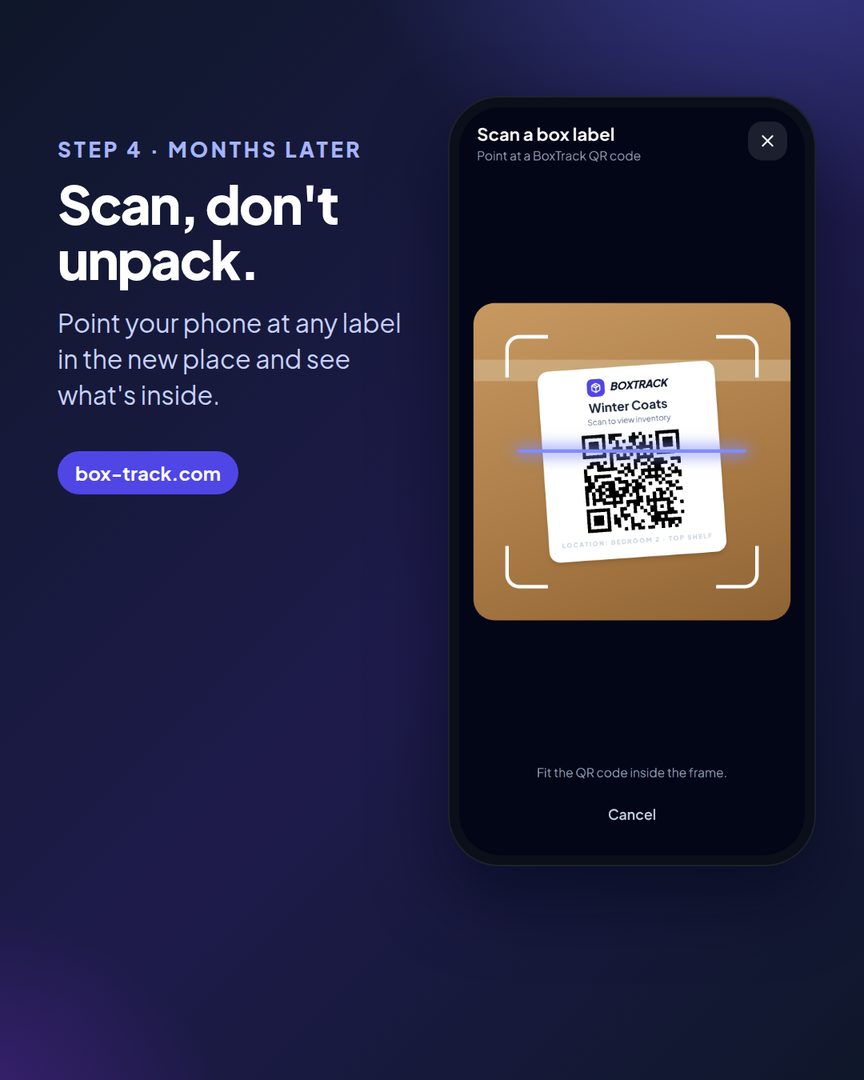
The boxes you keep still need a list
The boxes that stay packed are the ones you'll be hunting through next December. BoxTrack keeps a list of what's in every box. Snap a photo of what's inside, and AI lists the items for you to check. Print a QR label for each box you keep, and scan it from the garage floor to see what's inside without lifting the lid. Search "string lights" and get the box number. See how BoxTrack works for a move. Your first box is free.
Sources
- U.S. EPA, How do I recycle common recyclables
- U.S. EPA, Paper and paperboard: material-specific data
- U.S. EPA, What you can do to reduce plastic waste
- NYC Department of Sanitation, Mixed paper and cardboard
- NYC Department of Sanitation, Metal, glass, plastic and cartons
- City of Sunnyvale, Recycling's dirty dozen
- USPS Publication 52, 224 Old markings
