How to keep boxes dry in a basement or garage
How to keep storage boxes dry in a basement or garage, from humidity targets and shelving to what shouldn't be stored down there at all.
 The BoxTrack team · · 6 min read
The box marked "Christmas" had sat in the corner of the basement for three years. When it came up the stairs this time, the bottom fell out. The cardboard had soaked up water from the concrete, the ornaments' tissue paper had gone grey, and the whole thing smelled like a wet towel left in a gym bag.
Basements and garages are where most of a household's boxes end up, and they're the two spaces in a home most likely to be damp. You don't need a perfect room to store things safely. You need to keep boxes off the floor, keep the air from getting too humid, and be choosy about what goes down there.
Why boxes get wet even when there's no leak
A basement doesn't need a flood to ruin a box. Concrete floors and walls in contact with the ground stay cool, and the EPA notes that warm, humid air can condense on cold surfaces such as uninsulated basement walls and floor slabs. Cardboard sitting on that concrete soaks up the moisture from below, and the box at the bottom of a stack takes the most weight while it softens.
Garages have their own version of the problem. They follow the weather more closely than the house does, and a car parked inside brings in rain and snow.
The numbers to aim for
Get the air under control
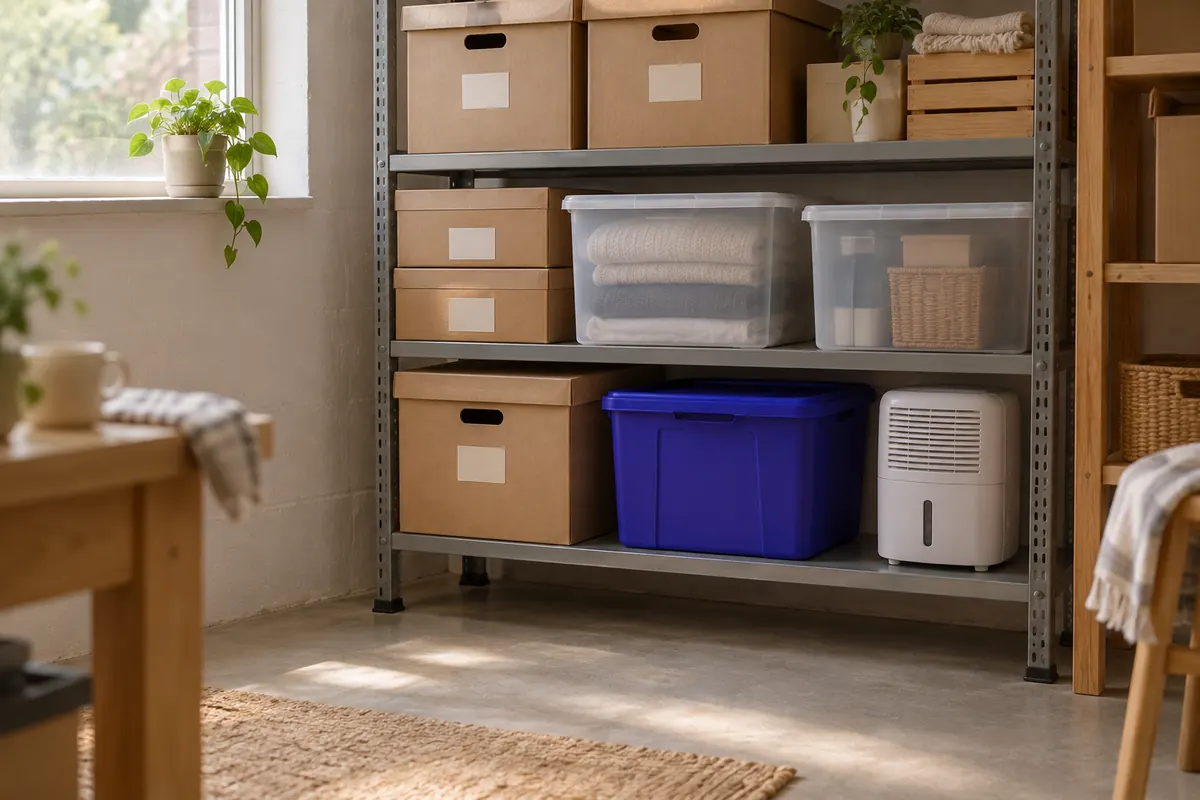
The EPA's guidance on mold is to keep indoor relative humidity below 60 percent, and ideally between 30 and 50 percent. In basements, it suggests running a dehumidifier when needed to hold humidity in that range. A simple humidity meter from a hardware store tells you where you stand, and it's worth checking in different seasons, since the reading changes with the weather.
If a box does get wet, speed matters. The EPA says that if damp materials are dried within 24 to 48 hours after a leak or spill, in most cases mold won't grow. Take a wet box upstairs, unpack it, and dry the contents in a warm, airy room. The box itself is usually done; cardboard that's been soaked rarely holds its shape again.
Get the boxes off the floor and away from the walls
University of Minnesota Extension advises storing boxes, bags, books and papers off the floor to limit their exposure to dampness. Its guidance on cockroaches adds a second reason: keep stored boxes off the floor and away from walls, with some space between them.
In practice:
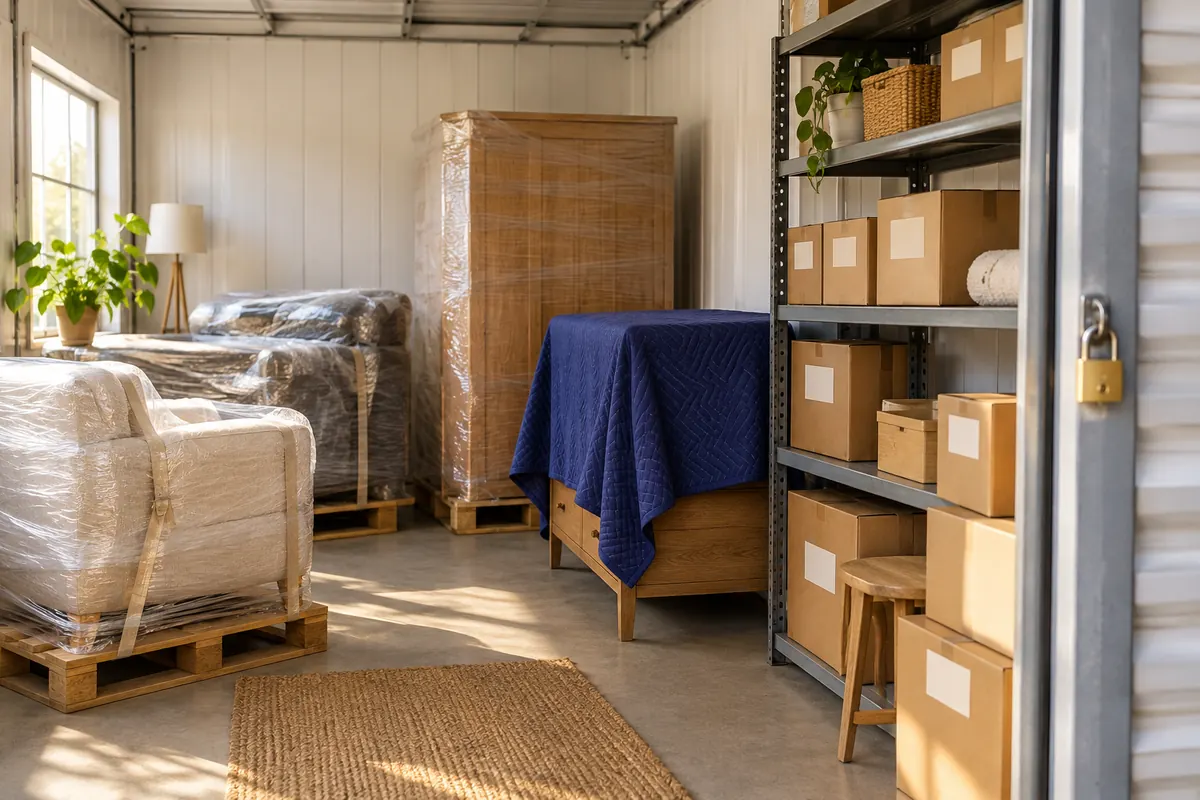
- Put boxes on metal or plastic shelving, or at least on pallets or a few lengths of lumber, so air can move underneath.
- Leave a gap between the shelving and the outside walls.
- Keep the heaviest, sturdiest boxes on the lowest shelf and the lightest on top.
- Don't stack anything directly under pipes, a water heater or a washing machine.
- Clear a path so you can see the floor around the shelves and spot water early.
Our guide to garage organization ideas has more on shelving and zones.
Cardboard or plastic bins?
Plastic bins keep out a puddle or a drip far better than cardboard does, which is why they're the usual choice for basements and garages. But they're not a cure for damp air. The Library of Congress says plastic bags and bins protect against water damage but not against the swings in temperature and humidity in basements, attics and garages, and that a plastic container in an area of high humidity increases the risk of mold.
So the bin helps most when the space is already kept reasonably dry. In a basement that's damp all summer, a bin of clothes or papers can still come out musty.
| Item | Basement or garage OK? | Notes |
|---|---|---|
| Holiday decorations in plastic bins | ✓ | Off the floor, in a dry space |
| Tools, sports gear, camping gear | ✓ | Watch for rust if it's damp |
| Cardboard boxes on bare concrete | ✗ | They soak up moisture from below |
| Family papers and photos | ✗ | The National Archives says keep them out of damp basements and garages |
| Books you want to keep | ✗ | The Library of Congress calls basements a poor choice for books |
| Anything irreplaceable | ✗ | Store it on an upper floor |
The National Archives puts a number on it for papers and photographs: keep relative humidity below 65 percent to prevent mold, and keep them out of damp basements, garages and hot attics. If you're deciding whether some of these things need a climate-controlled storage unit, our post on climate-controlled storage goes through what really needs it.
Flood insurance and the basement
This catches a lot of people out. Under the National Flood Insurance Program, coverage in a basement is limited. FEMA's basement fact sheet says that personal property in a basement that isn't on its list of named items isn't covered, and that even covered items such as washers, dryers and freezers aren't covered if they're only stored there and not connected to power. The NFIP counts any area with a floor below ground level on all sides as a basement.
FEMA's advice for protecting belongings from flooding is to keep valuables and important documents on an upper floor, in waterproof or water-resistant containers, and to keep copies of important papers somewhere else. Check your own policy, homeowners and flood, for what it says about basement contents.

Know what's down there without unstacking it
The less you have to move boxes around, the less often they get set down on the wet floor, crushed at the bottom of a pile, or left open. And when something does go wrong, a list of what was in each box is what you'll want for the clean-up and any claim.
BoxTrack keeps that list. Make a box in the app, snap a photo of what goes in, and AI lists the items for you to check, with an estimated value. Print a QR label for each box or bin, and scan it later to see what's inside without opening it, or search "extension cords" and find the box and where it's kept. See how BoxTrack works for storage. Your first box is free. Our guide to QR code storage bins covers setting up labels for the garage.
A quick seasonal check
Twice a year, maybe when the clocks change, take ten minutes in the basement and garage:
- Read the humidity meter and empty or service the dehumidifier.
- Look at the floor under and behind the shelves for damp spots.
- Press the bottom corners of the lowest boxes. Soft means move it up or swap it for a bin.
- Sniff. A musty smell usually turns up before visible mold does.
This is general information, not insurance advice. Your flood and homeowners policies decide what's covered in a basement, so check them or ask your agent.
Sources
- EPA, A brief guide to mold, moisture and your home
- EPA, Mold course chapter 2
- EPA, Biological pollutants' impact on indoor air quality
- University of Minnesota Extension, Psocids (barklice, booklice)
- University of Minnesota Extension, Cockroaches
- Library of Congress, Books FAQ
- Library of Congress, Storing your books
- National Archives, How to preserve family archives
- FEMA, NFIP basement flooding fact sheet
- FEMA, Protect your property from storm surge