Self-storage vs portable containers: which fits?
How a storage unit compares with a portable moving container for size, access, permits and insurance, and which one fits your move.
 The BoxTrack team · · 5 min read
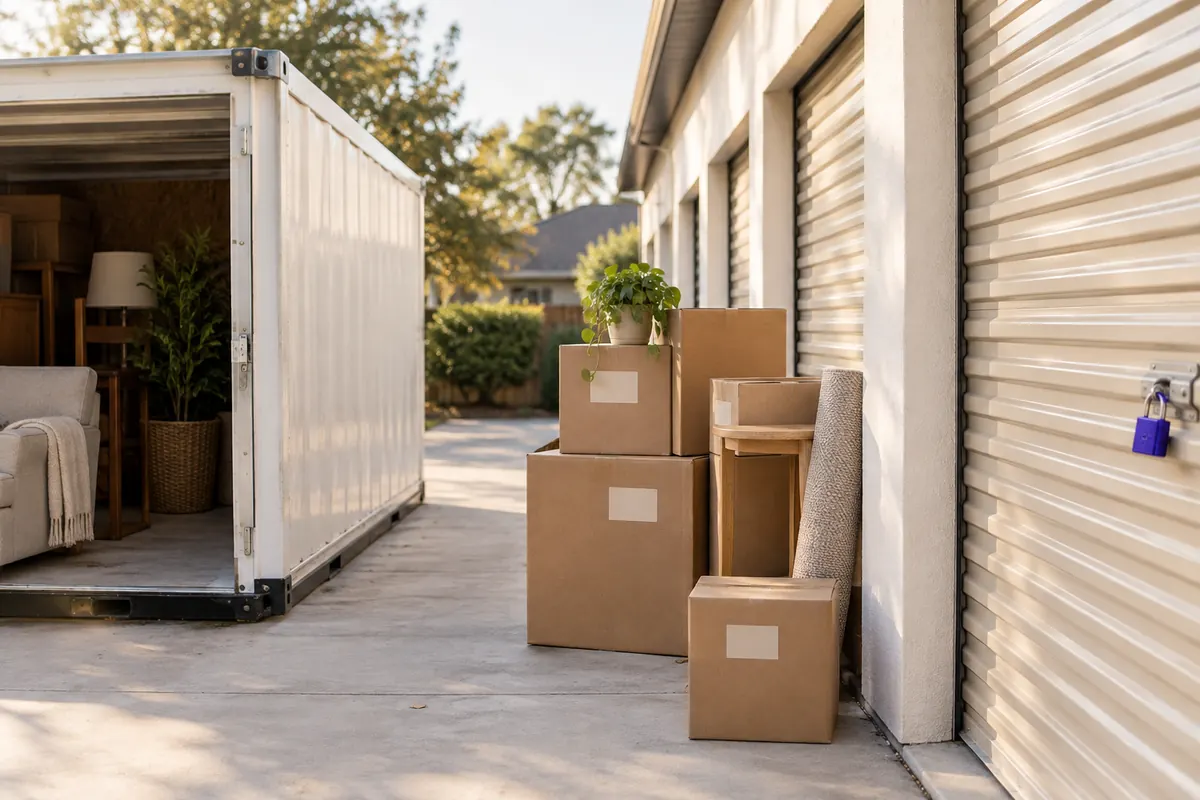
The house sold faster than the next one closed. That left six weeks, a three-bedroom house of furniture and nowhere to put it. One quote was for a 10x15 storage unit across town. The other was for a container dropped in the driveway, loaded at their own pace, then hauled away to a warehouse.
Both work. They just work differently, and the right one depends on how often you'll need to get into your things and where the stuff needs to end up.
How each one works
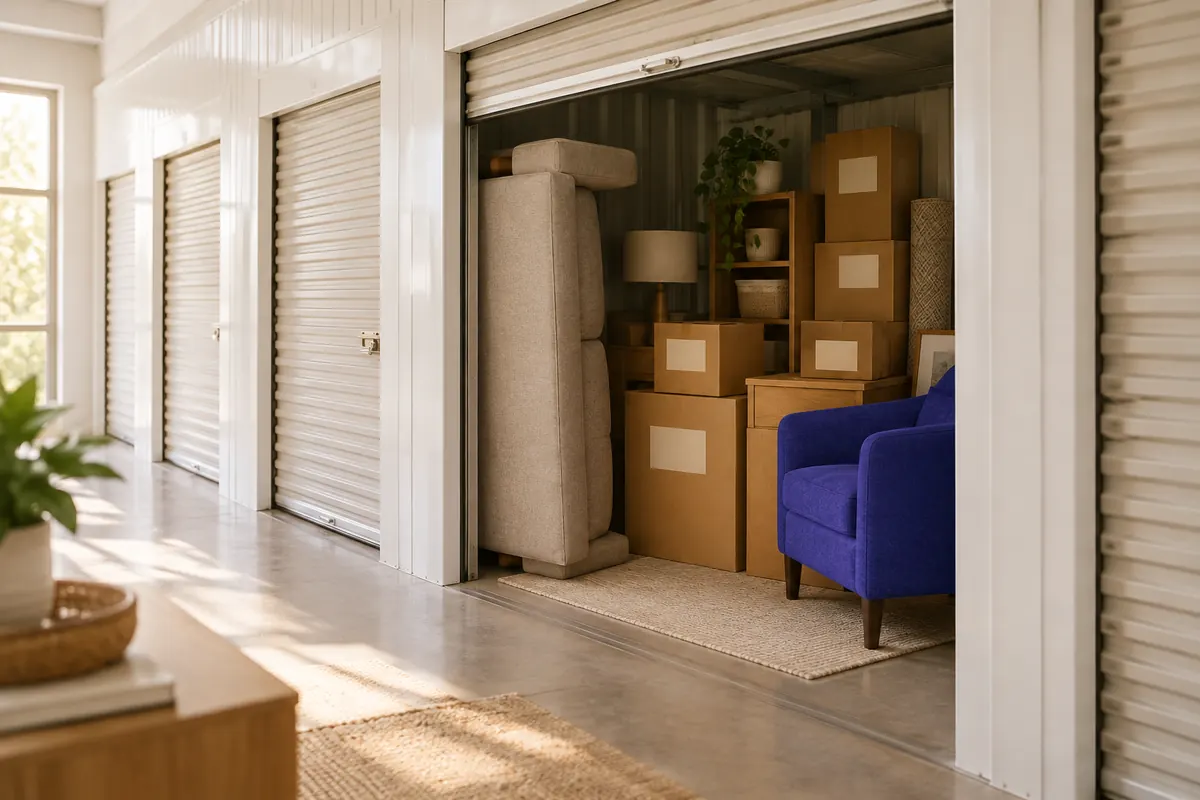
Self-storage. You rent a unit at a facility, load a truck, drive your things there and unload. You hold the key and can visit during access hours. When you're done, you load it all back into a truck.
A portable container. The company drops a container at your home. You pack and load it yourself, often over several days. Then it's either kept at your place, taken to the company's warehouse, or shipped to your new home, where you unload it.
The big difference is how many times your stuff gets handled. With a unit, it's loaded into a truck, unloaded at the unit, loaded again, and unloaded at the new home. With a container that goes straight to the new home, you load it once and unload it once.
Size: what fits where
Container companies publish their sizes. PODS lists three: 8, 12 and 16 feet long. It says the 8-foot holds up to about 500 square feet of living space, the 12-foot up to 800, and the 16-foot up to 1,200, and that the 16-foot is its standard size for long-distance moves. U-Haul's U-Box is about 8 by 5 by 7.5 feet on the outside, with a 2,000-pound weight limit, and U-Haul says one holds about a room and a half of household goods.
Storage units come in more sizes. Public Storage says a 10x10 can hold the contents of an entire living area or two bedrooms, and Extra Space says a 10x30 can hold a four- to five-bedroom home. Our storage unit size guide goes through each size.
Sizes to plan with
Side by side
| Self-storage unit | Portable container | |
|---|---|---|
| Pack at your own pace at home | ✗ | ✓ |
| Drive a truck yourself | ✓ | ✗ |
| Visit your things anytime | ✓ | ✗ |
| Needs a spot at your home | ✗ | ✓ |
| Can go straight to the new home | ✗ | ✓ |
| Many size choices | ✓ | ✗ |
Access is the trade-off people regret most. With a unit, you can drive over on a Saturday and grab the winter coats. A container kept at the company's warehouse usually needs an appointment, and it may not be close by. Check how access works before you book.
Where the container sits, and permits
A container needs room. PODS says the delivery truck needs a clear space 12 feet wide, 15 feet high and 40 feet long, so look for low wires and overhanging trees.
If it has to go on the street, check with your city first. Many cities require a right-of-way permit before a container is placed on a public street. Seattle requires a Street Use permit, for example, and Wauwatosa, Wisconsin, says the permit has to be in hand before the container is set down. Some places limit how long it can stay, and some don't allow it on the street at all. HOAs often have their own rules for driveways, too.
Insurance and security
Don't assume your things are fully covered in either place. The Insurance Information Institute says many homeowners and renters policies cover belongings kept off premises, such as in a storage unit, against listed perils like fire and theft, but some insurers limit that to 10 percent of the policy's personal property amount. Flood, mold and vermin damage are generally not covered. Ask your insurer:
- Does my policy cover things in a storage unit, and up to what amount?
- Does it cover a container in transit, or at the company's warehouse?
- Is the coverage replacement cost or actual cash value?
Storage facilities and container companies often sell their own protection plans. Read what they cover before you buy one or turn it down. Use a strong lock either way, and keep valuables, documents and anything irreplaceable with you, not in storage. Our list of what not to put in a storage unit applies to containers too.
Which one fits your move?
A storage unit tends to fit when:
- You'll need to get into your things during the gap
- You're storing for many months
- You have no driveway or the city won't allow a container
A portable container tends to fit when:
- You want to pack slowly at home, without renting a truck
- Your things are going to the new home anyway
- You'd rather load once and unload once
Booking either one
- Four weeks outMeasure your things; get quotes for both
- Three weeks outCheck permits, HOA rules and insurance
- Two weeks outBook; buy locks and supplies
- Packing weekNumber boxes; heavy items low, by the walls
- Load dayPhotograph the inside before it's closed
- LaterCheck the list before you visit or schedule delivery
Know what's in there without opening it
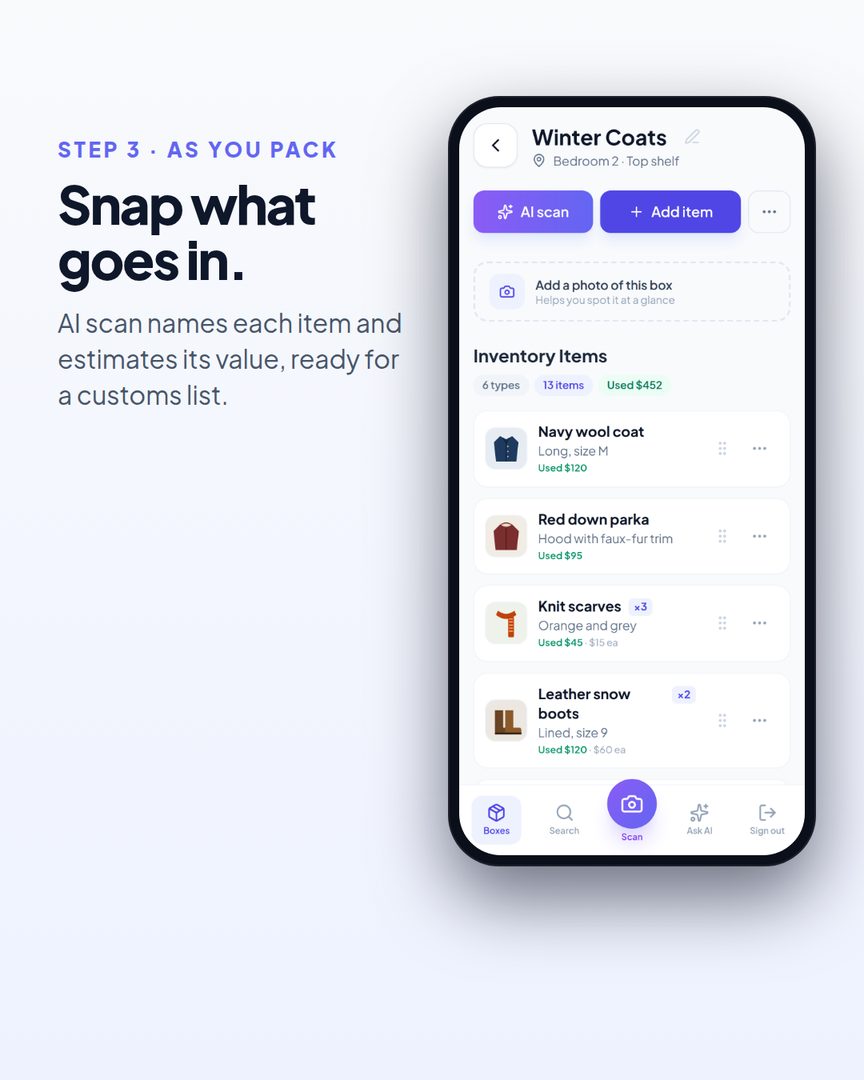
Whether it's a unit across town or a container in a warehouse, the hardest part is remembering which box has what. BoxTrack keeps the list. Make a box in the app for each carton, snap a photo of what goes in, and AI lists the items for you to check. Print a QR label for each box. When you need the tax folder, search for it on your phone and see which box it's in before you make the trip. See how BoxTrack works for storage. Your first box is free.
Sources
- PODS, Portable container sizes
- U-Haul, U-Box dimensions
- U-Haul, How many U-Box containers do I need?
- Public Storage, Self-storage unit size guide
- Extra Space Storage, Storage unit size guide
- Seattle Department of Transportation, Storage container and residential dumpster permits
- City of Wauwatosa, Storage in the right-of-way permit
- Insurance Information Institute, Self-storage facility coverage and tips
This is general information, not insurance advice. Permits, policies and company terms change, so check with your city, your insurer and the company before you book.