Storage unit size guide: 5x10, 10x10, 10x20 and more
What fits in a 5x10, 10x10, 10x15 and 10x20 storage unit, how to measure what you have, and how to avoid paying for space you don't use.
 The BoxTrack team · · 5 min read
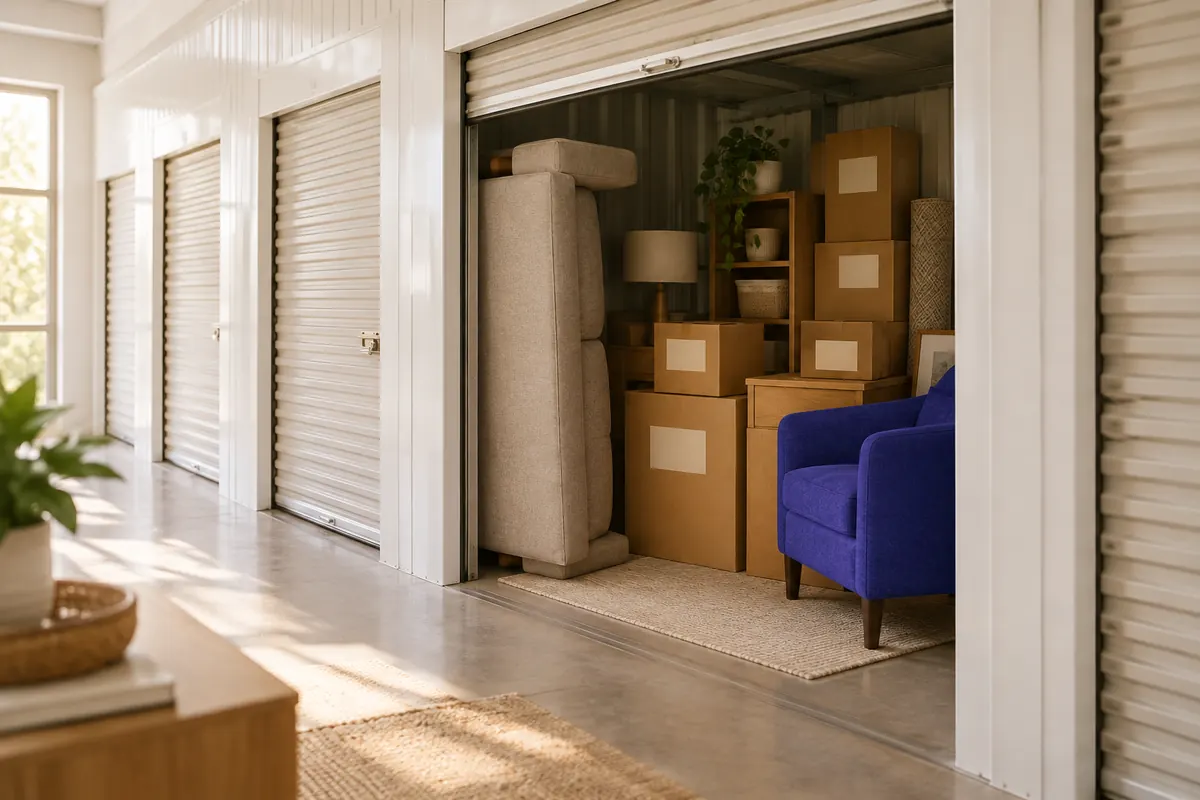
The online booking page offered a 5x10, a 10x10 and a 10x15, all at the same facility, all "available today." The apartment was a one-bedroom with a queen bed, a sectional and about 40 boxes. The 5x10 was cheapest. On moving day the sectional went in, the bed frame went in, and 15 boxes sat in the hallway with nowhere to go.
Storage unit sizes are written as width by depth in feet, and the numbers don't mean much until you picture them. Here's what each common size holds, according to the companies that rent them, and how to pick one without guessing.
The sizes at a glance
The descriptions below come from the size guides of Public Storage, Extra Space Storage and CubeSmart, three of the largest US operators. They broadly agree, but they're estimates. A room full of books fills a unit faster than a room full of lamps.
| Size | Floor space | Roughly like | What the operators say it holds |
|---|---|---|---|
| 5x5 | 25 sq ft | A large closet | Boxes, seasonal things, a small chair or desk |
| 5x10 | 50 sq ft | A walk-in closet | One room, such as a mid-sized bedroom, or a studio |
| 10x10 | 100 sq ft | A bedroom | Two bedrooms or a large living area |
| 10x15 | 150 sq ft | One and a half 10x10s | A two-bedroom home |
| 10x20 | 200 sq ft | A one-car garage | A three-bedroom home, or a car |
| 10x30 | 300 sq ft | Three 10x10s in a row | A larger house, or a car plus more |
CubeSmart's guide lists its units at 8 feet tall, which gives a 5x10 about 400 cubic feet and a 10x20 about 1,600. Heights vary by facility, so ask. A unit with a taller ceiling holds noticeably more if you stack well.
5x10: one room, or a studio
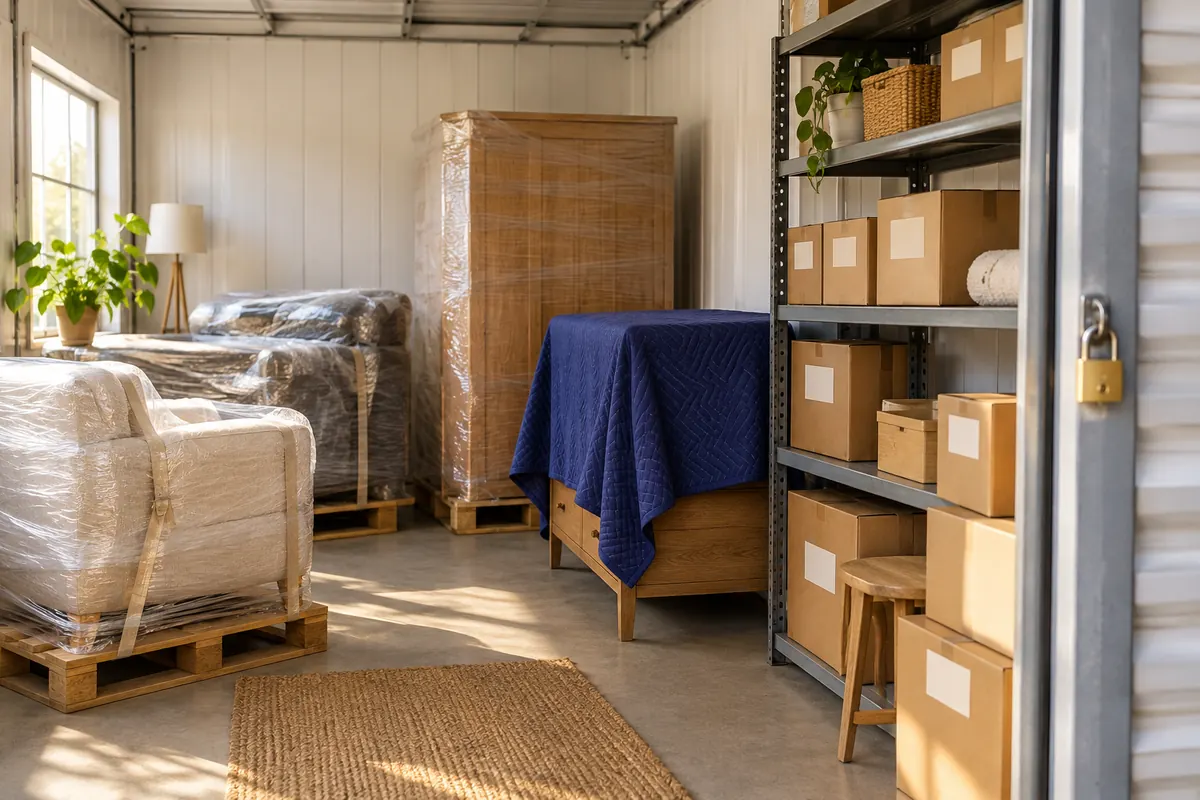
Public Storage describes a 5x10 as holding the contents of one mid-sized bedroom, boxes included. Extra Space says a queen mattress fits, and that a standard motorcycle does too, but cars and SUVs don't.
It's a long, narrow space, about the width of a hallway. That's fine for boxes and a bed, and awkward for a sectional or a dining table with legs that won't come off. With only five feet of width, anything longer than that has to go in lengthwise or stand on end.
10x10: the size most people rent
A 10x10 is about the size of an average bedroom. Public Storage says it holds an entire living area or two bedrooms. Extra Space says it fits two full bedrooms or a large family room, including a king bedroom set, and up to about 100 medium moving boxes if there's no furniture. Furniture cuts that number fast.
It won't fit a car. Extra Space says a full-size car can't go in a 10x10, though motorcycles, ATVs and jet skis can.
10x15: a two-bedroom home
Public Storage puts a two-bedroom home in a 10x15. This is the size for a family that's between houses with most of the furniture, or a one-bedroom apartment with a lot of extras: a home office, bikes, a patio set.
10x20: a house, or a car
A 10x20 is about the size of a one-car garage. Public Storage and Extra Space both point to it for the contents of a three-bedroom home. CubeSmart says most standard cars and sedans fit in one, and that trucks and SUVs may need a 10x25.
Check the door as well as the floor. Measure your car or your largest furniture against the door's width and height, not just the unit's.
10x30: the biggest common size
CubeSmart says a 10x30 is roughly 2,400 cubic feet and suits a four- or five-bedroom house, or a lot from a garage, basement and attic. It also leaves room for a car plus another bedroom's worth of things.
How the common sizes compare
How to pick the right size
List what's going in. Count the boxes and write down every piece of furniture, with rough dimensions for the big ones: the couch, the bed, the dresser, the dining table. Our free storage unit inventory list gives you a place to write it all, and the free storage unit size calculator suggests a size from what you tell it is going in.
Measure the awkward pieces. A sectional, a long dining table or a tall bookcase decides the size more than the box count does. If it won't fit through the door or across the width, the unit is too small no matter what the square footage says.
Plan to stack. Furniture on end and boxes stacked to the ceiling can shrink the size you need. A couch stood on end, a mattress against the wall and boxes in columns of the same size use the height you're paying for. Heavy boxes on the bottom, light ones on top.
Leave an aisle if you'll visit. If you'll need things out of the unit while it's rented, a walkway down the middle is worth the extra space. If it's a sealed-up wait between homes, you can pack it tight.
Ask about climate control. Wood furniture, photos, electronics and instruments do better in a unit that doesn't bake in summer or freeze in winter. Our guide to climate-controlled storage explains what needs it.
When you're between two sizes, the larger one is usually the safer bet. Moving to a bigger unit halfway through means unloading and reloading everything.

Know what's at the back
The tighter you pack a unit, the harder it is to find anything. Six months later, the box you need is always behind the couch.
BoxTrack keeps a list of every box. Make a box in the app for each carton, snap a photo of what goes in, and AI lists the items. Print a QR label for each one, and scan it in the aisle to see what's inside, or search "winter coats" from home to see which box they're in. See how BoxTrack works for storage units. Your first box is free.
For how to load the unit once you've picked a size, see how to organize a storage unit, and check what not to put in a storage unit before packing.
Sources
- Public Storage, Self-storage unit size guide
- Extra Space Storage, Storage unit size guide
- Extra Space Storage, 5x10 vs 10x10 storage units
- CubeSmart, Storage unit size guide
- CubeSmart, 10x20 storage units
- CubeSmart, 10x30 storage units