Long-term storage while you live abroad
How to keep a storage unit in the US while you live overseas, from payment and lien notices to insurance, packing for years and who can get in.
 The BoxTrack team · · 5 min read
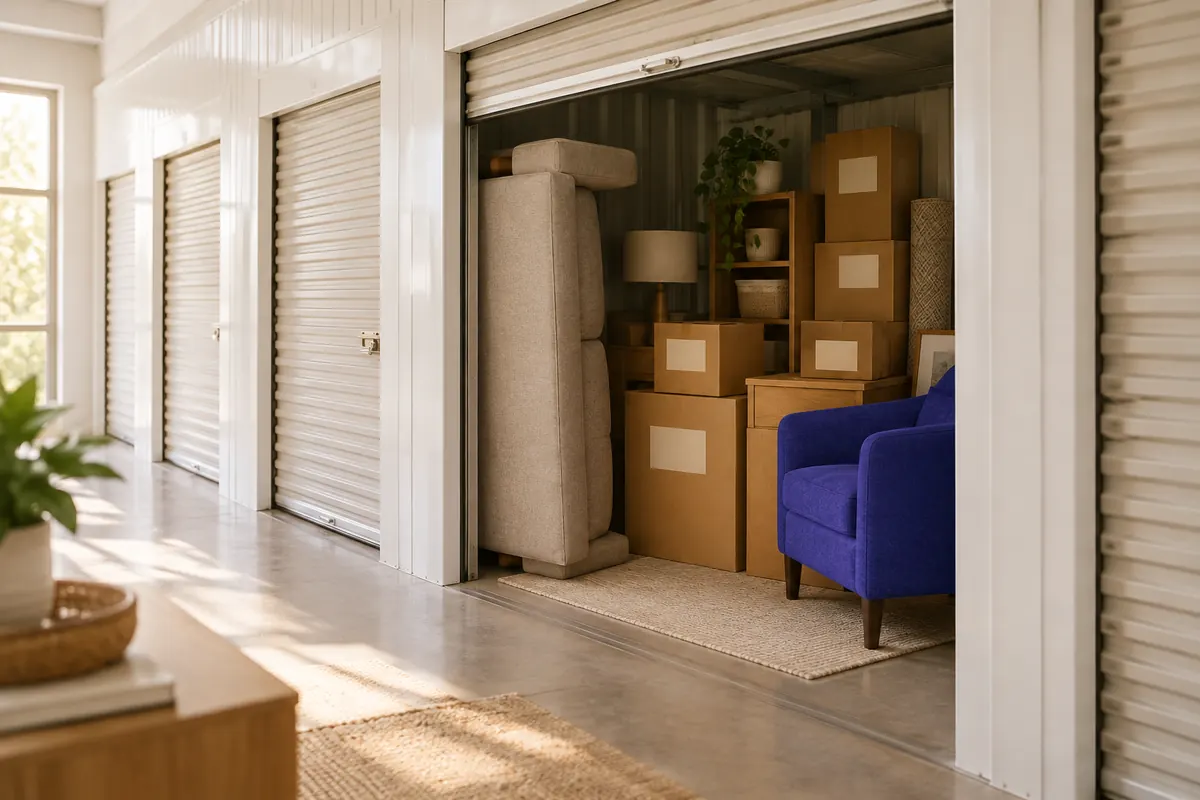
The job in Singapore was for three years, maybe four. Shipping a houseful of furniture there and back made no sense, and selling the dining table that had been in the family since the 1970s wasn't going to happen. So it went into a 10x15 unit outside Denver, along with 40 boxes, two bikes and the winter gear.
Eighteen months later, the card on file expired. The renewal went to a US address nobody checked anymore.
A storage unit is easy to rent and easy to forget, and living on another continent makes both of those more true. Most of what goes wrong is about paperwork, not the boxes. Here's how to set it up so it's all still there when you get back.
Keep the rent paid, no matter what
A storage facility can sell what's in your unit if the rent goes unpaid long enough. The rules come from state self-storage lien laws, and they vary. In North Carolina, under G.S. 44A-43, the owner can start enforcing the lien once rent has gone unpaid for 15 days. In California, the rental agreement has to warn that the contents can be sold if rent stays unpaid for 14 consecutive days.
Before you leave:
- Set up autopay, and use a card that won't expire while you're away. If you can, add a second card as a backup.
- Ask whether the facility gives a discount for paying a year or more up front.
- Put a calendar reminder for each card's expiry date, a month ahead.
Make sure the notices reach you
Lien laws require the facility to send notices before a sale, but those notices go where the rental agreement says. If that's a US mailbox nobody opens, the warning doesn't help you.
- Update your contact details to an email you check abroad and a phone number that works overseas, or a messaging app the facility uses.
- Name an alternate contact. California's B&P Code 21712 requires the rental agreement to ask for one, and lien notices go to both. Other states and facilities may offer the same. Pick a friend or family member in the US who'll answer.
- Read how they send notices. Some agreements let notices go by email. Find out which address they'll use, and whitelist it.
Numbers to plan around
If you're a servicemember, the Servicemembers Civil Relief Act adds a layer. Under 50 U.S.C. 3958, a storage lien on a servicemember's property can't be enforced during military service, or for 90 days after, without a court order. The Justice Department has sued storage and towing companies that sold property without one. That protects you, but it's still better if it never gets that far.
Insure it properly
Your homeowners or renters policy may cover things in storage, but usually for less. Amica's guide to storage units says off-premises coverage is commonly capped at 10 percent of your personal property limit, and that causes like flood, mold and rodents are generally not covered. Your declarations page has your real number.
The catch for people moving abroad is that the home policy may go away with the home. If you sell or rent out your house, or end your lease, ask your insurer what happens to coverage for the things in storage. Your options are usually a stand-alone policy for stored goods or the facility's own protection plan. The Triple-I suggests checking what a facility plan covers and what it excludes before you rely on it.
Whichever you choose, you'll need a list of what's there, with values and photos, to make a claim from abroad.
Pack for years, not months
A unit you won't open for three years needs a little more care than one you'll visit next month.
- Choose climate control if you're storing wood furniture, electronics, photos, paper, instruments or anything leather. Our guide to climate-controlled storage covers when it's worth it.
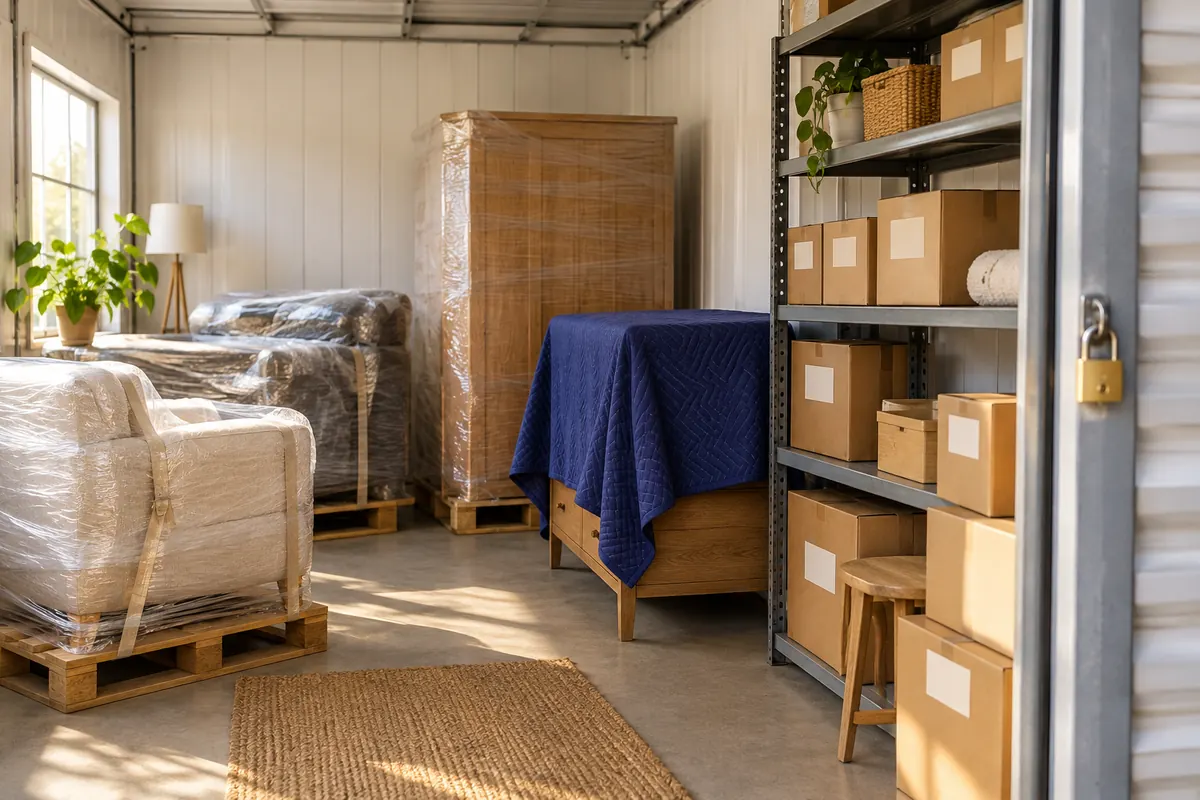
- Get things off the floor on pallets or shelving.
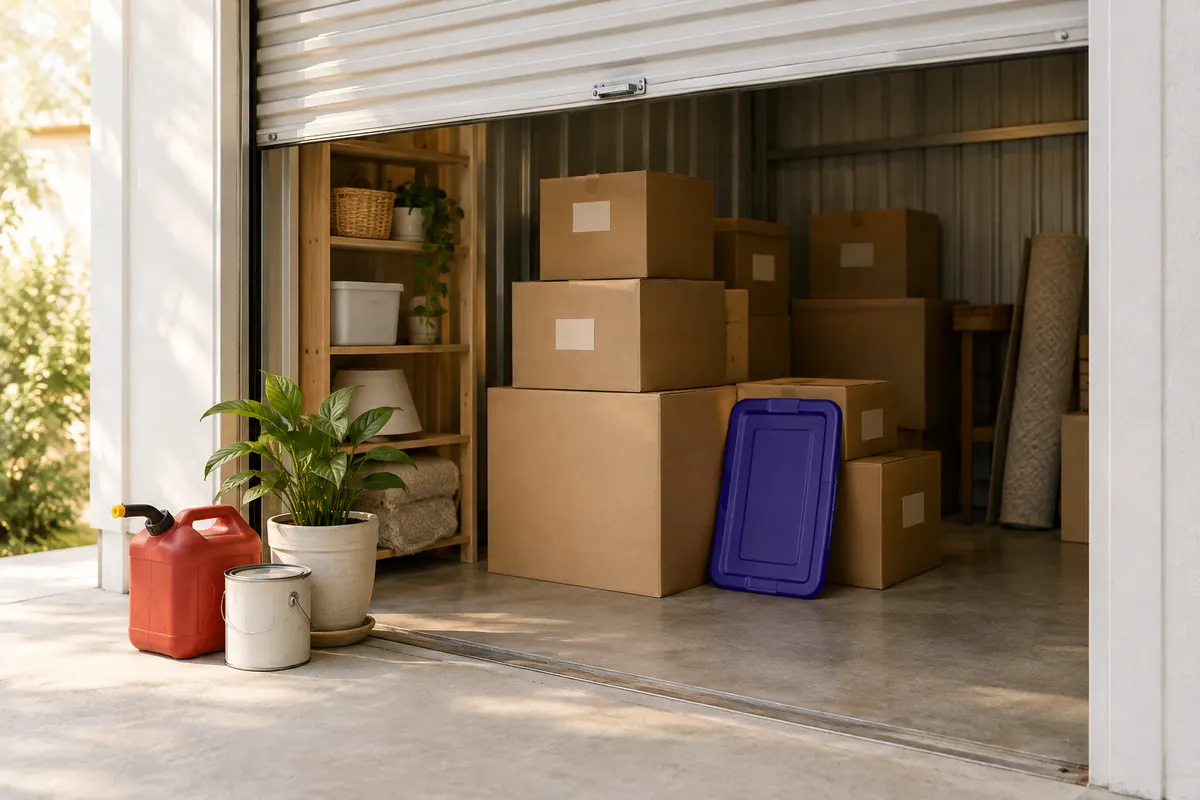
- Leave out anything that spoils, burns or attracts pests. Food, plants, fuel and chemicals don't belong in a unit. See what not to put in a storage unit.
- Clean and dry everything before it goes in, especially appliances, tents and outdoor gear.
| Store it | Take it | Leave it with family | |
|---|---|---|---|
| Furniture you'll want back | ✓ | ✗ | ✗ |
| Passports, titles, tax records | ✗ | ✓ | ✗ |
| Jewelry and small valuables | ✗ | ✓ | ✓ |
| Seasonal clothes and gear | ✓ | ✗ | ✗ |
| Photos and papers | ✓ | ✗ | ✓ |
Decide who can get in
Sooner or later someone will need to open the unit for you: to fetch a document, check on a leak, or ship you a box. Ask the facility how to add an authorized person to your account, and do it before you leave. Give that person a key or the lock code, and tell the facility in writing.
Then make it easy for them. A friend who has to dig through 40 unmarked boxes for your kid's birth certificate will do it once.
Before you leave the country
- Two months outPick the unit size and decide on climate control
- One month outCheck insurance; set up autopay with a long-dated card
- Two weeks outAdd your overseas email and an alternate contact
- Packing weekPack, list and photograph every box; add an authorized person
- Once a yearCheck the card, the contacts and the bill
Know what's in every box from 8,000 miles away
When you're abroad, the list of what's in storage is the only way to see it.
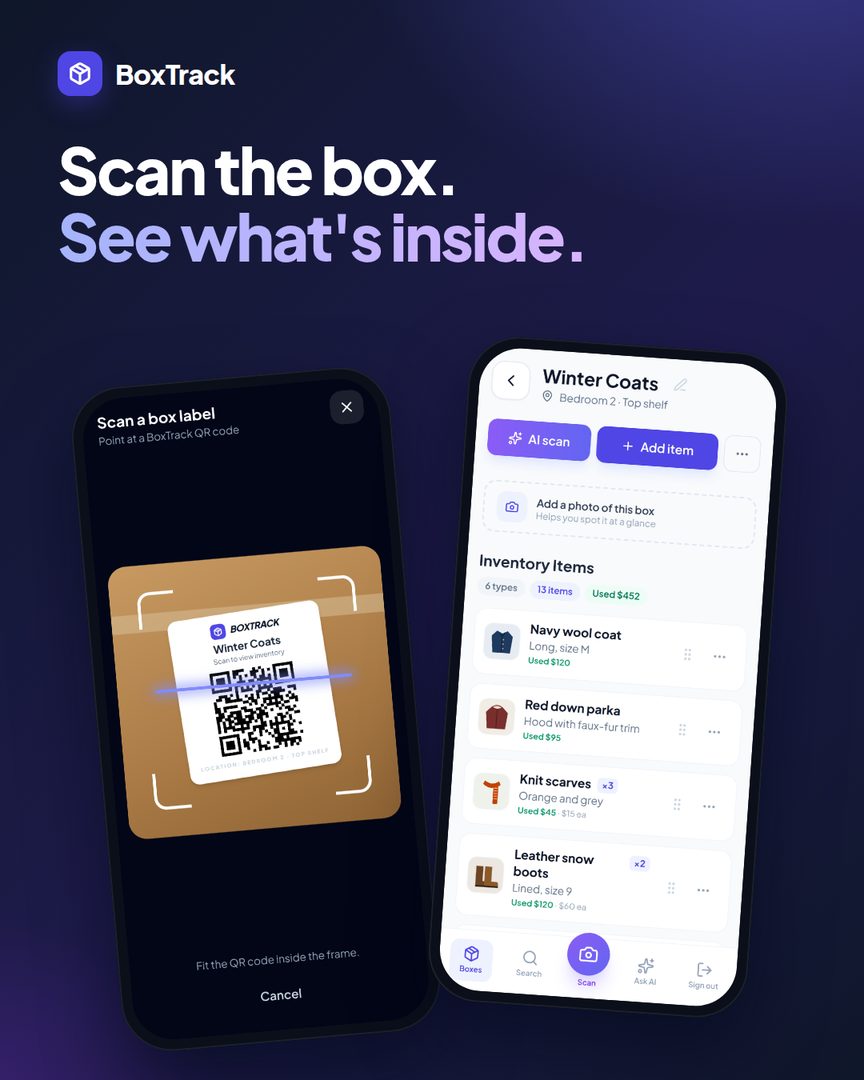
BoxTrack keeps that list. Make a box in the app for each carton, snap a photo of what goes in, and AI lists the items with an estimated value for you to check. Print a QR label for each box. From abroad, search "tax returns 2024" to find which box they're in, then share that box with the friend who has the key so they know which one to open. See how BoxTrack works for storage. Your first box is free.
If you're still choosing a unit, our storage unit size guide helps.
Sources
- North Carolina General Assembly, G.S. 44A-43: Enforcement of lien
- California Business and Professions Code, Section 21712
- U.S. Department of Justice, Know your rights: the Servicemembers Civil Relief Act
- Amica, Does home insurance cover storage units?
- Triple-I, Self-storage facility coverage and tips
This is general information, not legal or insurance advice. Lien laws differ by state and change, and so do insurance policies. Read your rental agreement and your policy, or ask a lawyer or your insurer, before you rely on them.