Garage organization ideas: zones, clear bins and labels
Garage organization ideas that last past the first weekend: zones, the right bins, storage bin labels that say what's inside, and what to move out.
 The BoxTrack team · · 5 min read
You pull in, and the car door stops four inches short of the bike. The lawn mower lives in front of the shelves, so getting the cooler means moving the mower, which means moving the recycling. Every garage starts with good intentions and ends up as a stack of whatever came home last.
The good news is that a garage is easier to fix than a closet. It's one big room with walls you can use, and most of what's in it falls into a handful of groups. These garage organization ideas go in a simple order: sort, set up zones, pick bins, then label so it stays that way.
Start by emptying one wall, not the whole garage
Pulling everything onto the driveway looks dramatic in videos. In real life it rains, or it gets dark, and half of it goes back in the wrong place. Clear one wall or one shelving unit at a time.
As each thing comes out, it goes in one of four piles: keep, sell, donate or toss. If the sell pile gets big, our free garage sale pricing guide helps you put prices on it without overthinking each one.
Set up zones
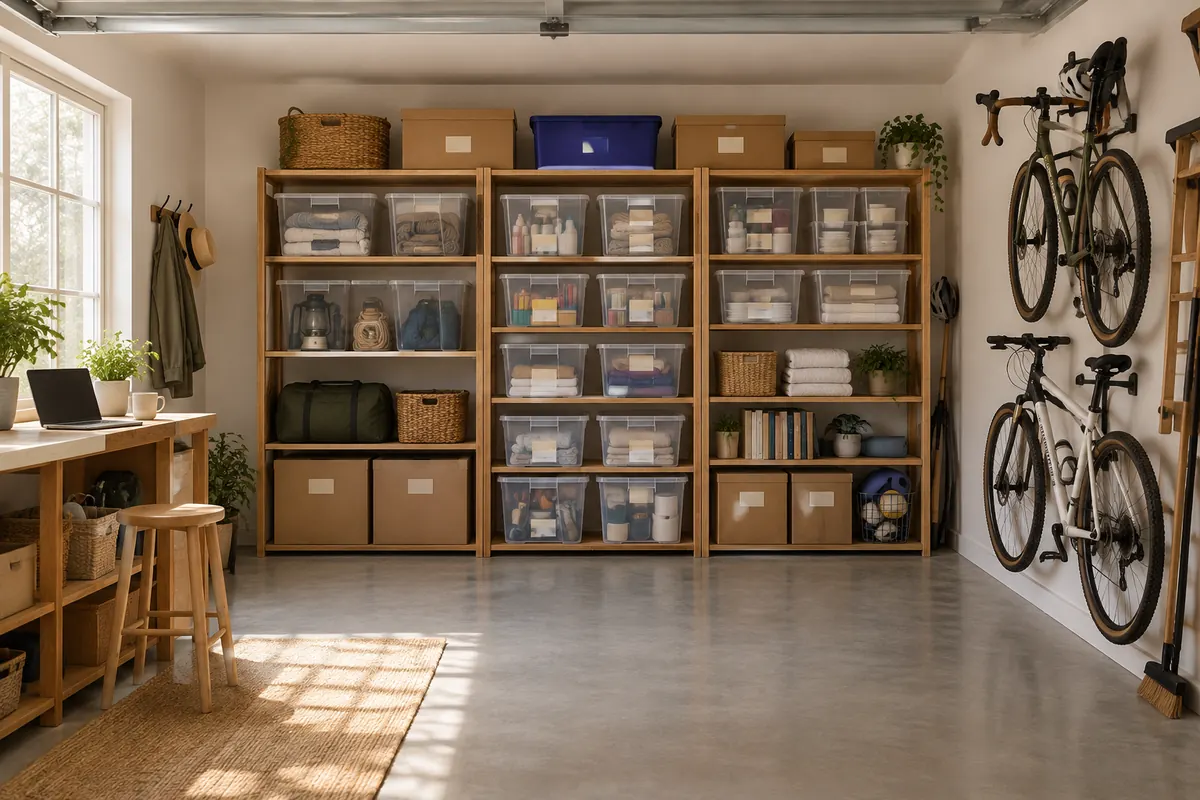
A zone is just a part of the garage that holds one kind of thing. Put each zone where you'll use it, and keep the things you use most at the front.
| Zone | Where it goes | Height |
|---|---|---|
| Everyday: shoes, bags, dog leash, recycling | Next to the door into the house | Waist level |
| Car and outdoor: washer fluid, ice scrapers, sports gear | Near the car door or garage door | Waist to shoulder |
| Garden and yard: hoses, tools, fertilizer | Near the garage door | Wall hooks and low shelves |
| Workshop: tools, hardware, paint | One end, with a bench if you have one | Pegboard and drawers |
| Seasonal: holiday decorations, camping gear | Back wall or overhead racks | High shelves |
| Long-term: keepsakes, kids' baby clothes, tax papers | Furthest from the door | Top shelf, sealed bins |
Two rules make zones work. Heavy things go low, so nobody is lifting a full bin of tools over their head. And floor space is for things with wheels, like the car, bikes and the mower. Everything else goes on a shelf, a hook or a wall.
Pick bins you can see into
Most garage storage ends up in bins, and the kind you pick matters more than people expect.
| Clear plastic bin | Solid plastic bin | Cardboard box | |
|---|---|---|---|
| See what's inside without opening it | ✓ | ✗ | ✗ |
| Holds up to damp and spills | ✓ | ✓ | ✗ |
| Stacks without crushing | ✓ | ✓ | ✗ |
| Keeps light off photos and fabrics | ✗ | ✓ | ✓ |
| Easy to get matching sizes | ✓ | ✓ | ✗ |
Clear bins are the default for anything you reach for. Use solid bins for keepsakes and anything that shouldn't sit in light. Cardboard is fine for a move, but in a garage it can soften in damp weather and crush under the next box. Buying one size in bulk makes stacking far easier than a mix of whatever was on sale.
Storage bin labels that say what's inside
A clear bin shows you the top layer. It doesn't show what's underneath, and once bins are stacked three high, you can't see into the bottom ones at all. That's what storage bin labels are for, and most labels are too vague to help. "Garage stuff" and "Misc" are the classic ones.
A label that works has three parts:
- A number. Bin 14 is easy to say, and easy to find on a list.
- A short word. "Camping" or "Xmas lights", big enough to read from across the garage.
- The full list. Written on the side, kept on paper, or held in a QR code your phone can scan.
Put the label on the end that faces out and on one long side, so it's visible however the bin is stacked. We go deeper into the QR version, and why a scuffed code still scans, in QR code storage bins. Our free QR storage labels print on regular sheets.

What shouldn't live in the garage
Organizing a garage is a good time to move out the things that don't belong there. Fire marshals and the EPA are clear on a few:
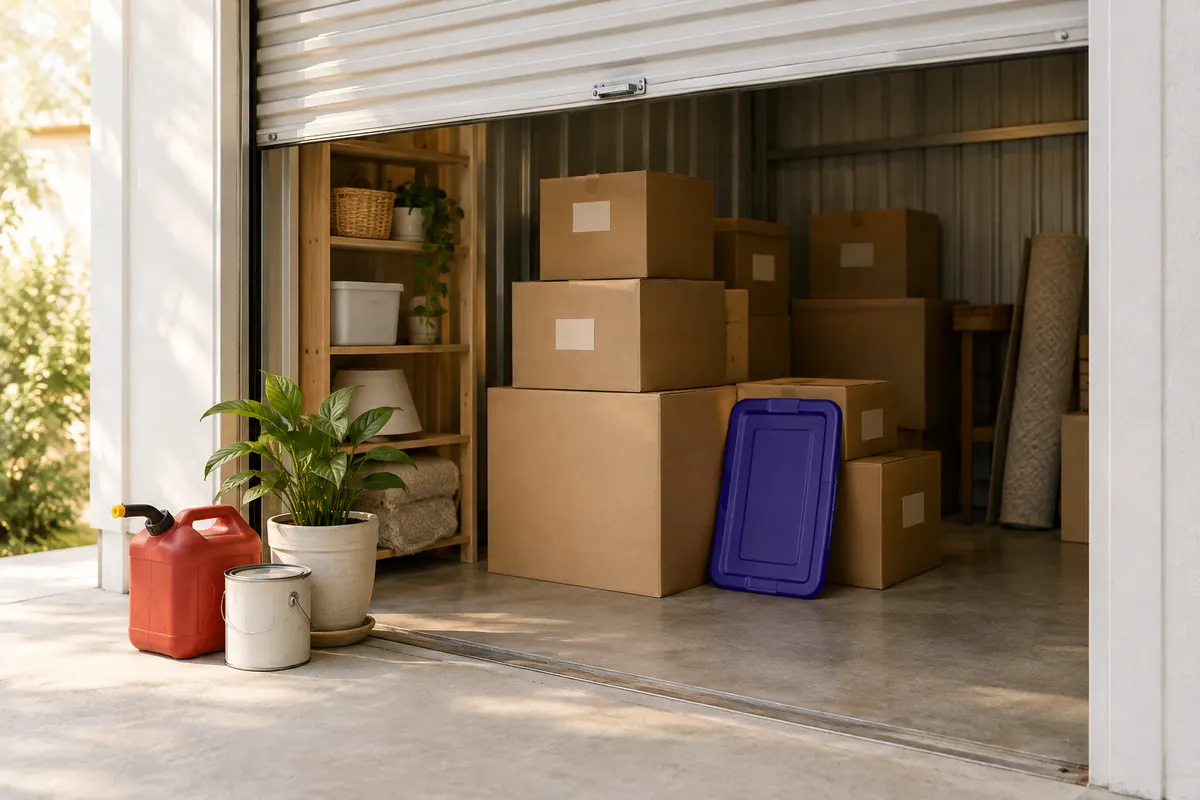
- Propane tanks. Fire marshal guidance says propane cylinders, full or empty, belong outdoors in a well-ventilated spot, never in the house, the basement or an attached garage. That includes the grill tank.
- Large amounts of gasoline. Keep fuel in an approved container, away from the water heater, furnace or anything else with a flame or spark. Local fire codes limit how much you can keep in an attached garage, so check yours. The same fire marshal's guidance, based on the International Fire Code, puts it at no more than 10 gallons in an attached garage.
- Chemicals in the wrong containers. The EPA's advice on household hazardous waste is to keep products in their original containers with the labels on, never in food or drink containers, and never to mix them. Keep them up high or locked away from children and pets.
- Things that hate heat and cold. Photos, papers, electronics and candles do better indoors. Our post on climate-controlled storage covers which belongings take temperature swings badly.
Leftover paint and chemicals you no longer need go to a household hazardous waste collection, not in the trash. Your city or county website lists the drop-off days.
Keeping it organized
How the garage stays sorted
- Every timePut things back in their zone, not on the nearest flat surface
- Every monthEmpty the drop zone by the door
- Each seasonSwap the seasonal bins forward and update their lists
- Once a yearPull one wall at a time and sort again
The yearly sort is faster when you already know what's in each bin. BoxTrack keeps that list for you: make a box for each bin, take a photo of what goes in, and AI lists the items. Print a QR label, and anyone in the house can scan a bin with their phone camera to see inside it without opening it. To find one thing, search for it, and you'll see which bin it's in and which shelf that bin is on. See how it works for storage. Your first box is free.
If you're still weighing whether to bring in help, how much a professional organizer costs walks through what you'd pay for and what you can do yourself.
Sources
- Commerce Township Fire Department (Michigan), From the Fire Marshal: propane and flammable liquids at home
- US EPA, Household hazardous waste
This is general information, not fire-safety or legal advice. Storage limits for fuel and propane depend on your local fire code; ask your fire department if you're unsure.