Studying abroad: what to pack and what to store
What to bring for a semester or year abroad, what to leave in storage at home, and the passport, medicine and battery rules worth checking first.
 The BoxTrack team · · 5 min read
Two weeks before her spring semester in Madrid, a junior stood in her dorm room with a twin-size comforter, a mini fridge, forty pounds of textbooks and two suitcases. The dorm had to be empty by Friday. Madrid was in January. Everything she owned had to either fit in those bags or go somewhere for five months, and her parents' basement was already full of her older brother's stuff.
Studying abroad is really two moves at once: a small one, with only what you can carry, and a bigger one into storage. Getting both right saves money and a lot of last-minute panic.
Start with the papers, not the packing
Before anything goes in a bag, check your documents. The State Department's study abroad site says your passport should be valid for at least six months and have two or more blank pages, or some countries may refuse entry. It also says to learn about visa requirements, local laws and customs where you're going.
If you need a student visa, the country's embassy or consulate decides what you need and how long it takes. Start early, and check the embassy's own site for the steps.
The State Department also suggests a few things that take ten minutes:
- Sign up for the Smart Traveler Enrollment Program (STEP), so you get updates about your destination and the embassy can reach you in an emergency.
- Make copies of your passport and visa. Leave one set with someone at home, keep another set apart from the originals, and photograph them on your phone.
- Make sure you have health insurance that works abroad, and get extra coverage if your US plan doesn't.
Before you pack, per the State Department
Medicine: original bottles and a letter
Prescriptions are where students get caught out. The State Department's travel checklist says some prescription and over-the-counter medicines are not legal in some countries, and suggests bringing copies of your prescriptions and medicine in labeled bottles.
The CDC's guidance for travelers says to keep medicines in their original, labeled containers, and suggests a letter from your doctor listing each medicine by its generic name, the dose and what it's for. Some medicines are allowed only in limited amounts, or need permission in advance. The CDC points to the U.S. embassy website for your destination for medicine-specific warnings, so check that before you go.
For the flight itself, the TSA says medically necessary liquids and medicines over 3.4 ounces are allowed in carry-on bags. TSA screens them separately, and recommends labeling medicine clearly.
What to pack
You'll be living with what fits in a suitcase or two, and you can buy most everyday things where you land. Pack for the climate and the length of your stay, not for every possible plan.
| Item | Pack it | Leave or store it |
|---|---|---|
| Passport, visa, copies, insurance card | ✓ In your carry-on | ✗ Never in checked bags |
| Prescription medicine and doctor's letter | ✓ In your carry-on, original bottles | ✗ Not in checked bags |
| Laptop, phone, chargers and power bank | ✓ Power banks in carry-on only | ✗ Spare batteries in checked bags |
| Clothes for the season | ✓ Enough for a week or two | ✗ Bulky winter gear you can buy there |
| Bedding, kitchen gear, small appliances | ✗ Usually cheaper to get there | ✓ Store at home |
| Textbooks and dorm furniture | ✗ Heavy and rarely needed | ✓ Store, sell or return |
Two rules from the TSA matter here. Carry-on liquids are limited to travel-size containers of 3.4 ounces (100 ml) or less, in one quart-size bag. And spare lithium batteries, including power banks and phone battery cases, must go in carry-on bags only.
What to store, and where
The other half of the move is everything you aren't taking. You have three usual options:
- Family's home. Free, if there's room. Pack it in labeled boxes so nobody has to guess what's in the basement.
- A storage unit. Worth it for furniture or a lot of boxes, especially if you're splitting a unit with a friend who's also abroad.
- Sell or donate it. Mini fridges, lamps and cheap furniture are often cheaper to rebuy than to store for a semester.
Read the rules before you store anything. Our guides to what not to put in a storage unit and storage unit insurance cover what's allowed and what's covered. If you'll be gone a year or more, long-term storage while living abroad goes deeper.
A semester abroad, step by step
- Three months outCheck passport dates; start the visa application
- Six weeks outSee your doctor; get prescriptions and a letter
- One month outDecide what to store, sell or bring
- Two weeks outEnroll in STEP; make copies of documents
- Move-out weekPack storage boxes and list what's in each
- Travel dayDocuments, medicine and power banks in your carry-on
Know what's in storage from five time zones away
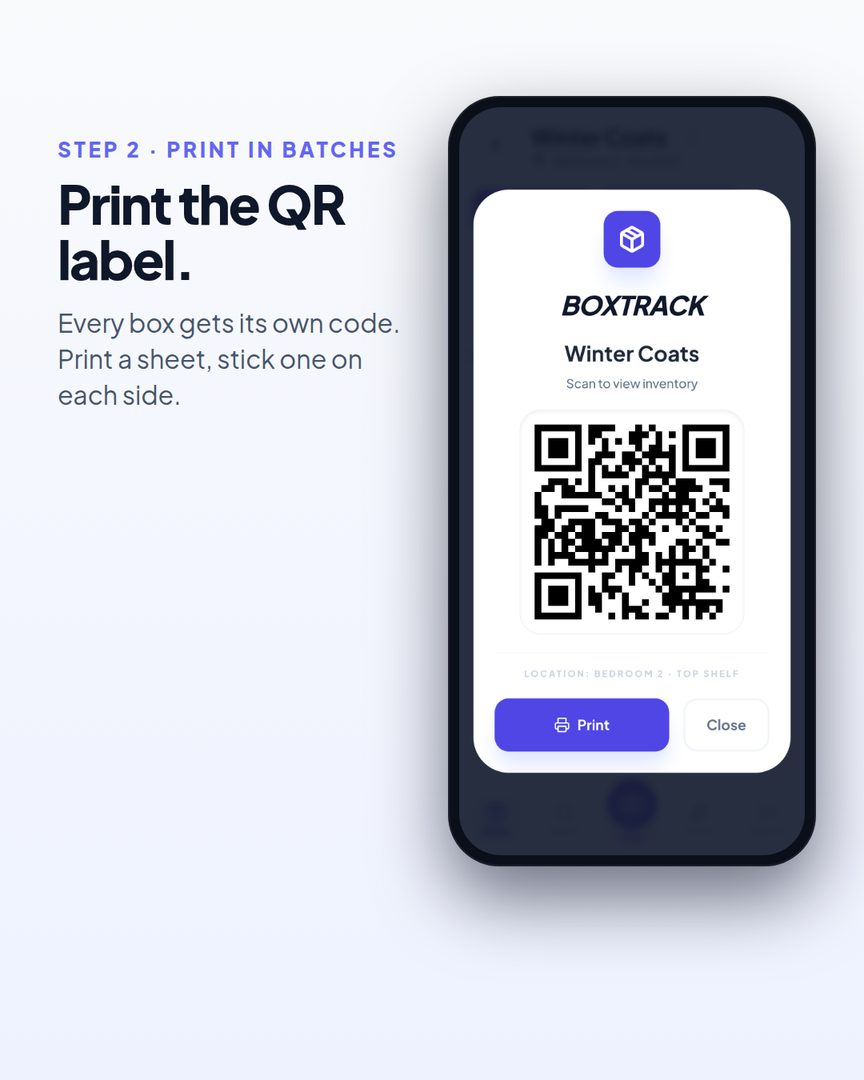
BoxTrack keeps a list of what's in every box. Make a box in the app as you pack, snap a photo of what goes in, and AI lists the items for you to check. Print a QR label for each box. When you need your winter coat mailed to you in February, you can tell your parents exactly which box it's in, and share the boxes with them so they can look it up too. See how BoxTrack works for storage. Your first box is free.
This is general information, not legal or travel advice. Entry, visa and medicine rules differ by country; check your destination's embassy and the State Department before you go.
Sources
- U.S. Department of State, USA Study Abroad, Travel health and safety info
- U.S. Department of State, International travel checklist
- CDC Yellow Book, Traveling with prohibited or restricted medications
- TSA, Liquids, aerosols and gels rule
- TSA, Traveling with medication
- TSA, Lithium batteries with 100 watt hours or less in a device
