How to pack a kitchen without losing a weekend
The order to pack a kitchen in, how to wrap plates and glasses so they arrive whole, and what to leave out for the last few days.
Most people leave the kitchen for last because they still need it. Then it's the night before the truck, every cabinet is open, and the wine glasses are going into a laundry basket wrapped in bath towels.
The kitchen has more small, breakable, oddly shaped things than any other room, so it takes longer than you expect. The fix is to start earlier than feels necessary and pack it in stages, so you can still cook until the last couple of days.
What you need
Get these before you open a single cabinet:
- Small and medium boxes. Kitchen items are heavy. A large box full of plates is too heavy to carry safely and more likely to give out at the bottom.
- Dish-pack boxes or cell dividers for glasses and stemware, if you have a lot of them. Moving supply stores and truck rental places sell them.
- Packing paper, plenty of it. Newspaper works but leaves ink on everything.
- Strong tape, and tape the bottom of every box twice, in an H pattern.
- Zip-top bags for small parts, lids and loose utensils.
- A marker and labels. Every box gets a number, "Kitchen," and a short note of what's inside.
Pack in stages
Two to three weeks before: things you won't miss
Start with what you rarely use: the stand mixer, holiday platters, the fondue set, the extra mugs, cookbooks, the bread maker, vases, and the top shelves generally. Pack these and label them clearly. You won't need them until you're settled.
This is also the time to clear out the pantry. Plan meals around what's open, and give away unopened food you won't use before the move. Food banks often accept unopened, unexpired items; check with yours first.
One week before: most of the kitchen
Pack everything except a small set of things you'll use daily. Leave out:
- one plate, bowl, mug and set of cutlery per person
- one pan, one pot, a knife, a cutting board, a spatula
- dish soap, a sponge, a towel
- the coffee maker or kettle
The last day or two: the open-first box
Everything you left out goes into one box marked open first on every side, along with paper towels, a trash bag roll, snacks, and a can opener. This box travels in your car if you can manage it.
How to wrap the breakables
Plates
Wrap each plate in two or three sheets of paper, and pack them on edge, standing up like records, not stacked flat. Plates are stronger on their edge. Put a layer of crumpled paper on the bottom of the box and fill any gaps at the sides so nothing shifts when you lift it.
Glasses and stemware
Stuff the inside of each glass with paper, then wrap it. For stemmed glasses, wrap the stem first, then the whole glass. Pack them upright in a box with dividers, heaviest at the bottom.
Knives
Wrap each knife in several sheets of paper or a dish towel and tape it closed, or put it in a blade guard. Write "KNIVES" on the bundle so nobody grabs it by the wrong end while unpacking.
Pots and pans
Nest them, with paper between each one so they don't scratch. Put lids in a separate stack, wrapped, or tuck them in the gaps upside down.
Small appliances
Use the original boxes if you kept them. Otherwise, tape down moving parts, bag the cords and small attachments, and tape the bag to the appliance. Empty and clean anything with water in it (coffee makers, kettles) a day ahead so it's dry.
Pantry items
Tape the lids of open jars and bottles, then put them in a zip-top bag in case they leak. Liquids go in their own box, upright, and never in the same box as anything paper or fabric. Think hard before moving most open dry goods: they're heavy, cheap to replace, and take space in the truck.
The fridge and freezer
Use up frozen food in the last two weeks. If the fridge is moving with you, empty it, unplug it, and leave the doors open with a towel underneath to defrost and dry out, ideally the day before. Check the manual for any specific moving instructions, especially for models with water lines or ice makers.
Label for the kitchen you're moving into
Kitchen boxes are where good labels pay off. "Kitchen" isn't enough: you'll be looking for a specific pan while standing in front of nine identical boxes. Number each box, write the main contents on two sides, and mark "fragile" and "this side up" where it applies. (More on that in how to label moving boxes.)
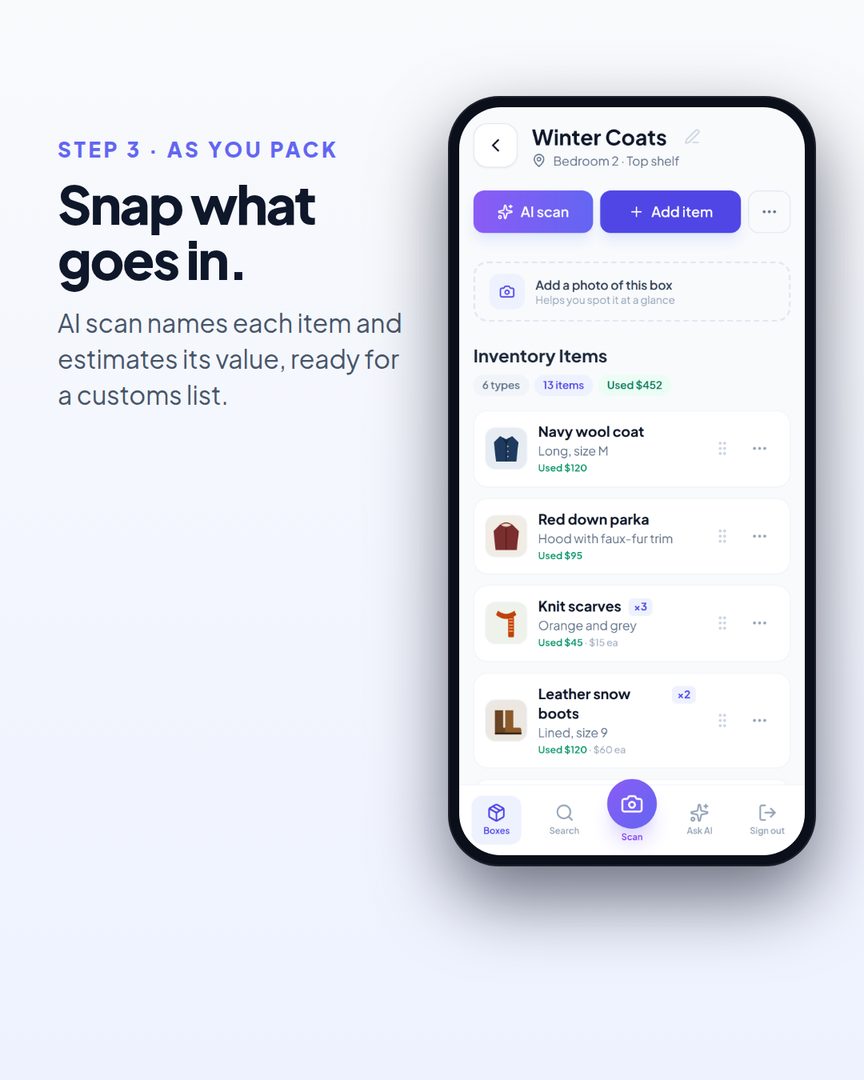
With BoxTrack, you can make a box called "Kitchen – Fragile," print its QR label, and snap a photo of what goes in before you tape it. When you can't find the colander in the new place, you can search for it instead of opening boxes.
Unpack in the right order
- The open-first box.
- The everyday dishes, cutlery and the pots you cook with most.
- Pantry basics and the fridge.
- Everything else, as you work out where it belongs. It's worth waiting on decorative and rarely used things until you've lived in the space for a week.
Pack it in stages, wrap the plates on edge, and keep one box of essentials apart. You'll be making coffee the first morning instead of hunting for the kettle.