Moving back to the US with your household goods
Household effects vs. personal effects, what CBP Form 3299 is for, and the inventory your mover or broker will need.
After a few years abroad, the move home can be just as complicated as the move out. Your belongings will usually arrive by sea or air freight, separately from you, and they need to clear US Customs and Border Protection (CBP) before delivery.
The good news: if you're a returning US resident, many household goods you used abroad can come back duty-free. The catch is that you need the right paperwork and a clear list of what's in the shipment.
This is a general overview. Your international mover or a licensed customs broker will handle the filing details, and CBP's own pages are the final word.
Household effects vs. personal effects
CBP treats two groups of belongings differently, so it's worth knowing which is which before you build your list.
Household effects are things like furniture, carpets, paintings, tableware, linens and similar household furnishings. According to CBP's guidance on household items, household effects you acquired abroad can come in duty-free if you used them abroad for at least one year and they aren't intended for someone else or for sale.
Personal effects include clothing, jewelry, photography equipment, portable electronics and vehicles. CBP does not treat these as household effects, so the one-year household rule doesn't cover them. However, CBP notes that duty is usually waived on personal effects that are more than a year old.
Items you originally took abroad from the US are generally a separate case again: American goods returning home are usually not dutiable, but you may be asked to show they came from the US (receipts, earlier export documents, or your original packing list).
What CBP Form 3299 is for
CBP Form 3299, the Declaration for Free Entry of Unaccompanied Articles, is the form used to claim duty-free entry for belongings that arrive separately from you, such as a household goods shipment. You sign it as the owner, and it's typically submitted by your mover or customs broker along with:
- a copy of your passport,
- your arrival information, and
- an itemized inventory of the shipment.
The inventory is where most of your work goes.
How to prepare the inventory
A clear inventory makes clearance faster and gives you a record if something is lost or damaged in transit.
- Number every box and list its contents under that number.
- Describe items specifically. "Dining chairs, 6" is better than "furniture."
- Separate categories if your broker asks: household effects used abroad over a year, newer purchases, personal effects, and items originally from the US.
- Note purchase dates for big items bought abroad, so the one-year use requirement is easy to show.
- Record values. Your broker will tell you which value they need.
- Photograph high-value items and serial numbers before packing.
- Keep receipts for anything bought recently or anything expensive.
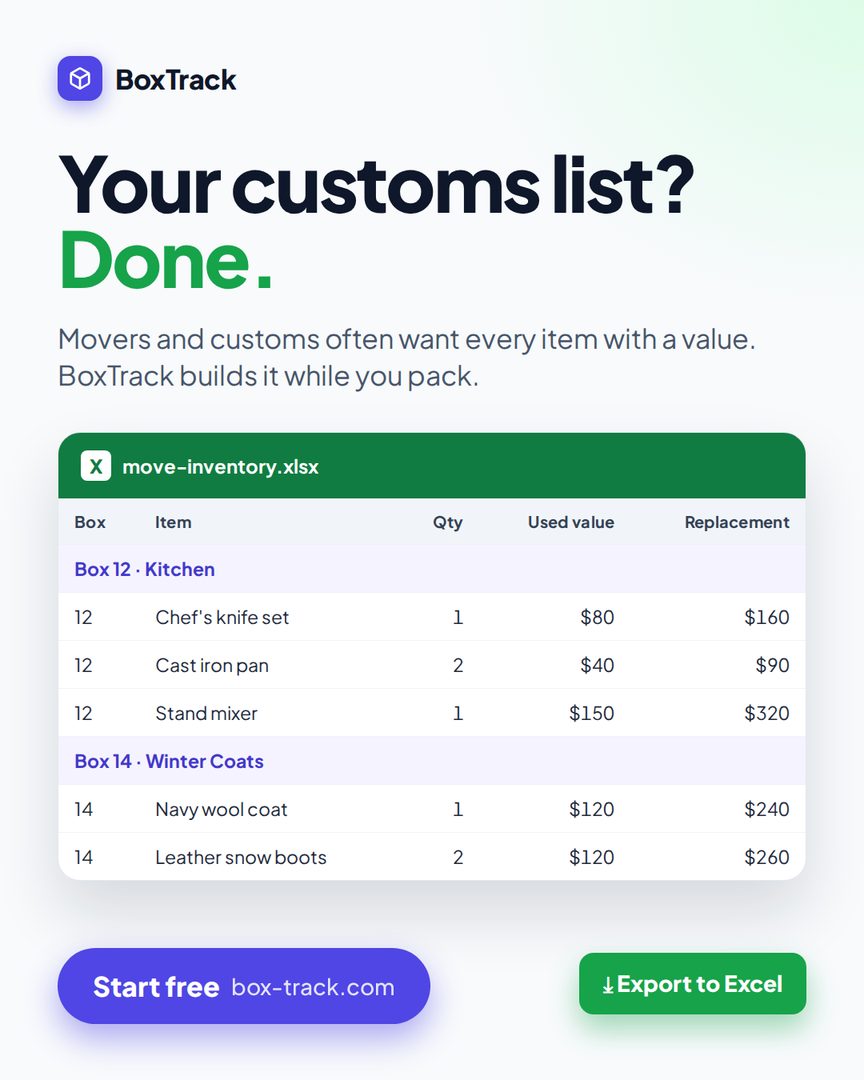
If you're using BoxTrack, create a box for each carton as you pack, add items with a photo (the AI scan suggests names and values you can edit), and export the full list to Excel when your broker asks for it. Since each box has a QR label, you can also scan any carton after delivery to find what's inside.
Items that need extra attention
Some things are restricted or need permits regardless of residency. CBP's prohibited and restricted items page is the place to check. Common trouble spots include:
- Food, plants, seeds and soil
- Items made from protected wildlife (some ivory, furs, shells)
- Alcohol and tobacco above personal limits
- Medications, which should be in original containers with prescriptions
- Vehicles, which have their own import process
- Firearms and ammunition
A simple timeline
- 6 to 8 weeks before the move: get quotes from international movers and ask what customs paperwork they handle.
- While packing: number boxes and build the inventory box by box.
- Before the shipment leaves: finalize the inventory, sign Form 3299, and send copies of your passport and arrival details to your mover or broker.
- When you arrive: keep your copy of the inventory handy. Your shipment may arrive weeks after you do.
- At delivery: check every box number off the list and note any damage before signing.
Sources
- U.S. Customs and Border Protection, Shopping Abroad: Duty Free, Gifts, Household Items
- U.S. Customs and Border Protection, CBP Form 3299
- U.S. Customs and Border Protection, Prohibited and Restricted Items
- U.S. Customs and Border Protection, Importing a Motor Vehicle
This article is general information, not legal or customs advice.