Leaving the dorm for winter break: what to take
What to take home, what to leave and what to store when you leave a dorm for winter break, plus the closing checklist most schools use.
 The BoxTrack team · · 5 min read
The text came on December 28th, from the family room couch, three states away from campus: "Mom, where's my passport? I need it for the ski trip." It was in the desk drawer of a locked dorm room. The building was closed until January 10th. There was no way in.
Leaving a dorm for winter break looks like a short trip home, so people pack like it's one. But for a few weeks, you can't get back into the room, and the school isn't guarding what you left. A little planning on the last day before break saves that phone call.
Read your school's closing notice first
Every school runs winter break its own way. Some halls close completely, some let you stay if you apply, and some ask you to move out entirely if you're switching rooms or leaving for spring. Housing offices send a closing notice before break with the dates, the checkout steps and what they'll inspect. Read it the day it arrives, because the rules there beat any general advice, including this post.
Closing checklists from schools such as the University of Maryland, Georgetown, Arizona State and the University of Chicago share a lot. Common items include:
- Take valuables, medications and anything you'll need over break with you.
- Throw out perishable food, and empty the trash and recycling.
- Unplug electronics, except anything the school tells you to leave on.
- Close and lock windows and doors.
- Follow your school's instructions for the mini-fridge, which often means emptying, defrosting and unplugging it.
Some schools also say plainly that they don't guarantee the security of things left in rooms over break. Plan as if that's true at yours.
Take it home, leave it, or store it
Most of your stuff can stay in the room if you're coming back to it. The question is what's too important or too useful to be stuck behind a locked door for a month.
| Item | Take home | Notes |
|---|---|---|
| Passport, ID, bank cards | ✓ | You can't get back in to fetch them |
| Prescriptions and medications | ✓ | Plus refill information |
| Laptop, tablet, chargers | ✓ | For anything over break, and for safety |
| Jewelry and other valuables | ✓ | Don't leave them in an empty building |
| Winter gear you'll need at home | ✓ | Boots, coat, gloves |
| Bedding, most clothes, textbooks | ✗ | Fine to leave if you're returning to the same room |
| Food that can spoil | ✗ | Eat it, give it away or throw it out |
| Mini-fridge contents | ✗ | Empty it before you leave |
If you're changing rooms or halls in January, or leaving for a semester abroad, you may need to clear the room entirely. That's when storage comes in.
When you need storage
If the room has to be empty, you have three usual choices.
- Take everything home. Simple, if home is a drive away and there's a car big enough.
- Use a storage service or a self-storage unit near campus. Book early, because many students need space at the same time.
- Leave things with a friend who's staying in town or living off campus.
Pack for storage the way you'd pack for a move: sturdy boxes, nothing damp, nothing that can spoil, and a label on every box. Our guide to college move-in packing covers what's worth bringing back to campus at all.
Winter break, by the numbers
Check what insurance covers
If something goes missing over break, insurance may help, but check before you count on it. The Insurance Information Institute says a full-time student who is still part of the household is typically covered under the parents' homeowners policy for about 10 percent of the policy's contents limit, and that some insurers may not extend this if the student rents an apartment in their own name. The NAIC describes the same common provision. Expensive items such as a laptop may need more coverage than that.
Students living off campus usually need their own renters insurance. Either way, a list of what you own, with photos, makes any claim easier. Our post on renters insurance inventory shows what to record.
A last-day checklist
Your last day before break
- MorningRead the closing notice again; note what the school will check
- MiddayPack the bag: ID, passport, meds, laptop, chargers, winter gear
- AfternoonEat, give away or toss food; empty and defrost the fridge
- Before you leaveUnplug, take out trash, close and lock windows
- At the doorPhoto of the room, then lock up and check out
That last photo helps if anything's different when you get back.
Know what's in the storage boxes
The trouble with storing a dorm room is that it all goes into similar boxes, and by January nobody remembers which one has the desk lamp or the shower caddy.
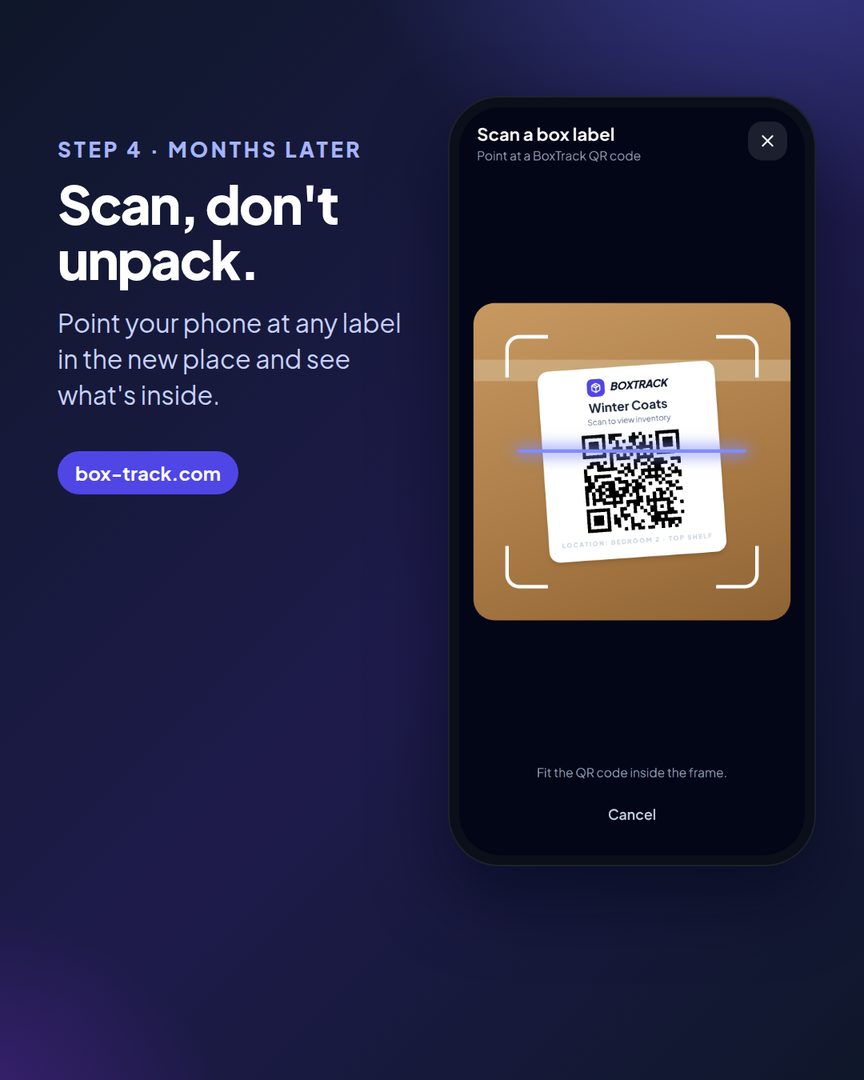
BoxTrack keeps a list. Make a box in the app as you pack, snap a photo of what goes in, and AI lists the items for you to check. Print a QR label for each box. When you're home and wondering where the second charger went, search "charger" and get the box number, or scan the label when you pick the boxes up. Parents can see the list too, if you share it. See how BoxTrack works for storage. Your first box is free.
This is general information, not insurance advice. Policies differ; check with your insurer or your parents' insurer.
Sources
- University of Maryland Residence Life, Winter break
- Georgetown University Residential Living, Winter break closing and move-out guide
- Arizona State University Housing, Winter break checklist
- University of Chicago Housing, Winter break closing procedures
- Insurance Information Institute, Am I covered?
- Insurance Information Institute, Protecting your college student from on-campus losses
- NAIC, Back to school
