College move-in: what to pack and how to get it there
A packing list that fits a dorm room, what to leave at home, and how to get through move-in day without a second trip to the store.
 The BoxTrack team · · 5 min read
It's 7:40 on move-in morning. The car is packed to the ceiling, your daughter's roommate has already texted that she's bringing a mini fridge too, and the line of cars outside the residence hall goes around the block. Somewhere in the back seat, under the comforter and the laundry basket, is the bag with her medication and her ID.
Moving into a dorm is a small move with tight rules: a room about the size of a parking space, an elevator shared with 200 other families, and a two-hour slot to get it all upstairs. A bit of planning makes the difference between a calm afternoon and an argument in a parking lot. Here's what helps.
Start with the school's list
Every college publishes a move-in page with what's provided in the room, what's allowed and what isn't. Read it before you buy anything. It usually tells you:
- the bed size (many dorm beds are twin XL, which is longer than a standard twin, so regular twin sheets won't fit)
- what furniture is already there: bed, desk, chair, dresser, sometimes a microwave-fridge unit
- what's banned, which commonly includes candles, string lights that aren't approved, space heaters, hot plates, and extension cords without surge protection
- your move-in date, time slot, and where to unload
Then check with the roommate before buying the big things. One fridge, one microwave and one rug are plenty for a double room.
Fire safety in a dorm
Dorms are crowded, and a lot of people in a small building cook, charge and plug things in. The U.S. Fire Administration's campus fire safety tips are worth a read with your student before move-in:
- Don't overload outlets, extension cords or power strips. Use a power strip with built-in surge protection, and don't run cords under rugs.
- Never disable a smoke alarm or take its batteries out, and don't hang things from sprinkler heads.
- If the fire alarm goes off, get out. Don't assume it's a drill or a false alarm.
- Know two ways out of the building.
- Use flameless candles if candles are allowed at all.
A dorm packing list that actually fits
For the bed: twin XL sheets (two sets), a mattress topper, a comforter, a pillow, and a mattress protector.
For the bathroom: towels, a shower caddy, shower shoes if the bathroom is shared, toiletries, a small first aid kit and any prescription medication.
For the desk: laptop and charger, headphones, a desk lamp, a surge-protected power strip, a few school supplies. Most printing is done on campus now; check before you pack a printer.
For clothes: less than you think. Pack for the season you're arriving in and the next one, and swap the rest at Thanksgiving or winter break. Dorm closets are small.
For laundry: a hamper or bag you can carry, detergent pods, and quarters or a loaded laundry card if the school uses one.
For the room: hangers, under-bed storage bins, command hooks (many dorms ban nails), a small trash can, a reusable water bottle, a few plates, a mug, a bowl and utensils.
Documents go in the carry bag, not a box: ID, health insurance card, the student's bank card, and any housing paperwork.
What to leave at home
Leave behind anything banned, anything that duplicates what the room or roommate already has, and anything you'd be heartbroken to lose. Shared rooms, open doors and busy halls are hard on valuables. Bring a laptop lock if the school recommends one.
Big furniture almost never fits. If a futon or bookshelf seems essential, measure the room first, or wait until you've seen it.
Packing the car
Pack in clear plastic bins with lids or sturdy boxes of the same size, not trash bags. Bins stack in the car, roll on a cart, and slide under the bed afterwards as storage.
Label each bin by where it goes in the room: "bed," "desk," "bathroom," "closet." When you're carrying bins up three floors, it helps to know which one to open first.
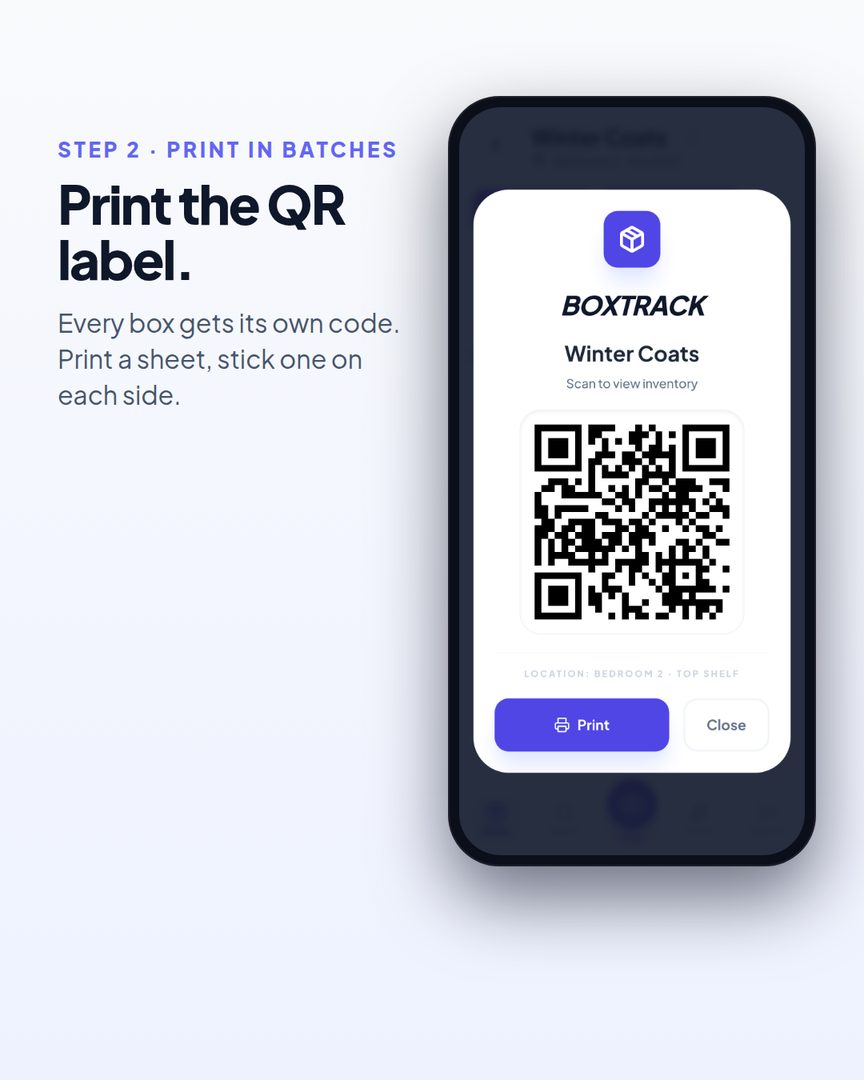
This is where a list of what's in each bin is handy. With BoxTrack, each bin gets a QR label, you snap what goes in, and the list fills in. The student can find the winter coat in October without opening every bin under the bed, and you'll both know what came home in May. Your first box is free.
Load the car in reverse order: the things you'll need last go in first. The bag with medication, chargers, ID and a change of clothes rides in the front seat.
Move-in day
Arrive at your assigned time. Schools stagger arrivals to keep the elevators and parking manageable, and showing up early usually means waiting.
Bring a folding hand truck or a collapsible wagon if you have one; carts provided by the school can run short. Also useful: scissors or a box cutter, a small toolkit, a tape measure, and a pack of command strips.
Make the bed first. It's the one thing your student will definitely need tonight, and it's easier before the room fills up. Then unpack the bathroom things and the desk, and leave the rest for the student to arrange their way.
Before you leave, take photos of the room, including anything already damaged. Many schools have a room condition form to fill out in the first days; if yours does, make sure it's submitted, because it's what they'll compare against at move-out.
Insurance for what's in the room
A laptop, a bike and a phone are worth more than most families realize. Many parents' homeowners policies cover a student's belongings in a dorm, but the coverage can be limited: some policies cap belongings kept away from home at a percentage of the main policy, and laptops, jewelry and bikes may have their own limits, according to the Insurance Information Institute. Call your insurer before move-in. Students living off campus usually need their own renters insurance.
An itemized list with photos of what's in the room makes any claim much easier, which is one more reason to write it down as you pack.
Coming home in May
Move-out is move-in in reverse, with a deadline and more stuff. If your student is storing things over the summer near campus, the storage unit guide covers how to pack a unit so you can find things in the fall.
Sources
- U.S. Fire Administration, Campus fire safety flyers
- NBC New York (quoting the Insurance Information Institute), Here's how to know if your college kid actually needs dorm insurance