Renters insurance inventory: what to list
What to put on a renters insurance inventory, room by room, plus the policy details that decide what a claim pays, from roommates to jewelry limits.
 The BoxTrack team · · 5 min read

The fire started two floors down. Nobody in 4B was hurt, but smoke and water got into everything. The landlord's insurance company came to look at the walls and the ceiling. Nobody came to look at the couch, the bike, the laptop or the clothes, because those weren't the landlord's. They were covered by the tenant's own renters policy, and the first thing that insurer asked for was a list.
A renters insurance inventory is that list, made before you need it. It doesn't have to be fancy. It does have to be specific enough that someone who has never seen your apartment can tell what was in it.
What the landlord's policy covers, and what it doesn't
This is the part renters often get wrong. The NAIC, the association of state insurance regulators, explains in its renters insurance guide that the landlord's coverage pays for damage to the building. Your belongings are yours to insure. New York's Department of Financial Services says it plainly: a landlord does not provide insurance for a tenant's personal property.
So the inventory isn't about the apartment. It's about everything you'd take with you if you moved out tomorrow.
Roommates need their own list
If you share the place, a roommate's policy won't pay for your things. The Texas Department of Insurance answers this directly: a roommate's renters insurance covers only their belongings, and it recommends each roommate buy their own policy. The NAIC notes some insurers let roommates buy a policy together.
Either way, keep separate lists. If the TV belongs to one person and the couch to the other, write that down now. After a fire is a bad time to sort out who owned the air fryer.
What to list, room by room
Go through the apartment one room at a time, in the same order, and don't skip the places you don't look at often.
Living room. TV, speakers, game consoles, streaming devices, couch, chairs, coffee table, rugs, lamps, shelves, books, records, art, plants and their pots.
Bedroom. Bed frame, mattress, dresser, nightstands, bedding, and the closet: coats, shoes, suits, bags. Clothing adds up faster than people expect, so count it.
Kitchen. Appliances you own (not the landlord's fridge or stove), cookware, knives, dishes, glasses, small appliances like a coffee maker, blender or stand mixer, and the pantry.
Bathroom. Hair tools, electric toothbrushes, towels, a scale.
Home office or desk. Laptop, monitor, printer, chair, desk, headphones, external drives.
Everything else. The bike on the wall hook, sports and camping gear, the storage cage in the basement, anything in a rented storage unit, and what's in your car that belongs to you.
For each item, write down what it is, the brand and model, roughly when you got it, and what it would cost to replace. Add a serial number for electronics and appliances. Photograph each room, then close-ups of anything valuable and its label. Our guide to photographing belongings for insurance covers how.
Check how your policy pays
Two lines on your policy change what the inventory is worth.
The first is actual cash value or replacement cost. The Insurance Information Institute's renters insurance guide explains the difference: actual cash value pays what it costs to replace your things minus depreciation, and replacement cost pays the cost of replacing them without that deduction. With replacement cost, insurers often pay the depreciated amount first and the rest once you buy the replacement and send the receipt. Either way, a list with ages and replacement prices gives the adjuster something to work from.
| Actual cash value | Replacement cost | |
|---|---|---|
| Pays for depreciation on older items | ✗ | ✓ |
| A five-year-old couch pays close to what a new one costs | ✗ | ✓ |
| Receipts for the replacement usually needed for full payment | ✗ | ✓ |
| Your inventory needs each item's age | ✓ | ✓ |
The second is special limits. Many policies cap what they'll pay for categories like jewelry, watches, collectibles or cash, well below the main personal property limit. Triple-I says a floater or endorsement can insure valuables individually at higher limits. If your inventory shows a ring or a camera kit worth more than the cap, that's the conversation to have with your agent now, not after a theft.
Things outside the apartment
Renters coverage often follows your belongings. New York's DFS gives the examples of a laptop stolen from your car or a bike taken from the rack at work: your renters insurance may pay to replace them. Policies differ, so check yours, but put the bike and the work bag on the list either way.
If you keep things in a storage unit, list those too, by box. Many policies treat property away from home differently, and the facility's own insurance offer is separate. Our post on what not to put in a storage unit covers the facility side.
Keep it current, keep it somewhere else
An inventory on a laptop that burns with the apartment doesn't help. Keep a copy in a cloud account or with someone you trust. Update it when you buy something expensive, and look it over when your policy renews. That's also a good moment to check the personal property limit still covers what's on the list.
A renters inventory, start to finish
- First weekendPhotograph every room and list what's in it
- Same weekAdd serial numbers, receipts and close-ups of valuables
- At renewalCompare the total with your coverage limit and special limits
- After a big purchaseAdd it the day it arrives, with the receipt
- Moving outUpdate the list as you pack, and it doubles as your moving inventory
A list you'll actually keep up
Most people mean to make a home inventory and never finish, because it's a lot of typing. Our free home inventory checklist is a place to start.
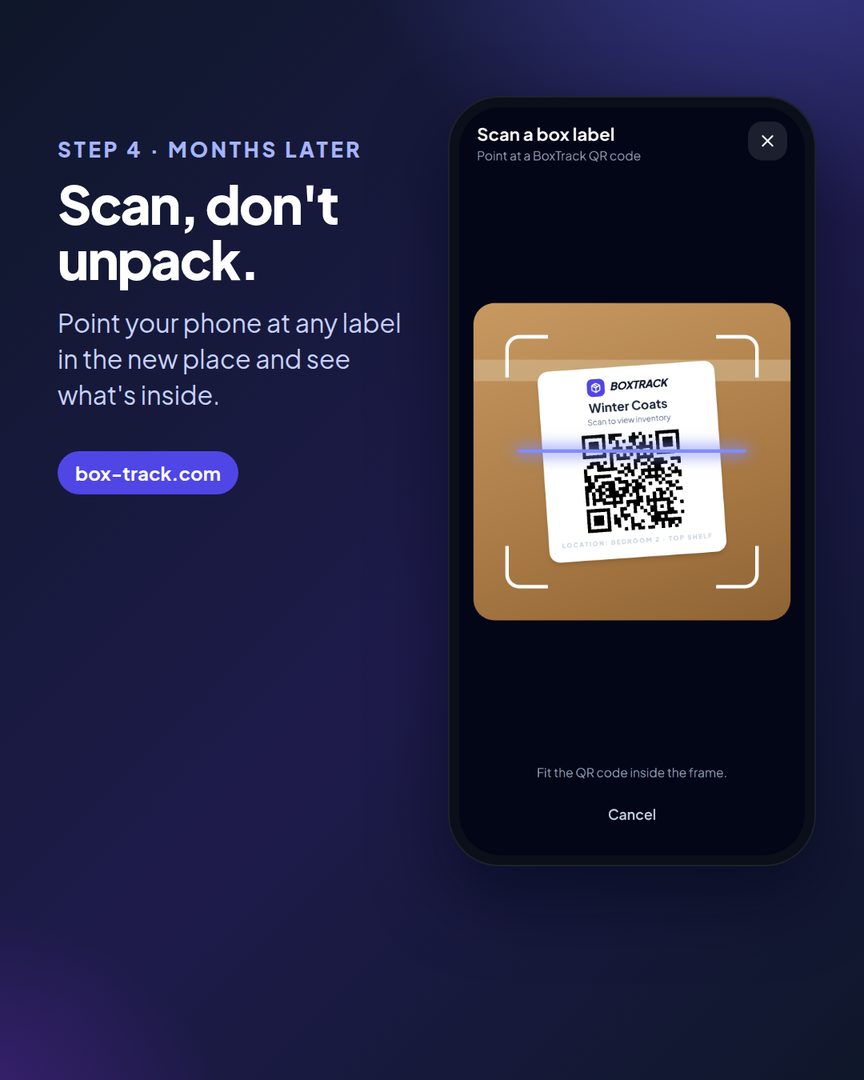
BoxTrack makes it faster. Make a "box" in the app for each room or closet, snap a photo, and AI lists the items in it with an estimated value for you to check. Add serial numbers and receipts to anything expensive. Your list is stored in your account, off the premises, and you can export it to Excel for a claim. When you move, the same list becomes your moving inventory. See how BoxTrack works for insurance records. Your first box is free.
Sources
- NAIC, For rent: protecting your belongings with renters insurance
- NAIC, Renters insurance: to purchase or not to purchase
- New York Department of Financial Services, Renter's insurance
- Texas Department of Insurance, Does my roommate's renters insurance cover my stuff?
- Insurance Information Institute, Renters insurance
This is general information, not insurance advice. Every policy is different, so read yours and ask your insurer or agent what it covers and what proof they want.