Vacation home inventory: what's there when you're not
How to keep an inventory of a vacation home or short-term rental, so you know what's missing, what to replace and what to show your insurer.
 The BoxTrack team · · 5 min read
The first trip to the lake house in May always starts the same way. Someone opens the hall closet and says, "Weren't there four beach chairs?" Someone else can't find the good corkscrew. The kayak paddles are in the shed, or maybe they went home in the back of a cousin's car last August. Nobody is quite sure what was there when the house was closed up in October.
A second home spends most of the year with nobody in it, and if you rent it out, strangers use everything in it. That's exactly the kind of place where an inventory pays off: for restocking, for guests, and for an insurance claim if something goes wrong while you're three hundred miles away.
Why an empty house needs a list
The Insurance Information Institute (Triple-I) points out that an unoccupied home is at greater risk for theft, vandalism and damage that goes unnoticed, like burst water pipes. Its advice for vacation homes includes making an inventory of the contents.
The reason is simple. If a pipe bursts in February and you find it in April, you'll be asked what was in the house. Remembering every lamp, rug and pan from a home you visit a few weeks a year is hard. A list made in advance isn't.
Our guide to a home inventory for insurance covers what an insurer usually wants to see. The same habits work for a second home.
Insurance is different when you rent it out
Before you build the inventory, it helps to know what it's for, and that depends on how you use the house.
Triple-I says a homeowners policy for a second home provides the same types of coverage as your primary policy, and may cost more. Renting it out changes things:
- Triple-I says your standard homeowners policy may not cover losses while the home is rented out.
- For short-term rentals, it says some insurers allow occasional rentals if you tell them, and others require an endorsement. If you rent regularly, it may count as a business, and standard homeowners policies don't cover business activities.
- For long-term tenants, it says you'll likely need a landlord or rental dwelling policy, which can cover personal property you leave for maintenance or tenant use.
- Your tenants' own belongings aren't covered by your policy.
The National Association of Insurance Commissioners (NAIC) adds that most homeowners or dwelling policies aren't designed to cover accidents from short-term rentals, and that some home-sharing platforms offer coverage to hosts. Check exactly what that coverage includes, and talk to your agent.
| Use of the house | Your inventory should track |
|---|---|
| Family only | ✓ Everything, with photos and rough values |
| Occasional rentals | ✓ Everything, plus what guests can use ✗ not personal items locked away |
| Regular short-term rentals | ✓ Guest supplies, furniture, linens, electronics, by room |
| Long-term tenant | ✓ What you leave for the tenant ✗ the tenant's own things |
How to do the inventory, room by room
Start with the rooms guests use, then the locked owner's closet, then the shed or garage.
Living areas. Furniture, rugs, lamps, the TV and streaming box, board games, books. Photograph each wall from the doorway, then the bigger items up close.
Kitchen. Count what disappears: wine glasses, good knives, the coffee maker, the blender. Photograph the inside of each cabinet. It takes ten minutes and settles a lot of arguments.
Bedrooms. Mattresses, bed frames, linens per bed, extra pillows and blankets, hangers.
Bathrooms. Towels by count, the hair dryer, anything you stock for guests.
Outdoor and storage. Grill, patio furniture, beach chairs, kayaks, paddles, life jackets, bikes, tools. Write down serial numbers for anything that has one.
Owner's closet. If you keep a locked closet for personal things, list it separately. It's the part of the house guests never see and the part you'll least remember.
For each item, note what it is, how many there are, roughly what it would cost to replace, and where it lives. Our guide to photographing belongings for insurance covers how to take pictures that are actually useful later.
One weekend, one house
Keep it current
An inventory from three years ago won't help much. The easiest rhythm for a seasonal house is twice a year:
A year at the vacation house
- Opening weekendWalk the house with last year's list; note what's missing
- After each rentalCheck the kitchen and linens; restock
- MidseasonUpdate for anything new you bought
- Closing weekendFinal walk-through; photograph each room
- Off-seasonKeep the list where you can reach it from home
Keep the list somewhere you can reach from home, not on paper in a kitchen drawer at the lake. If something happens while the house is empty, the list needs to be with you, not in the house.
One list for the whole house
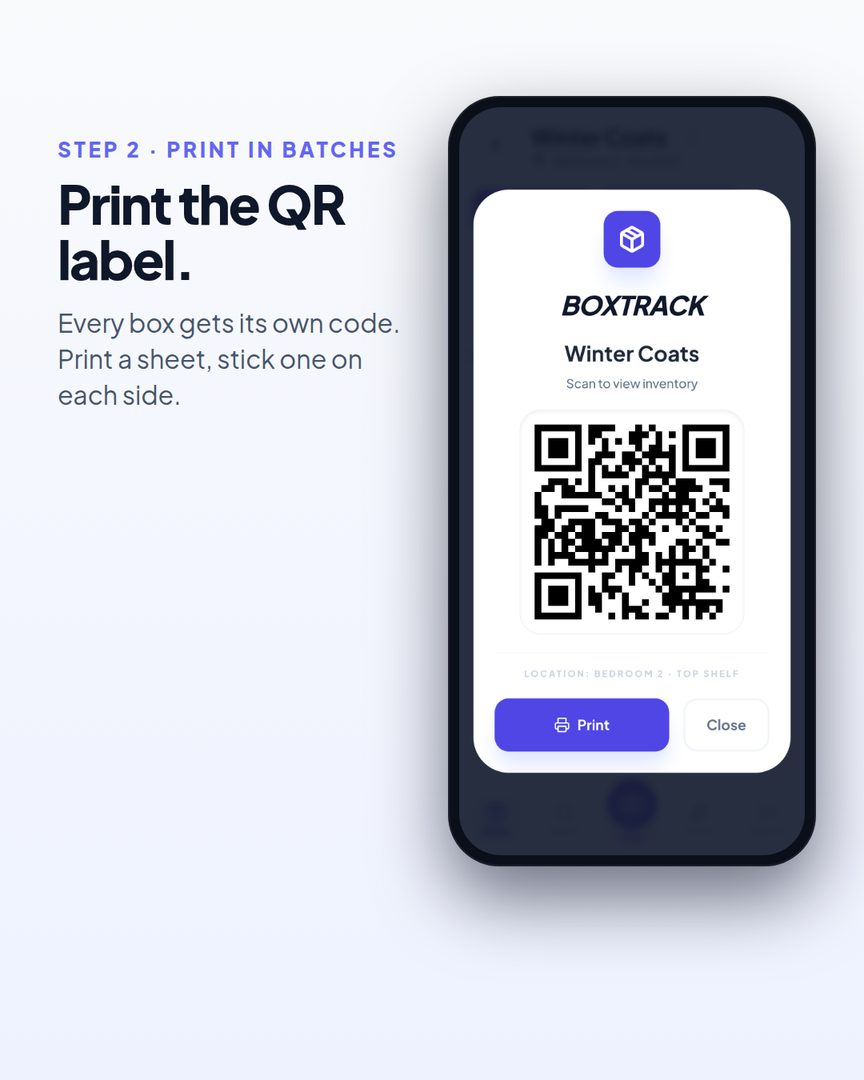
BoxTrack keeps a list of what's in every room, bin and closet. Make a box for each room or storage bin, snap a photo, and AI lists the items with an estimated value for you to check. Print a QR label for the bins in the owner's closet or shed, and scan one to see what's inside without unpacking it. The list lives on your phone, so you can check what's at the lake house from home. See how BoxTrack works for a home inventory. Your first box is free.
This is general information, not insurance advice. Coverage for second homes and rentals differs by insurer and state; talk to your insurance agent about how you use the house.
Sources
- Insurance Information Institute, Insuring a vacation home
- Insurance Information Institute, Coverage for renting out your home
- NAIC, Renting out your home? You need insurance coverage for home-sharing rentals