Storing your things between homes
Your mover's storage-in-transit or your own storage unit: how they differ, what happens to liability, and how to pack for months away.
 The BoxTrack team · · 5 min read
The closing on the old house is Friday. The new place won't be ready until the end of next month, or possibly the month after, depending on a contractor who has stopped answering texts. Everything you own needs to be somewhere in between.
This gap is common, and there are two usual ways to handle it: the mover holds your things in its warehouse, or you rent your own storage unit. They look similar, but who's responsible for your belongings, and what you pay for, is different. Here's how to choose, and how to pack so the things come out in the same shape they went in.
Option 1: your mover's storage-in-transit
On an interstate move, many movers offer storage-in-transit (SIT): they pick up your shipment, hold it in their warehouse, and deliver it when you're ready. It's on the same paperwork as your move.
What's good about it:
- One pickup and one delivery. You don't load a unit yourself and then move everything again.
- While it's in SIT, your goods are still under the mover's liability for the move.
What to watch:
- SIT doesn't last forever. Your estimate and the mover's tariff set how long the shipment can stay in storage-in-transit. After that, it converts to permanent storage.
- When it converts, the rules change. Federal rules (49 CFR 375.609) say the mover must tell you in writing, at least 10 days before SIT ends, the date it converts. The mover must also tell you three things. You have nine months after conversion to file claims for loss or damage that happened in transit or in SIT. The mover's liability is ending. From then on your things are under the warehouse's own rules and charges.
- The charges change too. Storage-in-transit is usually billed as part of the move. Permanent storage is a separate warehouse bill, often monthly, plus a separate delivery charge later.
Read the storage section of your estimate before you sign, and ask: how many days of SIT are included? What does each extra day cost? What does delivery out of storage cost?
If you might be in the gap longer than the SIT period, that's the moment to compare the cost against your own storage unit.
Option 2: your own storage unit
Renting a unit gives you control. You can get to your things any time the facility is open, you choose how it's packed, and you're not on anyone's delivery schedule.
The trade-offs:
- Two moves instead of one: into the unit, then out of it.
- Your things are covered by whatever insurance you arrange, not the mover. Check whether your homeowner's or renter's policy covers items in storage and how much, or buy the facility's protection plan.
- You're bound by the facility's rental agreement, including what happens if a payment is late. Set up autopay and keep your contact details current with the facility.
Climate control or not?
If you're storing wood furniture, electronics, photos, documents, instruments or anything leather, and the unit will sit through a hot summer or freezing winter, climate control is usually worth it. For metal shelving, garden tools and plastic bins of holiday decorations, a standard unit is usually fine.
Packing for months, not days
Things that would be fine for a three-day move can suffer over three months.
- Use sturdy boxes of the same few sizes. They stack straight and don't crush. Avoid used grocery boxes for anything heavy.
- Plastic bins with lids for anything that would be ruined by damp: photos, documents, linens.
- No food, no plants, nothing flammable. Facilities ban them, and food brings pests.
- Clean and fully dry everything, especially the fridge, washing machine and anything from outdoors. Trapped moisture is how mildew starts. Leave the fridge door propped open.
- Cover furniture with breathable cloth or old sheets, not plastic wrap, which can trap moisture against wood and upholstery.
- Take legs off tables and wrap the hardware in a labeled bag taped to the piece.
- Don't pack anything you'll need in the gap. Work documents, kids' school stuff, seasonal clothes for the months ahead, and medication all travel with you.
Label for the person who opens it in March
That person is you, but you won't remember much. "Kitchen" on a box is fine for a weekend move. After four months, you'll be standing in a unit or a new kitchen trying to find the slow cooker.
Number every box, list what's in it, and keep the list somewhere you can reach from your phone. Put the boxes you'll need first near the front of the unit, and leave a walkway down the middle. How to set up a storage unit you can actually find things in covers the layout in detail.
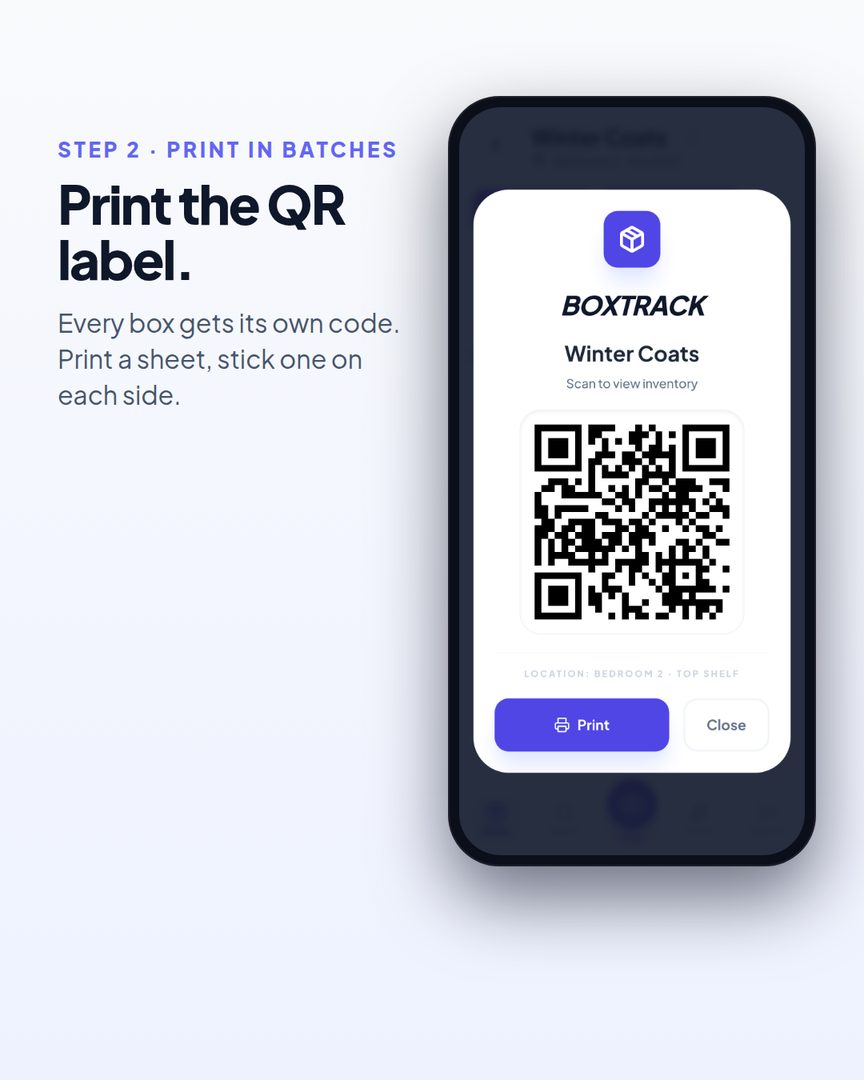
This is the job BoxTrack was made for. Give each box a QR label, snap what goes in before you tape it, and months later you can search "slow cooker" on your phone, or scan the label on any box, to see what's inside without opening it. Your first box is free.
Which one?
Go with the mover's storage-in-transit when the gap is short and fits the SIT period on your estimate, when you won't need anything in storage, and when one pickup and one delivery would make life easier.
Go with your own unit when the gap is long or uncertain, when you'll need to get to your things, or when you're moving locally and the mover's storage costs more than a unit plus a couple of truck rentals.
Either way, get the costs in writing, keep your own list of what's in each box, and put a reminder in your calendar a couple of weeks before any storage period ends.
Sources
- eCFR, 49 CFR Part 375: Transportation of Household Goods in Interstate Commerce (see 375.609, storage-in-transit)
- FMCSA, Your Rights and Responsibilities When You Move
This is general information, not legal advice. It covers interstate moves in the US; moves within one state, and storage units, are governed by state law and your contract.