Collectibles inventory: cards, coins and vinyl
How to inventory a collection of trading cards, coins or records for insurance, what a standard homeowners policy may limit, and how to store them well.
 The BoxTrack team · · 5 min read
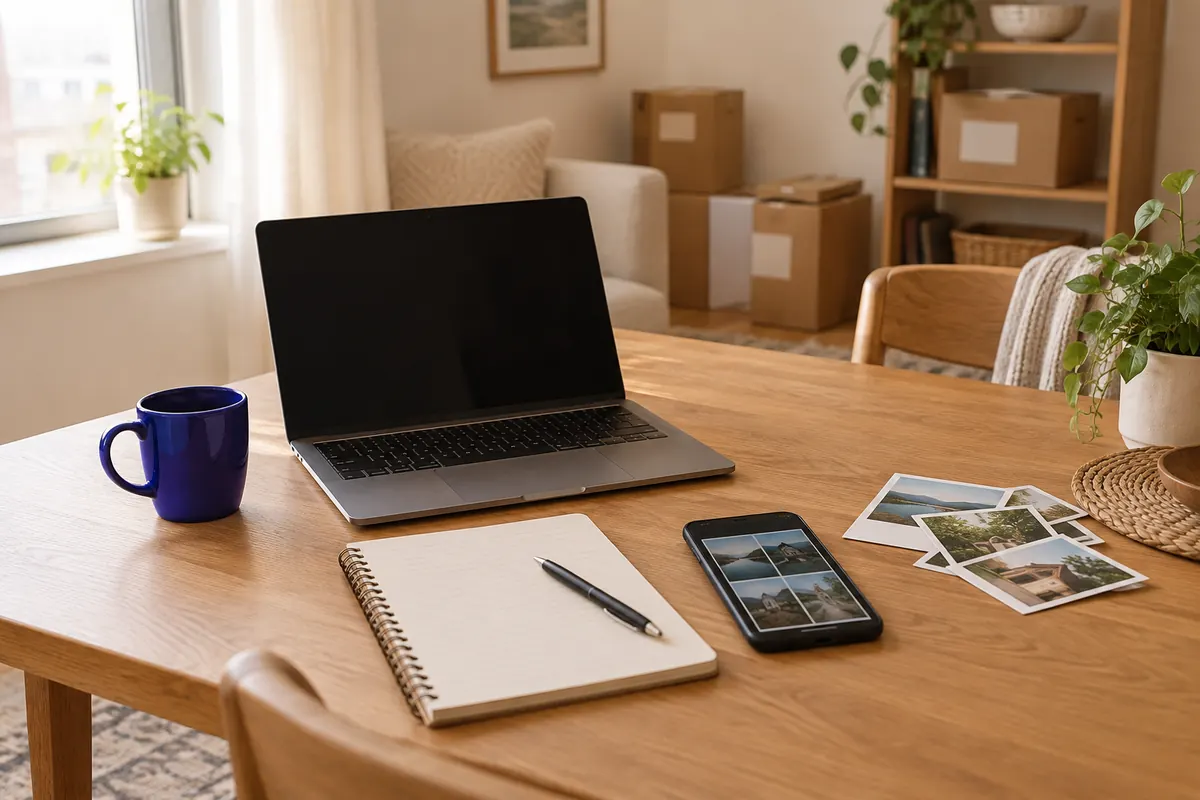
The pipe burst in the spare room on a Sunday. Most of what was in there could be replaced: a desk, a chair, a box of old tax files. Then there were the three long boxes of baseball cards under the bed and the crate of records by the closet. The adjuster asked for a list with what each item was and what it was worth. The owner knew the collection by heart, but had never written any of it down.
A collection is the kind of thing that's easy to undervalue and hard to prove. Unlike a sofa, nobody can guess what's in a binder of cards from a photo of the room. Here's how to build an inventory of a collection that will hold up, and what to check in your insurance before you need it.
First, check what your policy actually covers
Many homeowners policies put special dollar limits on certain kinds of property. In the ISO sample HO-3 homeowners form published by the Insurance Information Institute (Triple-I), coins sit in a category with money and bullion that has a $200 limit, and stamps sit in a category with a $1,500 limit. Your own policy may differ, so read the "special limits of liability" section, or ask your agent.
Triple-I says collectibles are usually covered, but with dollar limits if they're stolen, and that to insure them for their full value you can buy a special personal property endorsement or a floater. The NAIC describes a personal article floater as covering items like stamps, coins and antiques whose value may be higher than the normal limits, and notes that insurers often require an appraisal.
In the sample HO-3 policy form
The same Triple-I guidance says a floater can cover losses your homeowners policy won't, such as accidentally losing an item. If one card or coin is worth more than the limits above, that's worth a conversation with your agent.
What to record for each item
The goal is a list that lets someone who has never seen the collection understand what it was. For most collections, that means:
- What it is: the set, year, player or artist, denomination or catalog number.
- Condition or grade, and the certificate number if it's been professionally graded.
- How many you have.
- What you paid and when, if you know.
- A current value, and where that number came from.
- Clear photos.
For trading cards, photograph the front and the back. Graded cards in slabs have a certificate number on the label; record it. For coins, record the year, mint mark and denomination, and photograph both sides. For records, note the artist, title, label and catalog number, and anything that makes a pressing unusual.
You don't need to photograph every common card in a box of thousands. Photograph the box, note roughly how many cards are in it and what they are, and save item-by-item detail for the ones worth listing separately.
Get values you can stand behind
Values are where collection claims often get stuck. Keep receipts and order confirmations for anything you bought. For valuable pieces, the NAIC's guidance to get an appraisal applies, and an insurer may ask for one before it will schedule an item.
Write down where each value came from: a receipt, an appraisal, a recent sale. A number with a source is far easier to work with after a loss than a number from memory.
| Proof | Strong | Notes |
|---|---|---|
| Receipt or order confirmation | ✓ | Shows what you paid and when |
| Professional appraisal | ✓ | Often required to schedule an item |
| Grading certificate number | ✓ | Identifies a specific graded item |
| Clear photos, front and back | ✓ | Shows condition and identity |
| Value from memory | ✗ | Hard to support after a loss |
Store them so they last
An inventory helps after something goes wrong. Good storage keeps it from going wrong.
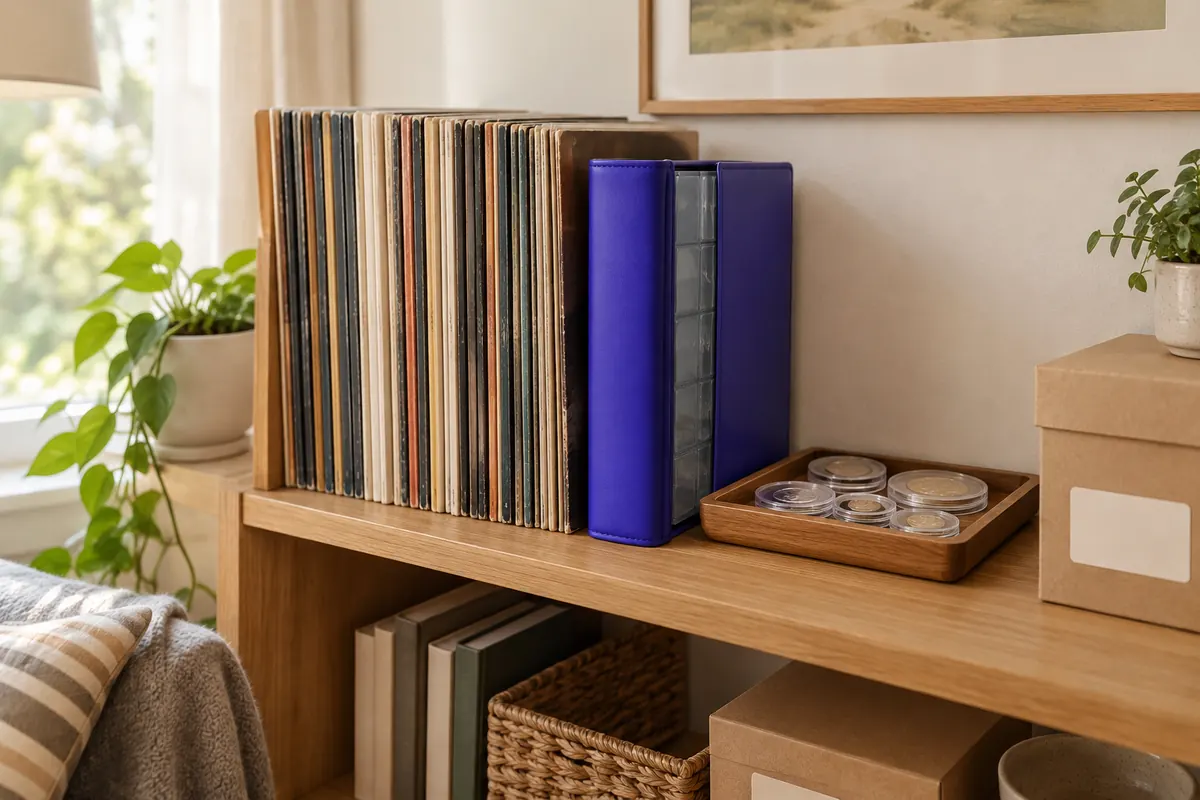
Coins: the U.S. Mint suggests holding coins by their edges, over a soft surface, ideally with soft cotton gloves, because the oils on your skin can be corrosive. It recommends acid-free cardboard and plastic holders that are free of PVC, and it cautions that cleaning or polishing can reduce a coin's value.
Records: the Library of Congress says to store discs upright, on edge, with dividers that support the whole face of the disc. For a collection at home, it suggests a cool, fairly dry space away from direct light, radiators and vents, and says to avoid attics and basements because of leaks and temperature extremes. It also recommends inert plastic sleeves, such as polyethylene, and warns against PVC.
Cards and paper collectibles have the same enemy as books and photographs: damp. Keep them out of basements and garages that get humid. Our guide to keeping boxes dry in a basement or garage covers humidity and shelving.
Keep the list where you'll keep it up
A collection changes. A list on paper from three years ago won't show the cards you've added since. The easiest inventory to keep current is one that's quick to add to.
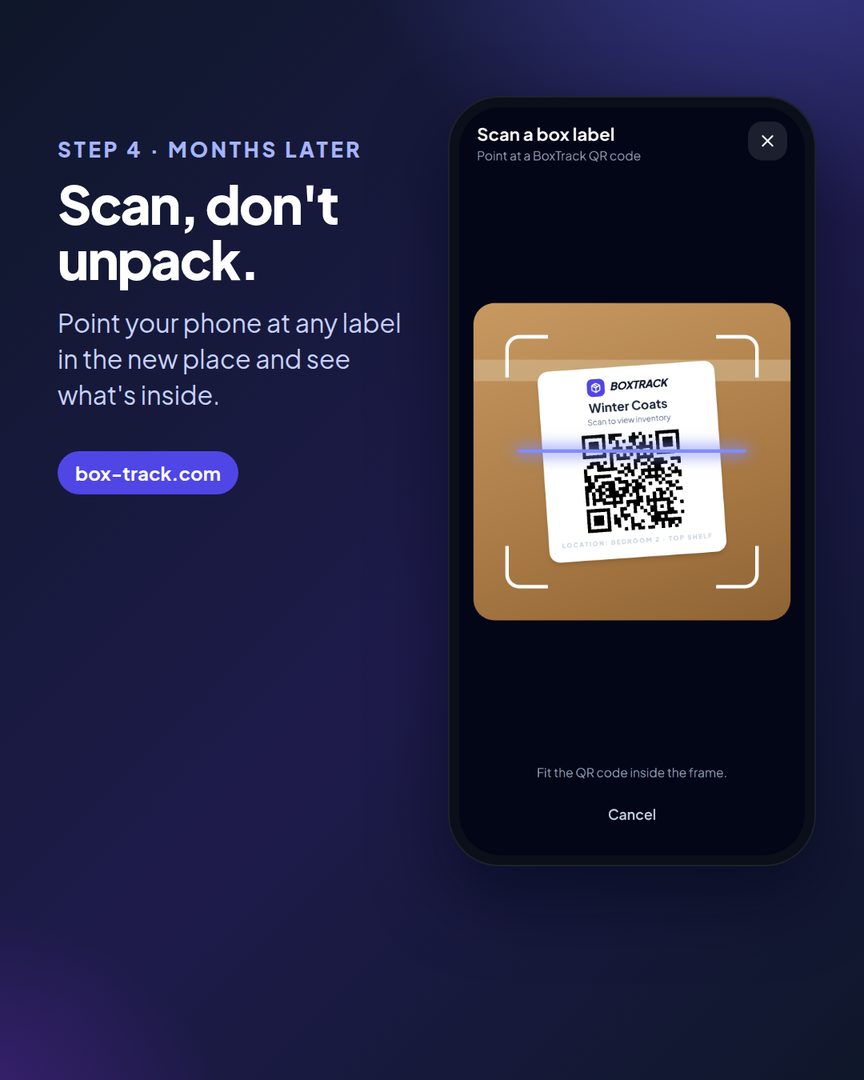
BoxTrack works for this. Make a box in the app for each long box, binder, coin tray or record crate, snap a photo of what's inside, and AI lists the items for you to check, with an estimated value you can replace with your own. Add photos of the valuable pieces and notes such as the certificate number. Print a QR label for each box or binder, and scan it later to see what's in it without taking anything out of its sleeve. You can export the whole list to Excel for your agent or an appraiser. See how BoxTrack works for insurance. Your first box is free.
For the rest of the house, our guides to a home inventory for insurance and photographing your belongings cover room by room.
This is general information, not insurance advice. Your policy decides what's covered and how much, so check it or ask your agent.
Sources
- Insurance Information Institute, Special coverage for jewelry and other valuables
- Insurance Information Institute, Sample homeowners policy form HO 00 03
- NAIC, A consumer's guide to home insurance
- NAIC, Learn how to insure expensive jewelry and gifts
- U.S. Mint, Caring for your coin collection
- Library of Congress, Care, handling, and storage of audio visual materials
- Library of Congress, Audio/visual materials FAQ