Home inventory after a fire or flood, from memory
How to build an insurance claim list of what you lost when there was no inventory before the fire or flood, room by room, using photos and memory.
 The BoxTrack team · · 5 min read

The adjuster's email arrived on the third day at the hotel. Attached was a spreadsheet with columns for item, quantity, age, and replacement cost. The house was still standing, but the water had reached the outlets on the first floor, and almost nothing down there could be saved. Nobody in the family had ever made a list of what they owned.
That's the usual situation. Most people start a home inventory after the loss, not before. It's harder that way, but it can be done, and a careful list makes a real difference to what an insurer can pay for. Here's how to rebuild one from memory, photos and whatever paperwork survived.
First, before you throw anything out
The instinct after a flood or fire is to clear the mess. Slow down on that part.
- Photograph everything first. Wide shots of each room, then close-ups of damaged items. For a flood, FEMA's flood insurance guidance asks for photos that show the waterline inside and out.
- Keep samples. FEMA's National Flood Insurance Program (NFIP) guidance says to keep samples of things like carpet, flooring and curtains for the adjuster to inspect.
- Hold items that might be repairable. Set them aside for the adjuster to look at. If something must go for health reasons, photograph it first so the damage is on record.
- Ask the insurer before you discard. The Insurance Information Institute (Triple-I) advises against throwing out damaged items until the adjuster has seen them.
- Keep every receipt. Hotel stays, meals, laundry, emergency repairs. Many policies cover additional living expenses (ALE), but the NAIC notes that ALE has its own limits, and you'll need receipts to be paid back.
Know your deadlines
Deadlines vary by policy and by state, so read yours or ask your agent. Two that come up often:
Dates that matter
For flood claims under the NFIP, the proof of loss is due within 60 days of the flood unless your insurer extends it. The NAIC says the time you have to report a homeowners claim varies by state, so notify your insurer as soon as you can, and keep a log of who you spoke to and when.
Rebuilding the list, room by room
A claim list built from memory works best when you go one room at a time, in your head, the way you'd walk through the house. The IRS has a free workbook for this: Publication 584 is laid out room by room, from the entrance hall to the garage, with a schedule for each room. It's written for tax casualty losses, but the room prompts help anyone remembering what was there.
For each room:
- Picture the doorway. Start on one wall and go around. Furniture first, then what was on and in it.
- Open the closets and drawers in your head. These hold most of the forgotten items. Coats, shoes, linens, tools, chargers, the junk drawer.
- Write a line per item. What it was, roughly how old, how many, and the brand or model if you know it.
- Mark anything with proof. A photo, a receipt, an order email, a manual.
FEMA's flood claim checklist suggests listing a description, quantity, make, model and serial number, approximate age and replacement cost for each item. You won't have all of that for everything. Fill what you can and leave the rest blank, rather than guessing at numbers.
Where to find proof when the paperwork is gone
The NAIC says that if your records were destroyed, you can work from memory, and that photos on your phone or from family and friends taken inside your home can help. A few places that turn up more than people expect:
| Source | What it shows | Worth checking |
|---|---|---|
| Your phone's photo library | Rooms in the background of birthdays and holidays | ✓ |
| Family and friends | Their photos taken at your home | ✓ |
| Online order history | Exact items, dates and prices for things bought online | ✓ |
| Store loyalty accounts | Purchases tied to your card or phone number | ✓ |
| Bank and card statements | Larger purchases and where they were made | ✓ |
| Product registrations and manuals | Model and serial numbers | ✓ |
| Guessing at prices | Nothing an adjuster can check | ✗ |
Search your photos by room ("kitchen", "living room") if your phone supports it, and zoom in on the background. A picture of a birthday cake often shows the whole kitchen counter.
Replacement cost or actual cash value
Your policy decides how belongings are valued. Triple-I explains that with replacement cost coverage, you generally get the actual cash value first, which accounts for depreciation, and the rest after you replace the item. That's another reason to keep the claim list going after the first payment: it's also your shopping list, and your receipts for the replacements go with it.
Keep it in one place you can share
A claim list grows over weeks. One person remembers the bookshelf, another remembers what was on it. Keeping that in a single shared place saves a lot of re-typing.
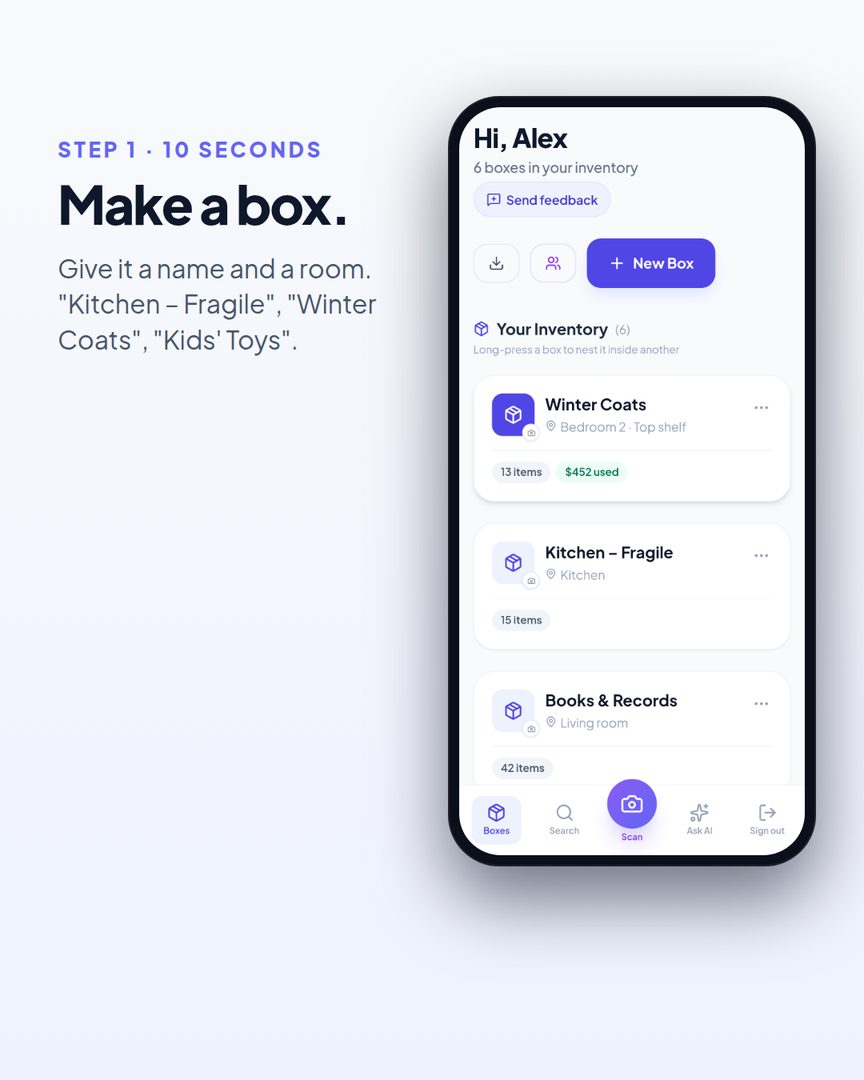
BoxTrack can hold it. Make a box in the app for each room, add what you remember, and attach any photos you find. When you replace things, snap a photo and AI lists the items for you to check, with an estimated value, so the new home's inventory starts as you rebuild. You can share boxes with family so everyone adds to the same list, and export it all to Excel for the adjuster's spreadsheet. See how BoxTrack works for insurance. Your first box is free.
Once you're settled, a full inventory before anything happens is far easier. Our guides to a home inventory for insurance and photographing your belongings cover that.
Sources
- FloodSmart (FEMA NFIP), Document flood damage
- FEMA, NFIP claims handbook
- FEMA, NFIP flood insurance claims checklist
- NAIC, What you need to know when filing a homeowners claim
- NAIC, Post-disaster claims guide
- Insurance Information Institute, Settling insurance claims after a disaster
- IRS, Publication 584, Casualty, disaster, and theft loss workbook
This is general information, not insurance, legal or tax advice. Your policy and your state's rules decide what's covered and when claims are due, so check with your insurer, agent or your state's insurance department.