Moving to New Zealand: household goods and biosecurity
How to ship household goods to New Zealand, from the Customs concession and form NZCS 218 to MPI's biosecurity inspection and cleaning rules.
 The BoxTrack team · · 5 min read
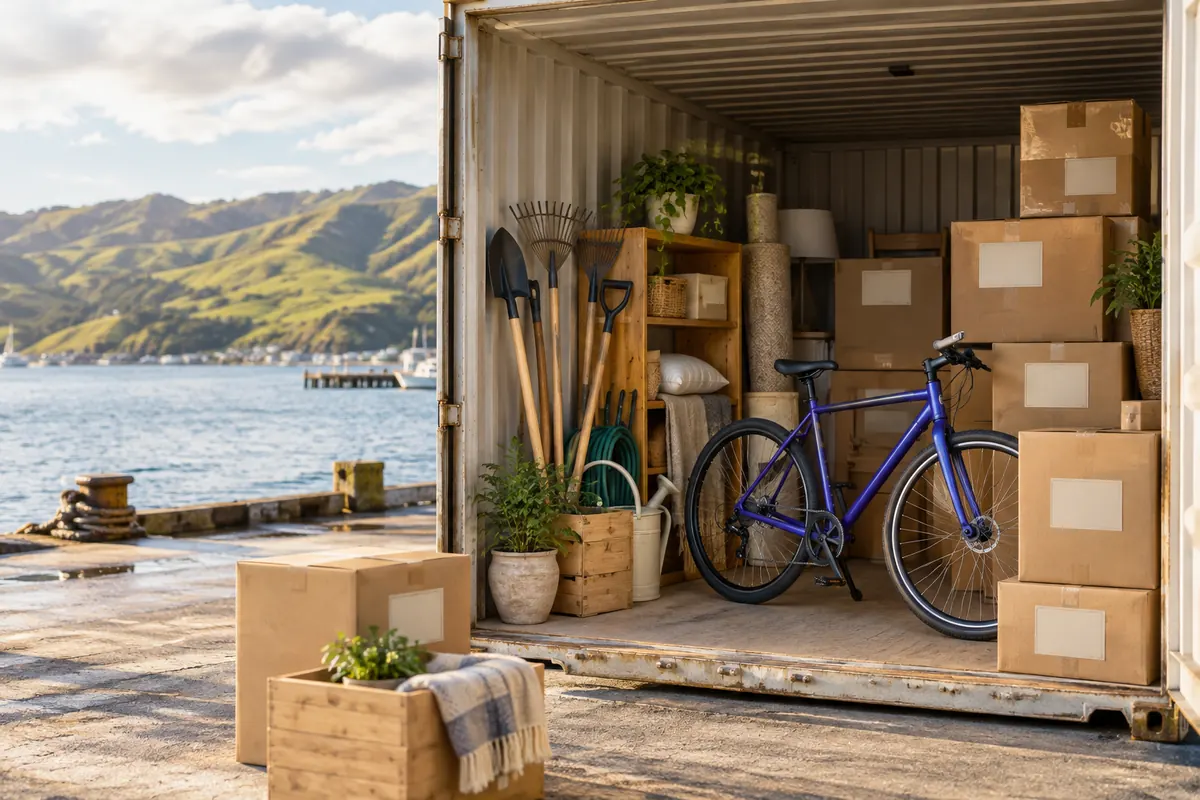
The container from Denver was booked for Auckland, and most of it was easy: boxes of books and kitchen things, two beds, a sofa. Then someone looked at the garage. Hiking boots with dried mud in the treads. A barbecue. A tent last used at a lake. A lawnmower. In New Zealand, every one of those can hold up a whole container.
New Zealand cares more about what's stuck to your belongings than almost any other country does. Here's how the two sides of clearance work, Customs for duty and MPI for biosecurity, and how to pack so your container gets through.
Two agencies, two questions
Your shipment has to clear both:
- New Zealand Customs Service decides whether you owe duty and GST.
- The Ministry for Primary Industries (MPI) decides whether your things are a biosecurity risk.
They're separate. MPI's guidance is clear that goods free of duty can still need biosecurity clearance.
The Customs concession
If you're moving to New Zealand to live, your household effects can come in without duty or GST under a Customs concession, if they qualify. On its household effects page, Customs lists the main tests:
- You've lived or been domiciled outside New Zealand for the full 21 months before you arrive, apart from short holidays or business trips. That covers people moving for the first time and New Zealanders coming home after 21 months or more away.
- You personally owned and used the goods before you left.
- They're for your own use, not to sell, give away or trade.
Brand-new or unused items don't qualify, so declare them, because duty and GST will apply.
To clear the shipment, you'll fill in the unaccompanied personal baggage declaration, form NZCS 218, from the Customs site. Customs also asks for a copy of your passport, a packing list of your household effects, and the shipping documents such as the bill of lading or air waybill. If you're not in New Zealand yet when the goods arrive, you can name a nominee in writing to complete it.
MPI and biosecurity
MPI says inspection of sea containers is mandatory. An inspector will check the documents, look for pests and diseases, and look for contamination such as soil. MPI's import health standard for personal effects requires everything to be clean, dry and free of pests and contamination, and it says to clean things before they're packed.
MPI's risk assessment notes that containerised personal effects, especially outdoor furniture and equipment, carry a higher risk of soil than the same goods sent by air or mail. That's the garage problem.
What to expect
What needs cleaning before it's packed
MPI's personal effects standard names outdoor furniture (seats, tables, pots, marquees, barbecues) and gardening and work equipment. In practice, look at anything that has been outside:
- Hiking boots, sports shoes, cleats
- Bikes, especially the tires
- Tents, tarps and camping gear
- Garden tools, pots, the lawnmower and the wheelbarrow
- Barbecues and outdoor furniture
- Fishing gear, golf clubs, strollers and wagons
Remove all mud, soil, dirt, leaves, grass, dust and any animal matter, then let it dry before it's packed. MPI's voluntary supplementary declaration asks about these things, and MPI says filling it in can mean faster clearance and lower costs.
| Usually fine if clean | Needs a closer look | |
|---|---|---|
| Clothes, books, kitchenware | ✓ | ✗ |
| Indoor furniture | ✓ | ✗ |
| Outdoor furniture and barbecues | ✗ | ✓ |
| Bikes, boots and camping gear | ✗ | ✓ |
| Wooden and wicker items | ✗ | ✓ |
| Food, plants and seeds | ✗ | ✓ |
What happens if they find something
If an inspector finds contamination, MPI says the goods can be treated, reshipped or destroyed, and treatment is done at an approved facility. You pay for inspection and any treatment. MPI charges inspection fees by the number of items it looks at, and your shipping agent may pass those on to you.
What you carry on the plane
Your suitcases go through the same checks at the airport. Declare any food, plant material, animal products, and outdoor gear like hiking boots or camping equipment. MPI says travellers who fail to declare risk goods, even by accident, can be fined NZ$400 on the spot. When in doubt, declare it.
The packing list does double duty
Customs wants a packing list, and MPI's inspector works through the container with one. A list that says "Box 14: hiking boots (cleaned), tent (cleaned), camp stove" helps more than "Box 14: garage stuff." It also tells you, months later, which box the tent ended up in.
Moving to New Zealand, step by step
- Three months outCheck you meet the 21-month and owned-and-used tests
- Two months outBook the shipment; sell or leave new, unused items
- Packing monthClean outdoor gear, boots and bikes; dry everything
- Packing weekNumber every box and build the packing list
- Before arrivalNZCS 218, passport copy and shipping documents
- ArrivalDeclare risk items at the airport; wait for the container
Build the list as you pack
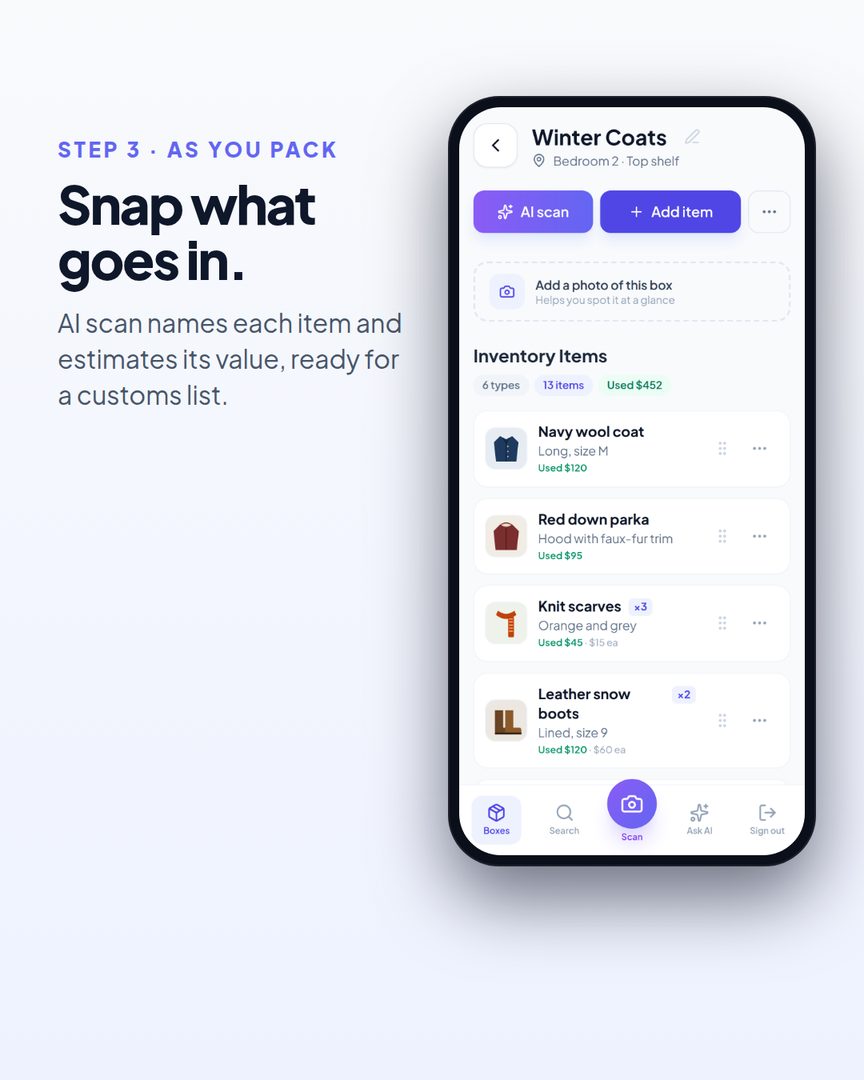
BoxTrack makes that packing list for you. Make a box in the app for each carton, snap a photo of what goes in, and AI lists the items with an estimated value for you to check. Name each piece of outdoor gear in the list, print a QR label for each box, and export the whole inventory to Excel when your mover or Customs asks for it. BoxTrack doesn't fill in Customs or MPI forms for you; it gives you the itemized list to work from. See how BoxTrack helps with customs lists. Your first box is free.
For a neighbor with similar rules, see moving to Australia with household goods. Our customs packing list guide covers how to write the list.
Sources
- Ministry for Primary Industries, Household goods and personal effects importing to NZ
- Ministry for Primary Industries, Personal effects supplementary declaration
- Ministry for Primary Industries, Fees and charges for clearance of goods
- Ministry for Primary Industries, What happens if you fail to declare
- New Zealand Customs Service, Household effects
- New Zealand Customs Service, Importing goods for personal use (fact sheet, April 2026)
This is general information, not legal or customs advice. Customs and MPI rules change and depend on your circumstances. Check the official pages, or ask your mover or a customs broker, before you ship.