Moving to Australia with household goods and biosecurity
How to ship your belongings to Australia, from the B534 statement and the 12-month rule to cleaning, the packing list and biosecurity checks.
 The BoxTrack team · · 6 min read
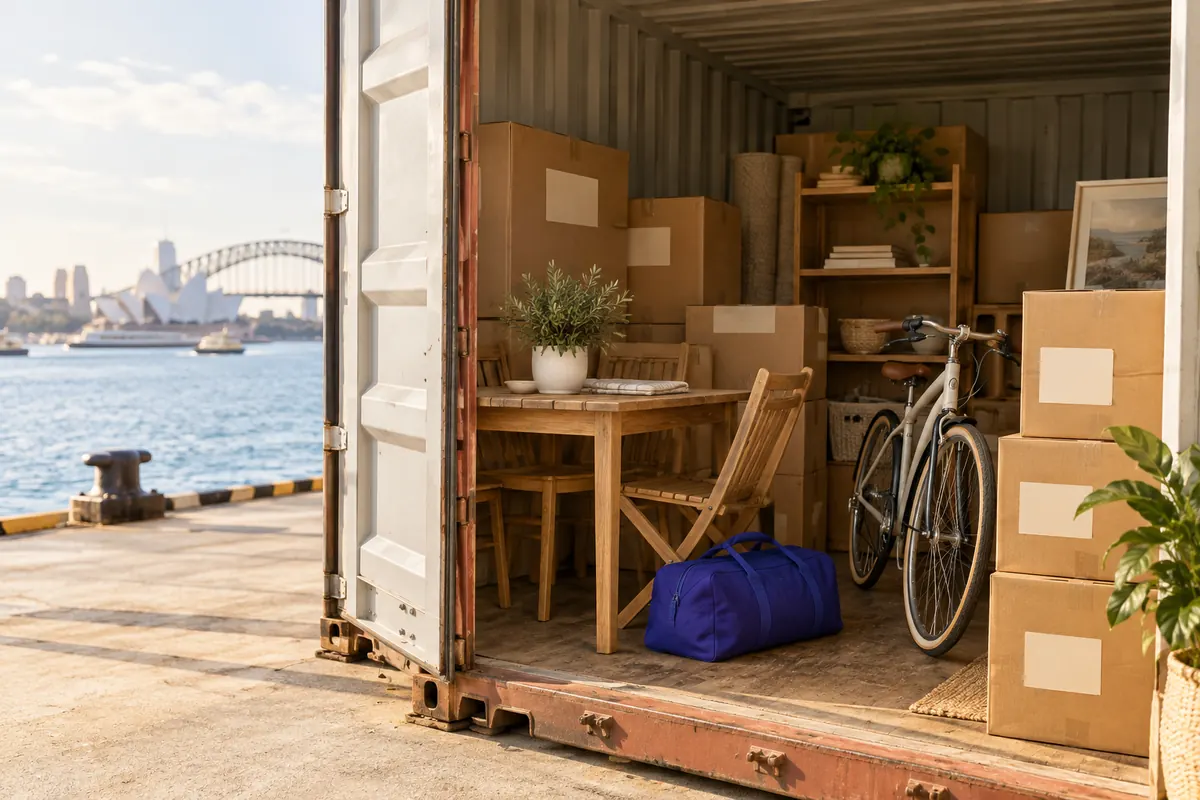
The container left Seattle in March and reached Melbourne in May. It sat at the wharf for an extra week. The reason, when the broker finally explained it, was box 41: a camping tent packed straight from its last trip, with dried mud on the pegs, listed on the packing list only as "misc outdoor."
Australia takes biosecurity seriously, and a household shipment gets checked twice: once by the Australian Border Force for duty and tax, and once by the Department of Agriculture, Fisheries and Forestry (DAFF) for pests, soil and plant material. Both checks run on your paperwork. Here's how to get both right.
Two agencies, two questions
The Border Force asks whether you owe duty and GST on what you're bringing. DAFF asks whether anything in the shipment could carry a pest or disease into Australia. You answer both on one form, the Unaccompanied Personal Effects statement (B534), backed by your packing list.
The Border Force says the B534 can be lodged by you or by a nominee, such as a friend, relative or customs broker. Most people moving a full household let their mover's Australian agent or a broker do it. They still need the packing list from you, and supporting papers such as a copy of your passport.
The 12-month rule
Things you ship separately don't get the same allowance as things in your suitcase. The Border Force's duty-free page says unaccompanied goods may be subject to duty and tax unless you have owned and used them for 12 months or more.
Two details matter:
- The 12 months is counted up to when you leave for Australia, not when the box arrives.
- The B534 asks you to declare anything you've owned for less than 12 months. That new TV bought for the move goes on the form, and may be charged.
Numbers to plan around
Cleaning before you pack
DAFF's guide to preparing personal effects for shipment is specific about what needs cleaning. Anything that has touched soil, plants, animals, food or water should be clean and dry before it goes in a box.
- Garden tools and outdoor furniture: remove all soil and plant debris, and clean every surface.
- Bikes, strollers and sports gear: wheels and tires are where soil hides.
- Camping gear: tents, pegs, boots and anything else that's been outside.
- Vacuum cleaners: empty and clean the bags.
- Rugs and mats: vacuum them.
DAFF also says not to reuse boxes that carried produce, meat, eggs or fertiliser, and to avoid straw or sawdust as packing filler.
| Usually fine if clean | Declare and expect a check | Leave it home | |
|---|---|---|---|
| Clothes, books, dishes, electronics | ✓ | ✗ | ✗ |
| Wooden furniture | ✗ | ✓ | ✗ |
| Cane, wicker, rattan or bamboo | ✗ | ✓ | ✗ |
| Garden tools, bikes, camping gear | ✗ | ✓ | ✗ |
| Fresh food | ✗ | ✗ | ✓ |
| Opened dry food, herbs and spices | ✗ | ✗ | ✓ |
Wooden and natural items
Wood is the item DAFF watches most. Its moving to Australia page says inspectors look for signs of insects in wooden furniture, like holes, sawdust or chewed timber. If they find live pests, the owner pays for treatment. Furniture made of cane, wicker, rattan or bamboo has its own import conditions, which you can check in BICON, DAFF's import conditions database.
Look over wooden pieces before you pack them. A dresser with small holes in the back is better treated, or left behind, before it ships.
Food and pet things
DAFF says not to pack fresh food, or opened packets of dry food, herbs and spices, because they can carry insects that are hard to see. Some sealed foods are allowed and others aren't, so check BICON before packing the pantry. Pet food and pet medicine may need an import permit.
If you do pack food, DAFF asks you to show on the packing list where it is, by box.
Write the packing list DAFF wants
This is the part that most decides how long your shipment takes. DAFF says inspection charges are based on time, so a clear list keeps the cost down. Its guidance asks for:
- Every box numbered, with the same number on the list.
- The contents of each box described in detail.
- What things are made of: "metal bed frame," "wooden chairs," "cane basket," not just "furniture."
- The box numbers of anything you've declared, so inspectors can go straight to it.
"Misc outdoor" is the kind of line that sends an inspector through the whole container. "Box 41: tent (nylon), tent pegs (metal), cleaned; camping chairs (aluminium)" lets them check one box and move on.
At inspection, DAFF says you or your agent must open the shipment and supply tools to do it. Goods you cleaned can still be checked, and if soil turns up, cleaning it on arrival means a second inspection.
Bringing a car
A car is a separate process. The Department of Infrastructure says you must get approval to import a vehicle before you arrange to ship it. For a car you're bringing as a personal import, you must have owned it for at least 12 months before you first arrived in Australia, and apply within 6 months of that arrival. The car also has to be cleaned for biosecurity, inside and out. Duty, GST and luxury car tax may apply.
A move to Australia, in order
- Three months outDecide what goes; check BICON for wood, wicker and food
- Two months outApply for car import approval if you're bringing one
- The weeks beforeClean outdoor gear, bikes and tools; pack and number every box
- Before shippingWrite the packing list and B534 with your broker or mover
- ArrivalBorder Force and DAFF clear the shipment; open boxes for inspection
One list for both checks
The packing list does three jobs: the Border Force reads it, DAFF inspects against it, and your mover or insurer uses it if something goes missing on the water.
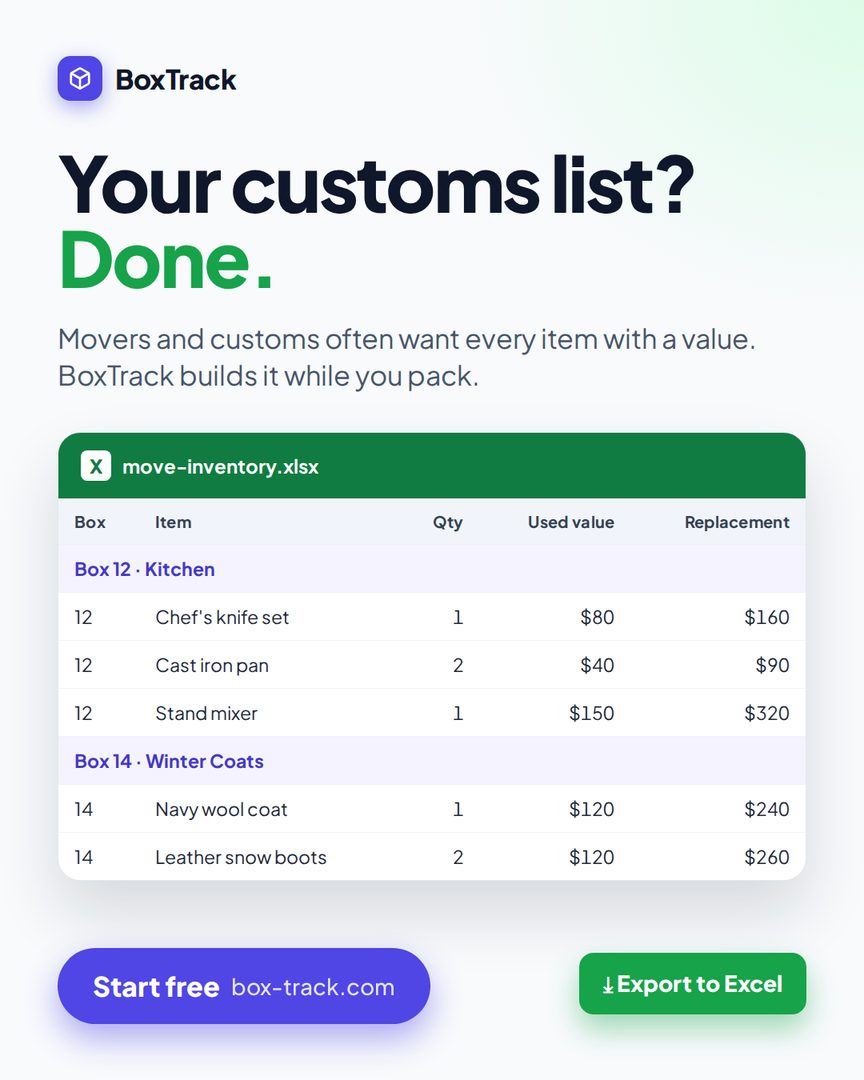
BoxTrack builds it as you pack. Make a box in the app for each carton, snap a photo of what goes in, and AI lists the items with an estimated value for you to check. Add what something is made of to its name ("wooden chair"), and print a QR label for each box so the numbers match. Then export the whole list to Excel with box numbers, items, quantities and values for your broker. BoxTrack doesn't fill in the B534 or file anything for you. See how BoxTrack handles customs lists. Your first box is free.
Still deciding how to ship? Our guide to container vs air freight compares the two, and the free customs list template is a place to start.
Sources
- Australian Border Force, Unaccompanied personal effects
- Australian Border Force, Unaccompanied Personal Effects statement (B534)
- Australian Border Force, Duty free
- Department of Agriculture, Fisheries and Forestry, Moving to Australia or importing personal effects
- Department of Agriculture, Fisheries and Forestry, Preparing your personal effects for shipment to Australia
- Department of Infrastructure, 8 steps to importing a vehicle
This is general information, not legal or customs advice. The Australian Border Force and DAFF decide every case, and their rules and fees change. Check their current pages, or ask a licensed customs broker, before you ship.