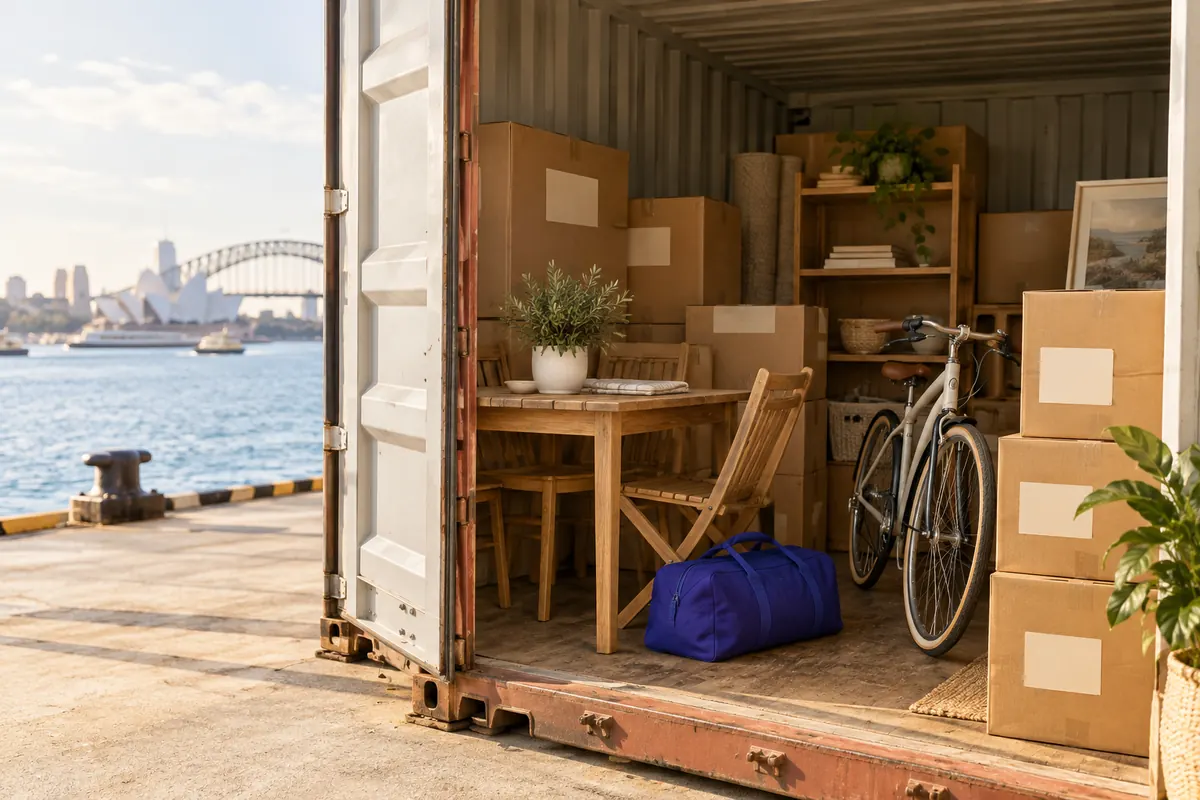
Moving to Portugal with household goods
How to bring your furniture and belongings into Portugal without duty or VAT, what the consulate's baggage certificate needs, and the 12-month rules.
 The BoxTrack team · · 5 min read

The residence visa was stamped in the passport, the lease in Porto started in March, and the shipping company's quote looked fine. Then came their document list. Near the bottom: "Certificado de Bagagem, issued by the Portuguese consulate, list of goods in triplicate." Nobody had mentioned a consulate. It turned out to be the paper that decides whether 30 boxes of ordinary household things arrive free or with a tax bill.
If you're moving to Portugal from outside the European Union, your used belongings can usually come in without customs duty or VAT. The relief comes from EU law, and Portugal's consulates handle the paperwork that proves you qualify. This guide covers both parts, plus the rules that apply after you land.
The EU rules behind the relief
Portugal follows the EU's regulation on reliefs from customs duty, which has a section for people moving their normal residence into the EU. The conditions are the same in every EU country:
The numbers that decide it
- You've lived outside the EU for at least 12 consecutive months. Customs can make exceptions when you clearly meant to stay that long.
- You've owned and used your things for at least six months at your old home, and you'll use them for the same purpose in Portugal. Be ready to prove it.
- They come in within 12 months of setting up residence in Portugal, and they can arrive in more than one shipment.
New things bought for the move generally don't qualify, and neither does anything that looks commercial. The consulates list what's left out:
| Qualifies for relief | |
|---|---|
| Furniture, kitchenware, linens, clothes, books | ✓ |
| Used electronics and appliances | ✓ |
| Items you've bought new and not used | ✗ |
| Alcoholic drinks and tobacco | ✗ |
| Food | ✗ |
| Commercial vehicles | ✗ |
A private car is a separate process. Portugal handles the vehicle tax exemption (ISV) for people changing residence through its own request on the Portal das Finanças, so plan for it on its own track.
The baggage certificate
The practical step for most people moving from the US or Canada is the Certificado de Bagagem, a certificate from the Portuguese consulate that covers where you live now. Your mover or customs broker uses it to clear the shipment under the relief. Each consulate publishes its own checklist, and they differ in the details, so read the one for your area. In the US, those include the consulate in San Francisco, the consulate in Boston and the embassy in Washington.
What they typically ask for:
- A copy of your passport or ID
- Proof of your current address abroad, such as a driver's license
- A copy of your Portuguese residence visa, if you're not an EU citizen
- A signed declaration with the date you're moving your residence to Portugal
- The list of goods, signed, usually in triplicate, with your address in Portugal on it
San Francisco's page says the certificate can be requested up to one year after the move. Montreal's consulate asks for the list in Portuguese, with the brand, model and serial number of electronics and appliances, and for proof the goods were used for at least six months. Even where your own consulate doesn't spell that out, a list with that much detail is the safe choice.
Writing the list
The list is what the consulate stamps and what customs compares against your boxes. A few habits make it hold up:
- Number every box and list what's inside it, by box. "Box 12, kitchen: 10 plates, 6 bowls, 2 saucepans" beats "kitchen items."
- Add make, model and serial numbers for anything electronic: TVs, laptops, the stand mixer, power tools.
- Give a value for anything expensive, and keep old receipts if you have them. A receipt from years ago also helps show the item isn't new.
- Write it in Portuguese, or have it translated, if your consulate asks. Simple item names are fine: "pratos", "cadeiras", "livros".
- Leave out what doesn't qualify. Don't pack the wine collection or new appliances still in the box and hope.
A move to Portugal, in order
- Visa in handFind your consulate's baggage certificate checklist
- PackingNumber each box and list it as you pack, with serial numbers and values
- Before shippingSend the certificate request with the signed list
- Shipment arrivesYour broker clears it using the certificate and list
- The next 12 monthsDon't sell, lend, rent out or give away what came in duty-free
The 12 months after you arrive
The relief has a condition that catches people out. Under the EU regulation, goods imported this way can't be lent, used as security, hired out or transferred to someone else for 12 months after customs accepts them, unless customs is told first. Doing it anyway can make the duty payable.
So if the sofa won't fit the apartment, or a 120-volt American appliance turns out to be useless on Portugal's 230-volt power, it's often easier to sell it before you leave than to ship it and keep it for a year.
One list, used three times
The list for the consulate is also what your international mover needs for the packing inventory, and what your insurer asks for if a crate arrives damaged. Making it once, while you pack, saves doing it three times later.
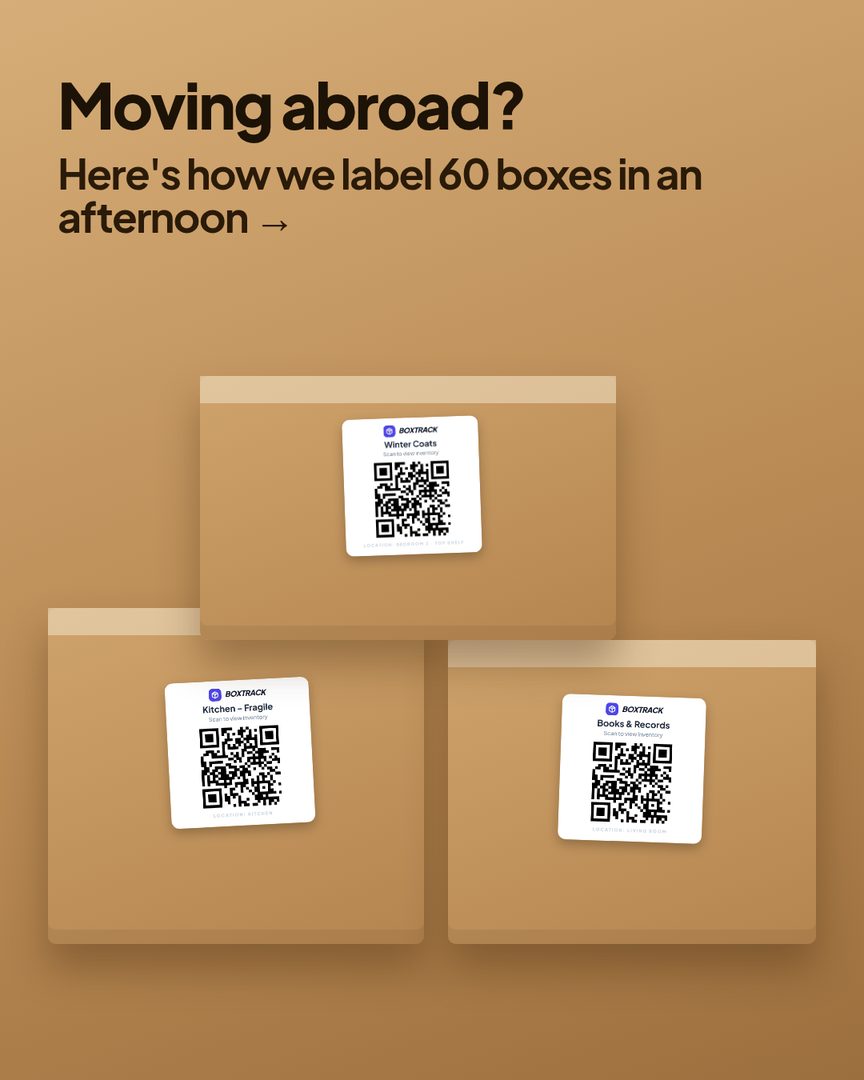
BoxTrack does that from your phone. Make a box in the app for each carton, snap a photo of what goes in, and AI lists the items with an estimated value for you to check. You can type item names in Portuguese, and add serial numbers to the electronics. Print a QR label for each box, then export the full list to Excel with box numbers, items, quantities and values. See how BoxTrack handles customs lists. Your first box is free.
If you're still choosing how to ship, our guide to container vs air freight compares the two. The Spain guide covers the same EU rules from the Spanish side, and the free customs list template is a starting point for the list.
Sources
- Council of the European Union, Regulation (EC) No 1186/2009 on reliefs from customs duty, Articles 3 to 11
- Consulate General of Portugal in San Francisco, Certificado de Bagagem
- Consulate General of Portugal in Boston, Certificado de Bagagem
- Embassy of Portugal in the United States, Certificados de Bagagem
- Consulate General of Portugal in Montreal, Certificado de Bagagem
This is general information, not legal or customs advice. Portuguese customs decides every case, consulates set their own document lists, and the rules can change. Check your consulate's current page, or ask your mover's customs broker, before you ship.