Snowbird packing list for living in two homes
What to pack, what to keep in both houses, and what to sort out before you lock up for the season, from mail forwarding to medication.
 The BoxTrack team · · 5 min read
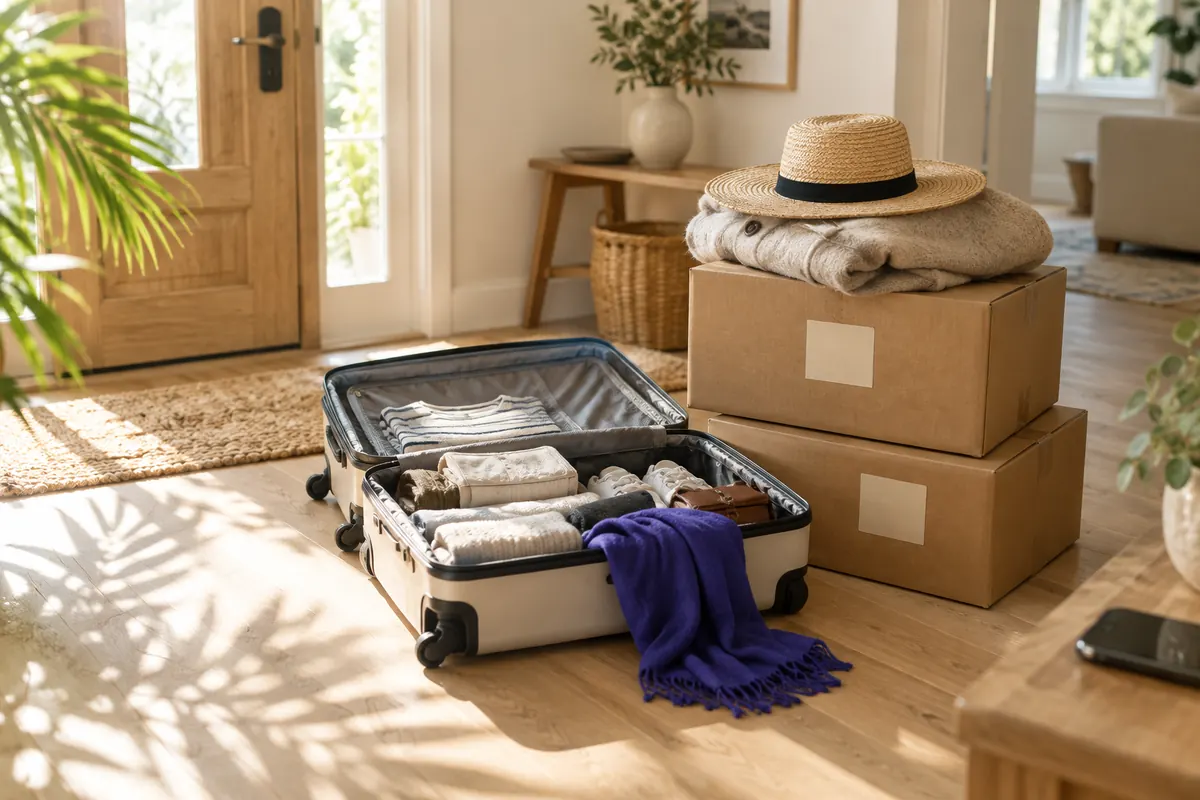
Three weeks into the winter in Sarasota, the reading glasses are in Michigan. So is the good paring knife, the charger for the tablet and the folder with the car title. Every snowbird has a version of this story, and most of them end with buying a second one of something you already own.
Living in two homes is mostly a sorting problem. Some things should live in both places, some travel with you every time, and a few need sorting out before the door closes on the house you're leaving. This snowbird packing list is built around those three groups.
Decide what lives in both houses
The fastest way to pack lighter is to stop packing the same things twice a year. After a season or two, most snowbirds settle on doubles of anything cheap, bulky or easy to forget.
| Keep one in each home | Travel with you | |
|---|---|---|
| Phone and tablet chargers | ✓ | ✗ |
| Reading glasses (a spare pair) | ✓ | ✗ |
| Basic kitchen tools and a good knife | ✓ | ✗ |
| Toiletries and first-aid basics | ✓ | ✗ |
| Bedding and towels | ✓ | ✗ |
| Prescription medication | ✗ | ✓ |
| Important papers and IDs | ✗ | ✓ |
| Laptop and its charger | ✗ | ✓ |
| Jewelry and small valuables | ✗ | ✓ |
| Hobby gear you only own one of | ✗ | ✓ |
Clothes are the in-between category. Many snowbirds leave a season's worth of clothes in each house and travel with a few favorites. That only works if you know what's already waiting at the other end, which is where most duplicate buying comes from.
The carry-with-you list
These go in the car or your carry-on, never in a box that ships separately or gets left in a closet.
Medication. Bring enough to get you through the drive or flight and the first days at the other house, plus a copy of each prescription. If you fly, the TSA allows medication in carry-on bags. Pills can come in any amount once screened. Liquid medication over 3.4 ounces is allowed in reasonable quantities, as long as you tell the officer at the start of screening and take it out of your bag. Ask your pharmacy how they handle refills when you're out of state for months.
Papers. IDs, insurance cards, the car's registration and insurance, checkbook, and anything you'd need if something went wrong at the house you left: the policy number, the alarm company, the neighbor's phone.
Electronics and valuables. Laptop, tablet, hearing aid batteries, jewelry, and the spare house keys for the other place.
A short list of what's in each house. It sounds fussy, but it's the thing that stops the second paring knife.
Before you lock up for the season
The house you leave behind needs a little attention, and your insurer may care about some of it.
Mail. The Postal Service offers a temporary change of address that forwards mail for at least 15 days and up to 364 days, so it covers a whole winter. For a fee, Premium Forwarding Service Residential instead packs up your mail once a week and ships it to you by Priority Mail. You can't run both at once, so pick one.
Insurance. Many homeowners policies limit or exclude some coverage once a home sits empty for a stretch, often 30 to 60 days, according to the Insurance Information Institute. The NAIC adds that policies generally expect you to keep the heat at a minimum temperature or shut off the water while you're gone. Call your agent before you leave. Ask what your policy expects and whether there's an option to stay covered while the home is unoccupied.
Water and heat. Shutting the main water valve is one of the simplest ways to avoid coming home to a flooded floor. In cold climates, set the heat to whatever your policy or plumber recommends instead of turning it off.
Food and trash. Empty the fridge of anything that will spoil, take out the trash, and leave the dishwasher and washing machine open to dry.
Someone with a key. A neighbor or friend who will walk through every couple of weeks catches problems early, and some insurers expect it.
The week before you head south
- 7 days outCall the insurance agent; set up mail forwarding
- 5 days outRefill prescriptions; gather papers into one folder
- 3 days outPack the car list; check what's waiting at the other house
- 2 days outClear the fridge; set the thermostat; arrange the key holder
- Leaving dayShut the water main, lock up, take photos of each room
Take photos on the way out
Walk through each room with your phone the day you leave. If something happens while you're away, those photos show what the house looked like and what was in it. Open a few closets and drawers too. It takes ten minutes and helps with an insurance claim, if you ever need one.
Keep one list for both homes
The question that wastes the most time for snowbirds is "is that here or up north?" One list for both houses answers it from either one.
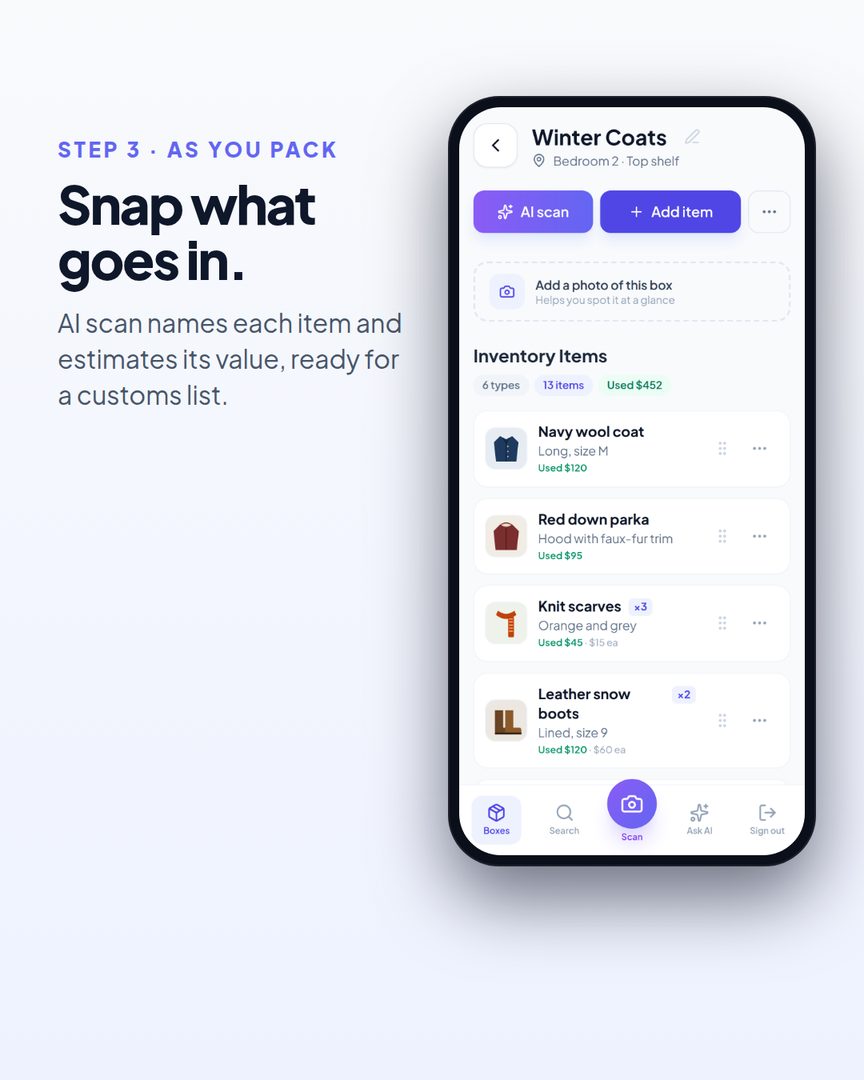
BoxTrack works well for this. Make a "box" for each closet, cabinet or storage bin in each house, and snap a photo of what's in it. AI lists the items for you to check. Then, from Florida, search "paring knife" or "car title" and see which house has it and where. The same photos double as a home inventory for insurance. See how BoxTrack works for a home inventory. Your first box is free.
If you store anything between seasons, storing your things between homes covers storage units and what to pack for months away. For the insurance side, home inventory for insurance explains what a useful inventory includes.
Sources
- Transportation Security Administration, Medical items and medication and Liquid medications
- US Postal Service, Change of address: the basics and Premium Forwarding Service
- Insurance Information Institute, Understanding the role of vacancy insurance
- National Association of Insurance Commissioners, Will my homeowners policy cover water damage from a burst pipe?
This is general information, not insurance advice. Vacancy rules and coverage depend on your own policy, so check with your insurer before you leave for the season.