Moving day checklist: hour by hour
A moving day checklist from the morning walkthrough to the last box off the truck, with what to check before you sign anything.
 The BoxTrack team · · 5 min read

The crew knocked at 7:40. The coffee maker was already packed, the kids' bags were somewhere in the stack by the door, and the lead mover was holding out a clipboard with an inventory sheet on it. Nobody had said who was in charge of reading it.
Moving day goes fast once the truck shows up. The planning is done by then; what's left is a few hours of decisions you'll want to get right the first time. Here's the day in order.
The night before
Most of moving day is decided the evening before. Before bed:
- Pack an overnight bag for everyone: clothes, chargers, medicine, toothbrushes.
- Set aside the open-first box, and keep it out of the truck. Our first-night box checklist covers what goes in it.
- Put everything that rides with you in one place, like a bedroom or the car: documents, laptops, keys, jewelry, pets' things.
- Empty and defrost the fridge if it's coming.
- Charge your phone and know where the paperwork from your mover is.
Morning, before the crew arrives
Get up early enough to do a walkthrough on your own. Open every closet, cabinet and drawer. Check the attic, basement, garage and any shed.
Clear a path. Prop doors, take down anything hanging in the hallway, and protect floors if it's wet out. Find a spot for the crew to park, and if you need a permit or a reserved space in your building, have it in hand.
Plan for kids and pets. A friend's house, a room with the door shut and a sign on it, or a sitter for a few hours keeps them safe and keeps the crew moving.
When the crew arrives
Meet the lead mover and walk the house together. Point out what's going, what's staying, and what rides with you. On an interstate move, FMCSA's consumer handbook, Your Rights and Responsibilities When You Move, says you or someone you appoint should be there for pickup and delivery.
If you've added things since the estimate, say so now. FMCSA's pickup guidance says that on the day of pickup, if you have more to move, the mover must either reaffirm your non-binding estimate or write a new one before loading.
The inventory and the bill of lading
On an interstate move, the crew writes an inventory: each item gets a number, and the mover notes any damage or wear it already has. FMCSA's handbook says both you and the mover sign each page, and that before you sign you should make sure every item is listed and the condition notes are right. If you disagree with a note, you can say so on the form.
Walk along while they do it. "Scratched" next to a dresser that isn't scratched becomes a problem if you need to make a claim later.
The bill of lading is your contract with the mover. Under 49 CFR 375.505, it must be in the driver's hands before the truck leaves your home, and it gets signed at both ends. FMCSA's handbook says:
- Check that the pickup and delivery dates on it are filled in and that you agree with them.
- Don't sign it if something on it is wrong. Get it corrected first.
- Keep your copy until the shipment is delivered, paid for and any claims are settled.
| Before you sign | Keep a copy | |
|---|---|---|
| Inventory: every item listed, condition notes right | ✓ | ✓ |
| Bill of lading: dates filled in and agreed | ✓ | ✓ |
| Accepted forms of payment written on it | ✓ | ✗ |
| Mover's phone number and the driver's name | ✗ | ✓ |
While they load
Stay close but out of the way. Keep water around for the crew. Label anything that shouldn't go on the truck with a sign, or move it to the car.
Take a photo of the meters (power, gas, water) and note the readings.
When the house is empty, do a last walkthrough. FMCSA's moving day tips say to look through the whole house one more time before the truck leaves. Check every room, every closet, behind doors and on top of the fridge.
Then lock up, leave the keys where you agreed, and take photos of each empty room in case there's a question about the deposit.
Delivery
At the new place, be there when the truck arrives, or have someone there for you. Before the crew starts, decide which room each box goes to, and put a sign on each door that matches the room names on your boxes.
FMCSA's handbook says it's your job to check what comes off the truck against the inventory, and to write any new damage on the inventory form before you sign it. Your ability to recover for loss or damage may depend on those notes. Check off item numbers as they come in, and look at furniture as it comes through the door.
FMCSA also says to confirm ahead of time how your mover takes payment, and not to assume a credit card is accepted unless the bill of lading says so.
If something turns up broken later, you have 9 months from delivery to file a written claim on an interstate move. Our guide to filing a moving damage claim covers it.
Moving day, in order
- The night beforeOvernight bags, open-first box, documents in one place
- MorningWalk every room, clear a path, settle the kids and pets
- Crew arrivesWalk the house with the lead mover; mention anything new
- LoadingCheck the inventory, read the bill of lading, photograph the meters
- Truck leavesFinal walkthrough, lock up, photos of empty rooms
- DeliveryCheck items against the inventory, note damage, then sign
Know which box is which
The longest part of moving day is often after the truck leaves, digging for the box with the sheets in it.
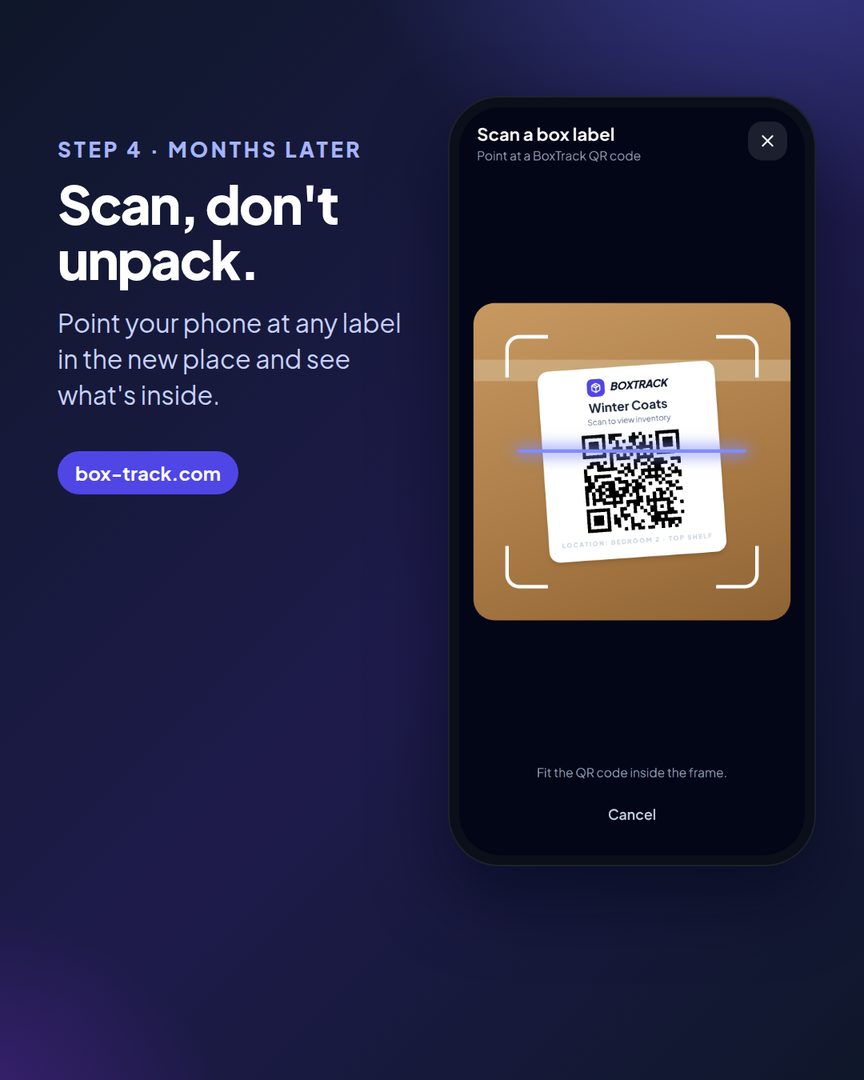
BoxTrack keeps a list of every box. Make a box in the app for each carton as you pack, snap a photo of what goes in, and AI lists the items. Print a QR label for each one with its room on it. On delivery, scan a box to see what's inside and where it goes, or search "bath towels" to find which box they're in. Our free moving checklist covers the weeks before. See how BoxTrack works for a move. Your first box is free.
For the weeks leading up to the day, see the 8-week moving to-do list.
Sources
- Federal Motor Carrier Safety Administration, Your Rights and Responsibilities When You Move
- Federal Motor Carrier Safety Administration, Pickup of my shipment of household goods
- Federal Motor Carrier Safety Administration, Ready to Move brochure
- Cornell LII, 49 CFR 375.505: Must I write up a bill of lading?
This is general information, not legal advice. The federal rules cited apply to interstate moves in the US; moves within one state follow that state's rules.