How to file a moving damage claim
The steps for a loss or damage claim against an interstate mover, from delivery day to the 9-month deadline, the mover's reply and arbitration.
 The BoxTrack team · · 6 min read

The crew was carrying the last of the boxes in at nine at night. Box 31 came through the door with one corner caved in, and the driver held out a clipboard. Somewhere under the signature line was a column for "exceptions." Nobody wrote anything in it. Two days later, unpacking box 31, the set of wine glasses inside was mostly glass dust.
That claim can still be made. Federal rules give you time to file one after an interstate move, and set deadlines for the mover to answer. What you do on delivery day, and in the weeks after, decides how easy it is to prove. Here's the process from start to finish.
On delivery day
Before you sign the delivery receipt, walk through what came off the truck. The mover's inventory lists every numbered item, and the copy you sign at delivery is the record of what arrived and in what shape.
- Check each item number off as it comes in. Anything missing goes on the inventory before you sign.
- Note visible damage next to the item: "box 31 crushed corner," "dresser top scratched." Be specific.
- Photograph damaged boxes and furniture right there, before anything is moved again.
You don't have to find every problem that night. The FMCSA's page on discovered loss or damage is clear that damage found later, while unpacking, can still be claimed. Noting it at delivery just makes the claim harder to argue with.
Keep everything
Don't throw out broken items or the boxes and packing they came in. The mover may want to inspect them, and a crushed carton is evidence of how the damage happened. Photograph each damaged item in place in its box, then on its own, and keep the pieces until the claim is settled.
Gather the paperwork too: the bill of lading, the estimate, the inventory with your notes, and any receipts or appraisals for what was damaged.
File in writing, within 9 months
On an interstate move, you have 9 months from delivery to file a claim. If the whole shipment was lost, the clock runs from the date it should have been delivered. Don't wait anywhere near that long. Memories fade and photos get lost.
The claim has to be in writing, but it doesn't have to be on the mover's own form, though most will send you one. FMCSA suggests sending it by certified mail so you have proof of the date. Under 49 CFR 370.3, a claim counts when it does three things:
- Gives enough facts to identify the shipment
- Says the mover is responsible for the loss or damage
- Asks for a specific amount of money, or one that can be worked out
A claim for "about $500, more or less" doesn't meet the third test. Put a number on it.
What to put in the claim
FMCSA's guidance suggests a list of missing items and a separate list of damaged ones, photos of the damage, and replacement cost estimates. For each item, give:
- What it is, with brand and model where it matters
- Its item number on the mover's inventory, and the box it was in
- What's wrong with it: missing, broken, scratched, water-damaged
- What it costs to repair or replace, with a quote, receipt or a link to the same item for sale
- Its age, if you know it
Photos from before the move are the strongest evidence you can add. A picture of the dresser in your old bedroom shows it left without the gouge.
| Strong claim | Weak claim | |
|---|---|---|
| Item described by brand and model | ✓ | ✗ |
| Matches a numbered item on the inventory | ✓ | ✗ |
| Damage noted at delivery | ✓ | ✗ |
| Photo from before the move | ✓ | ✗ |
| A specific dollar amount | ✓ | ✗ |
What the claim is worth
The level of liability you chose when you booked decides how much you can get back. With Full Value Protection, the mover has to repair the item, replace it, or pay its replacement value. With Released Value, the mover's liability is 60 cents per pound per item, so a broken 10-pound lamp is worth six dollars no matter what it cost. Our guide to full value protection vs released value explains both, and the extra step needed for items worth more than $100 a pound.
The mover's deadlines
The rules give the mover deadlines too. Under 49 CFR 370.5, it has to acknowledge your claim in writing within 30 days of getting it. Under 49 CFR 370.9, it has 120 days to pay, decline or make a firm settlement offer in writing. If it can't finish in 120 days, it has to tell you in writing why, and update you every 60 days after that.
A moving claim, start to finish
- Delivery dayNote missing and damaged items on the inventory, take photos
- The first weeksUnpack, list every problem, keep the broken items and boxes
- Before 9 monthsSend the written claim with photos and amounts, by certified mail
- Within 30 daysThe mover acknowledges the claim in writing
- Within 120 daysThe mover pays, declines or makes a firm offer
- If you disagreeAsk for arbitration through the mover's program
If you can't agree
Every interstate mover has to offer a neutral arbitration program for loss and damage disputes, under 49 CFR 375.211. The mover must tell you about it before the move, and can't charge you more than half the cost of starting the case. FMCSA's arbitration brochure explains the rest:
- For claims of $10,000 or less, arbitration is binding on the mover if you ask for it.
- For larger claims, the mover has to agree to it.
- The arbitrator should decide within 60 days of written notice of the dispute.
FMCSA itself doesn't settle claims. It treats them as a civil matter between you and the mover, so arbitration or court is the next step if the mover won't pay what you're owed.
Start the claim before you pack
The easiest claim to prove is the one where you already have a list. What was in box 31? What did the glasses look like before? What were they worth? Those answers are hard to rebuild after the move.
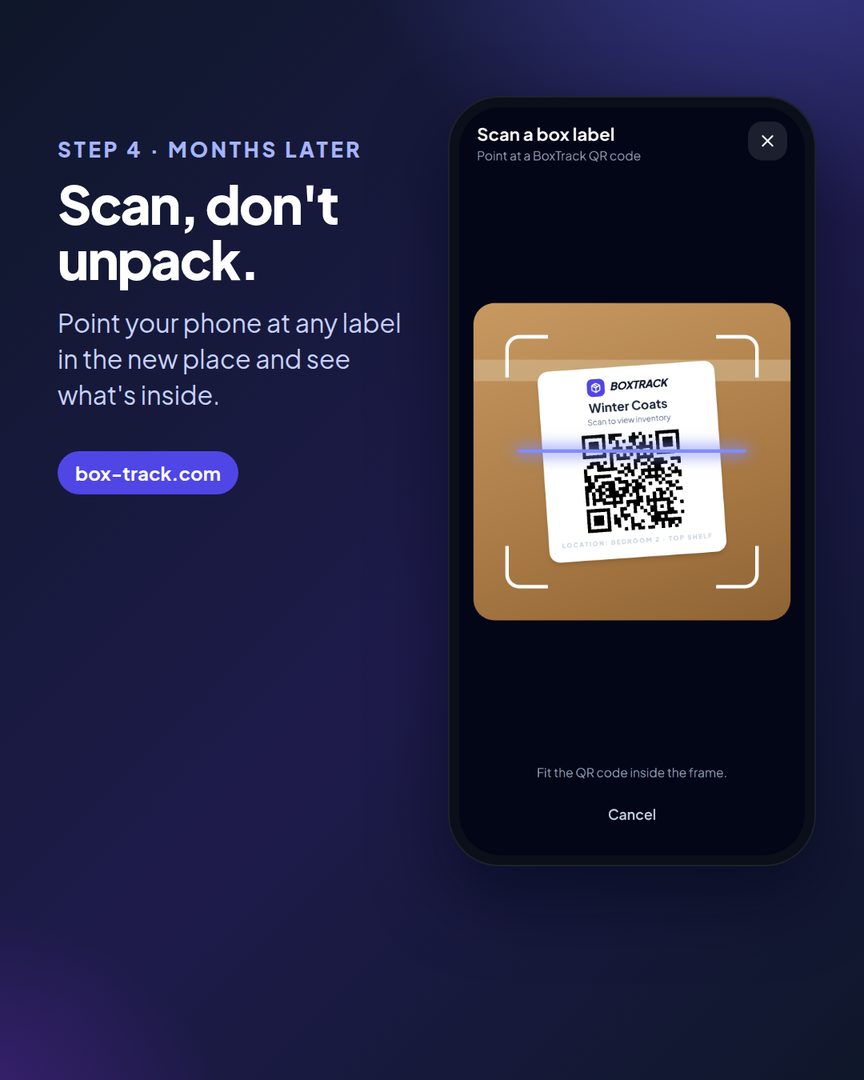
BoxTrack keeps them as you pack. Make a box in the app for each carton, snap a photo of what goes in, and AI lists the items with an estimated value for you to check. The photos show the condition before the truck, the list shows exactly what was in each box, and you can export it all to Excel to attach to the claim. See how BoxTrack helps with insurance records. Your first box is free.
Before you book, our guide to reading a moving estimate covers where the valuation choice shows up on the paperwork.
Sources
- Federal Motor Carrier Safety Administration, Have you discovered loss or damage to your household goods shipment?
- Federal Motor Carrier Safety Administration, What if there are problems?
- Federal Motor Carrier Safety Administration, Arbitration program brochure
- Cornell LII, 49 CFR 370.3: Filing of claims
- Cornell LII, 49 CFR 370.5: Acknowledgment of claims
- Cornell LII, 49 CFR 370.9: Disposition of claims
- Cornell LII, 49 CFR 375.211: Must I have an arbitration program?
This is general information, not legal advice. It covers interstate moves in the US; moves within one state follow that state's rules. Read your mover's paperwork, and talk to a lawyer if a large claim is denied.