Moving in winter: what to plan for
How to plan a winter move, from booking and delay rules to icy walkways, cold electronics, plants and keeping the heat on at both homes.
 The BoxTrack team · · 6 min read
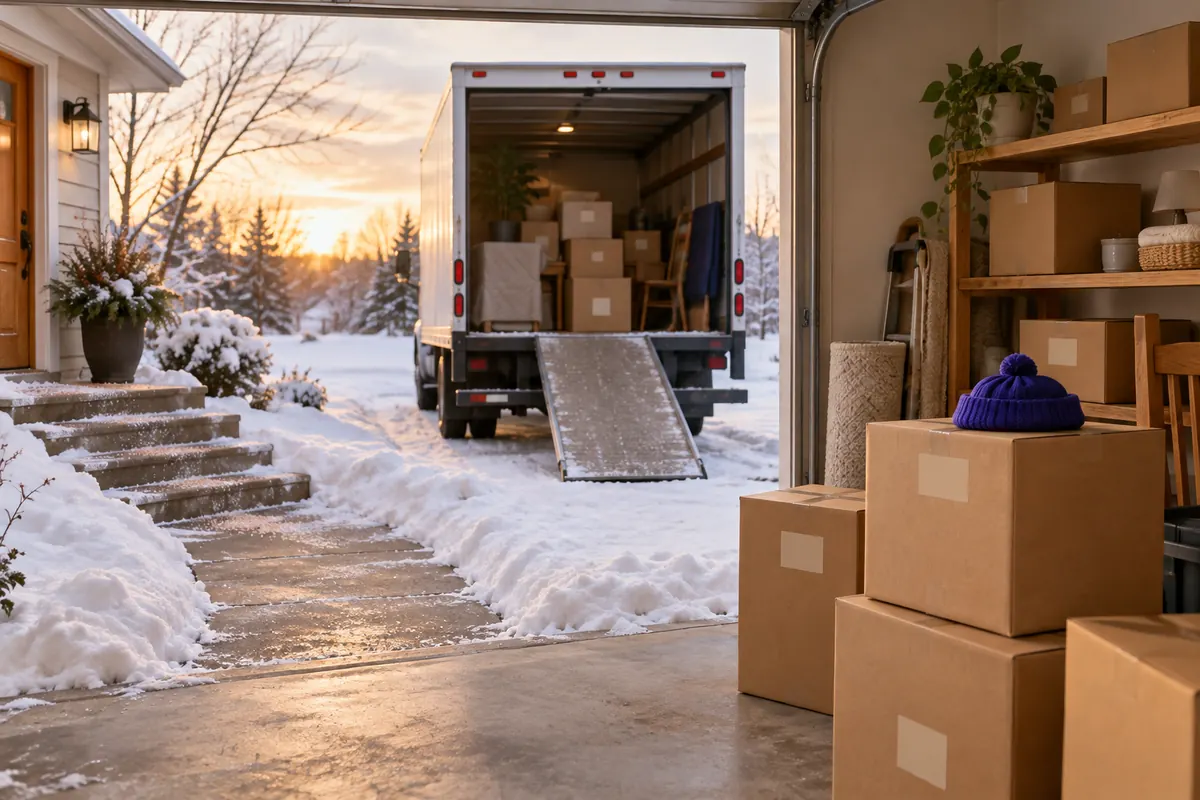
The truck was booked for the second Saturday in January. On Friday night it snowed six inches. By morning the driveway was a sheet of ice under fresh powder, the shovel was packed in a box marked "garage," and the crew's first question was where they could park.
A winter move can cost less and be easier to book than a summer one. It also has problems a July move never does: ice, short days, frozen pipes and electronics that come off a cold truck into a warm house. Most of them are solved by a few things you do in the week before.
Why people move in winter, and what it costs them
Moving companies call late spring and summer their peak season. North American Van Lines and Mayflower both describe the busy stretch as running from about May through September, and both suggest the colder months are when dates are easier to get and prices are often lower. That's their own guidance, not a federal figure, so get written estimates and compare.
The tradeoff is the weather. A storm can close a highway or push a pickup back a day, and you'll want room in your plans for that.
Numbers to plan around
If the weather delays your mover
On an interstate move, federal rules say what a mover has to do when it can't make the agreed dates. Under 49 CFR 375.605, it must tell you as soon as the delay becomes apparent, by phone, in person, email or another listed method, and give you the new dates it expects. It also has to keep a written record of that notice.
Two things to do before the move:
- Make sure the mover has a phone number and email you'll actually check on moving week.
- Read the pickup and delivery dates on your paperwork. A spread of dates, rather than one day, is common on long moves, and winter is when you're most likely to use the whole spread. Our guide to reading a moving estimate shows where those dates appear.
Clear a path at both ends
A crew carrying a dresser down icy steps is how furniture, and people, get hurt. The day before, and again that morning:
- Shovel and salt the driveway, walkways and steps at the old place.
- Ask someone at the new place, or the building manager, to do the same there. If that isn't possible, bring a shovel and a bag of ice melt in your car.
- Keep the street in front clear so the truck can get close.
Inside, the problem is what everyone tracks in. United Van Lines suggests mats at every outside door, plastic tarps over wood and tile, and cardboard laid over carpet, because slush, rock salt and sand are hard on new floors.
Pack the shovel, the ice melt and a broom last, and keep them out of the truck.
Electronics, liquids and plants
Electronics. Cold isn't the main danger. Moisture is. United Van Lines warns that electronics brought from the cold into a warm room can collect condensation. Let a TV, computer or game console sit indoors for a few hours to warm up before you plug it in. Phones and laptops ride with you, not in the truck. Apple says iPhone and iPad are designed to work between 32 and 95°F, and that a cold device may shut off or stop charging until it warms up, so keep them in the cab, not the trunk. Our guide to packing electronics covers the rest.
Liquids. Anything water-based can freeze and burst: paint, cleaning products, some toiletries, wine. Use up or give away what you can before the move, and carry the rest in your car. Check your mover's list of items it won't carry before you pack them at all.
Plants. Many movers won't carry them, and a cold truck would hurt them anyway. United Van Lines advises boxing or wrapping houseplants before you step outside and not leaving them in a cold car for long. Move them last and unload them first.
The car, if you're driving
A winter move often means a long drive in a loaded car. NHTSA's winter driving tips are a good checklist:
- Have a mechanic check the battery, charging system and belts. Cold weather reduces battery power, and electric cars can lose range.
- Check tire pressure when the tires are cold, using the number on the driver's door frame, not the one on the tire. NHTSA says tread should be at least 2/32 of an inch.
- Keep the gas tank close to full.
Build a car kit, and keep it in the cabin, not under 40 boxes in the trunk. NHTSA and Ready.gov both list a shovel, ice scraper, sand or kitty litter for traction, jumper cables, a flashlight, blankets, water, snacks, a phone charger and any medicine you need.
Keep the heat on at both homes
Don't turn off the heat at the old place until the truck pulls away, and have it running at the new place before you arrive. United Van Lines notes that heat in the new home protects the pipes, but suggests turning it down while doors are propped open for loading. If the new place has been empty, ask the landlord or seller to keep the heat on. A burst pipe in an empty house can run for days before anyone sees it.
Set up gas, power and water at the new address for the day before you move in, not the day of.
Short days
In December the sun can be down before a long-distance crew finishes. Ask for a morning start, and have lights ready: a work light or two, and the porch and driveway lights on at both ends. Put the bulbs, flashlights and an extension cord in a box you'll open first.
A winter move, in order
- Four to six weeks outBook the mover and ask about weather delays
- Two weeks outHave the car serviced; set up heat and power at the new place
- The week beforeUse up liquids, find the shovel and ice melt, pack a car kit
- The day beforeShovel and salt both ends, lay mats and tarps, check the forecast
- Moving dayElectronics and plants ride with you; plug things in after they warm
Find the warm stuff first
On a cold first night you'll want the coats, the space heater and the flannel sheets, and they'll be somewhere in a stack of boxes in the garage. Our free moving checklist has a space for a box you open first.
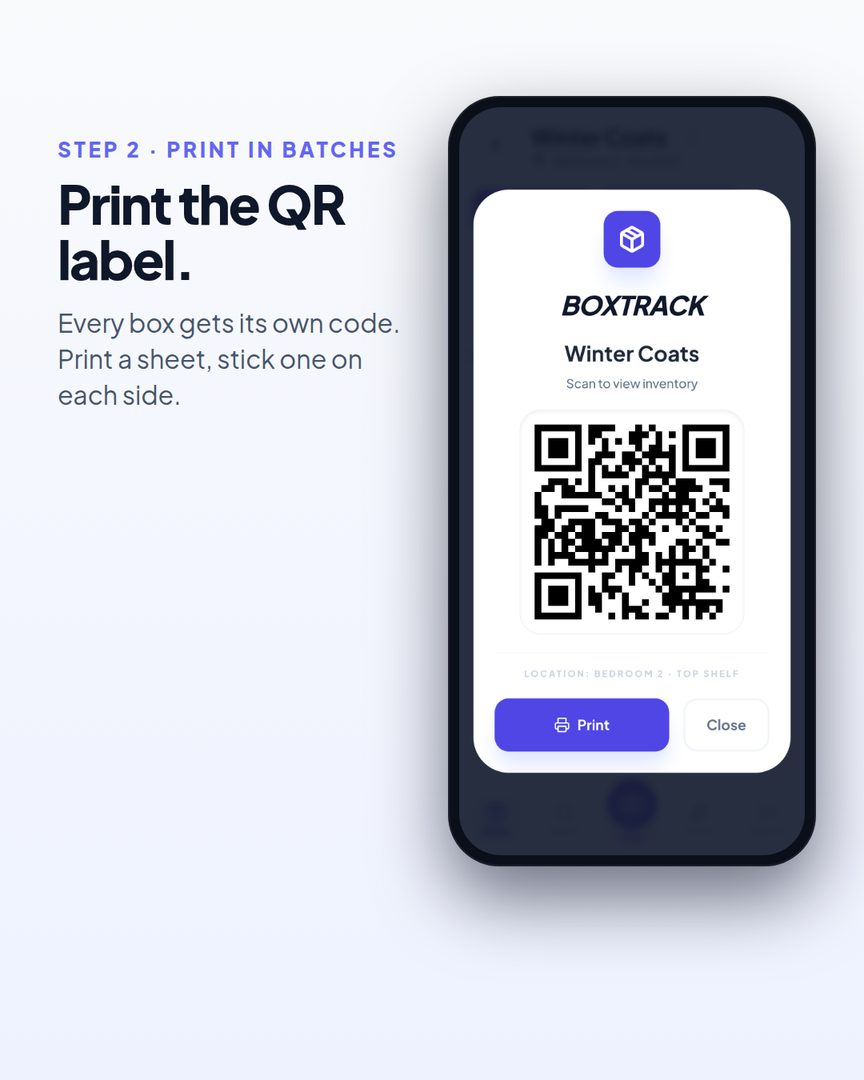
BoxTrack makes the rest of the boxes findable. Make a box in the app for each carton, snap a photo of what goes in, and AI lists the items. Print a QR label for each one. At the new place, search "space heater" and the app tells you which box it's in, or scan a label to see what's inside without opening it. See how BoxTrack works for a move. Your first box is free, and you can try it without signing up.
For which boxes to open first once you're in, see what to unpack first.
Sources
- National Highway Traffic Safety Administration, Winter driving tips
- Ready.gov, Winter weather
- Cornell LII, 49 CFR 375.605: How must I notify an individual shipper of any service delays?
- Apple Support, If your iPhone or iPad gets too hot or too cold
- United Van Lines, Moving in winter
- United Van Lines, 8 tips for moving in snowy winter weather
- North American Van Lines, How far in advance should you book movers?
- Mayflower, Best time of the year to move