Moving to a new state: DMV, voter and tax checklist
The official paperwork after a move to a new state, from a new driver's license and car registration to voter registration and two state tax returns.
 The BoxTrack team · · 6 min read

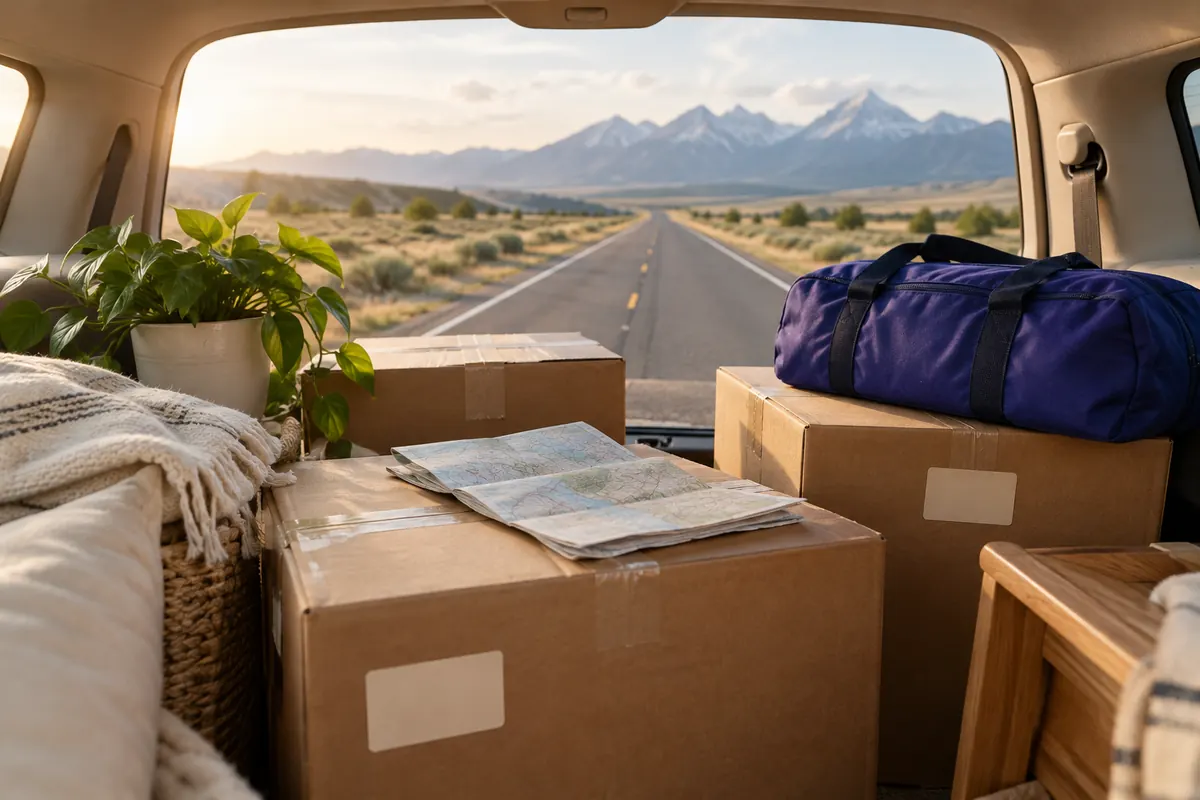
The boxes were mostly unpacked by the second weekend. The couch had found its wall. Then a neighbor glanced at the car and asked, kindly, whether they knew how long they had to get new plates. They didn't. The answer, in their new state, was already behind them.
Moving to a new state comes with a short list of official jobs, and some of them have clocks that start the day you become a resident. Most people know the jobs exist. What catches them out is how short the deadlines can be and how much they vary. Here's the list, with the order that tends to work.
Driver's license and car: look up your state's clock first
Each state sets its own deadlines for new residents, and they're not close to uniform. A few examples from the states' own motor vehicle sites:
| State | Driver license | Car registration |
|---|---|---|
| California | 10 days after becoming a resident | 20 days |
| Texas | 90 days | 30 days, after a vehicle inspection |
| Florida | 30 days | Check FLHSMV; its pages give different windows |
California's DMV says residency can be shown by things like voting in a California election or paying resident tuition. Florida's site lists enrolling children in public school, registering to vote, filing for a homestead exemption or accepting a job there. In other words, the clock may start before you think of yourself as "moved."
Order matters in some states too. The Texas DMV says to follow its steps in order: inspection, then registration and title, then the driver license from DPS.
New-resident deadlines vary a lot
What to bring
Expect to show proof of identity, your Social Security number and your new address. For a REAL ID, DHS lists the federal minimum as two proofs of your principal residence, and states can ask for more. California's DMV, for example, asks for one residency document for a standard license and two for a REAL ID. Florida says you'll need two proofs of residential address and must apply in person.
For the car, have the title (or your lender's details if there's a loan), your registration and proof of insurance. Florida, for one, requires the vehicle identification number to be physically checked by a law enforcement officer, a military police officer or a licensed Florida dealer before it will title an out-of-state car.
Our post on important documents to keep with you on moving day covers keeping these papers out of the moving truck, which is where they tend to end up.
Voter registration: it doesn't follow you
Your old registration doesn't move with you. USA.gov says that if you move to a new state, you need to register to vote there, and that some states' deadlines are as early as 30 days before an election. Vote.gov links to each state's rules and lets you register online where your state allows it.
There's also the National Mail Voter Registration Form, which you can fill in, print, sign and mail. Most states accept it, but not all; vote.gov lists the ones that don't. If you move close to a presidential election and miss your new state's deadline, USA.gov says your old state must let you vote in that election, by mail or in person.
Taxes: one move, often two state returns
If you move between states mid-year, you'll often file as a part-year resident in both states that have an income tax. The rules differ, but the shape is similar:
- California's Franchise Tax Board says people who moved into or out of California during the year file Form 540NR. Part-year residents are taxed on all income received while a California resident, and only on California-source income while not.
- New York's instructions say you must file Form IT-203 if you moved into or out of New York during the year. They also note that your domicile doesn't change until you've clearly abandoned the old one and set up a new permanent home somewhere else.
Look up both your old and new state's tax agency for its part-year resident form.
For federal taxes, the IRS says you can update your address with Form 8822, and that it may take four to six weeks to process. A USPS change of address may update the IRS too, but the IRS notes that not all post offices forward government checks, so it's worth telling the IRS directly.
One tax point that surprises people: moving expenses are no longer deductible for most people. Since 2018, the IRS says the deduction is limited to active-duty members of the Armed Forces moving under a permanent change of station order. The IRS's draft 2026 instructions for Form 3903 add members of the intelligence community who relocate for a change in assignment.
A first-month order of operations
Your first weeks in a new state
- Before you moveLook up the new state's license and registration deadlines
- Week oneChange your address with USPS and the IRS; set up car insurance for the new state
- Weeks one to twoGet any vehicle inspection, then register and title the car
- Weeks two to fourGet your new driver's license and register to vote
- Next tax seasonFile part-year resident returns where required
For everyone else who needs your new address, from banks to Social Security, see who to notify when you move, and our free change of address checklist keeps track of it for you.

The title is in a box somewhere
Every one of these visits asks for a piece of paper: the car title, last year's tax return, a birth certificate, the lease. The week after a move, most of those are in a box, and "Office" or "Misc" on the side doesn't narrow it down.
BoxTrack keeps a list of what's in every box. Make a box in the app as you pack, snap a photo of what goes in, and AI lists the items for you to check. Print a QR label for each box. When the DMV wants your title, search "title" and get the box number, or scan a label to see what's inside without opening it. BoxTrack doesn't fill in any official forms; it finds the papers you need for them. See how BoxTrack works for a move. Your first box is free.
This is general information, not legal or tax advice. Deadlines and rules change and differ by state; check your new state's DMV, election office and tax agency, or a tax professional.
Sources
- California DMV, New California resident portal
- California DMV, Fast Facts 5: requirements for a California driver license
- Texas DMV, New to Texas
- Texas DPS, Moving to Texas: a guide to driver licenses and IDs
- Florida HSMV, New resident: welcome to Florida
- TSA, REAL ID frequently asked questions
- USA.gov, How to update or change your voter registration
- Vote.gov, Register to vote
- California Franchise Tax Board, Part-year resident and nonresident
- New York State Department of Taxation and Finance, Instructions for Form IT-203
- IRS, Address changes
- IRS, Instructions for Form 3903
- IRS, 2026 Instructions for Form 3903 (draft)