Important documents to keep with you on moving day
Which papers should ride with you on moving day, not on the truck, from passports and Social Security cards to the bill of lading, and how to keep copies.
 The BoxTrack team · · 5 min read
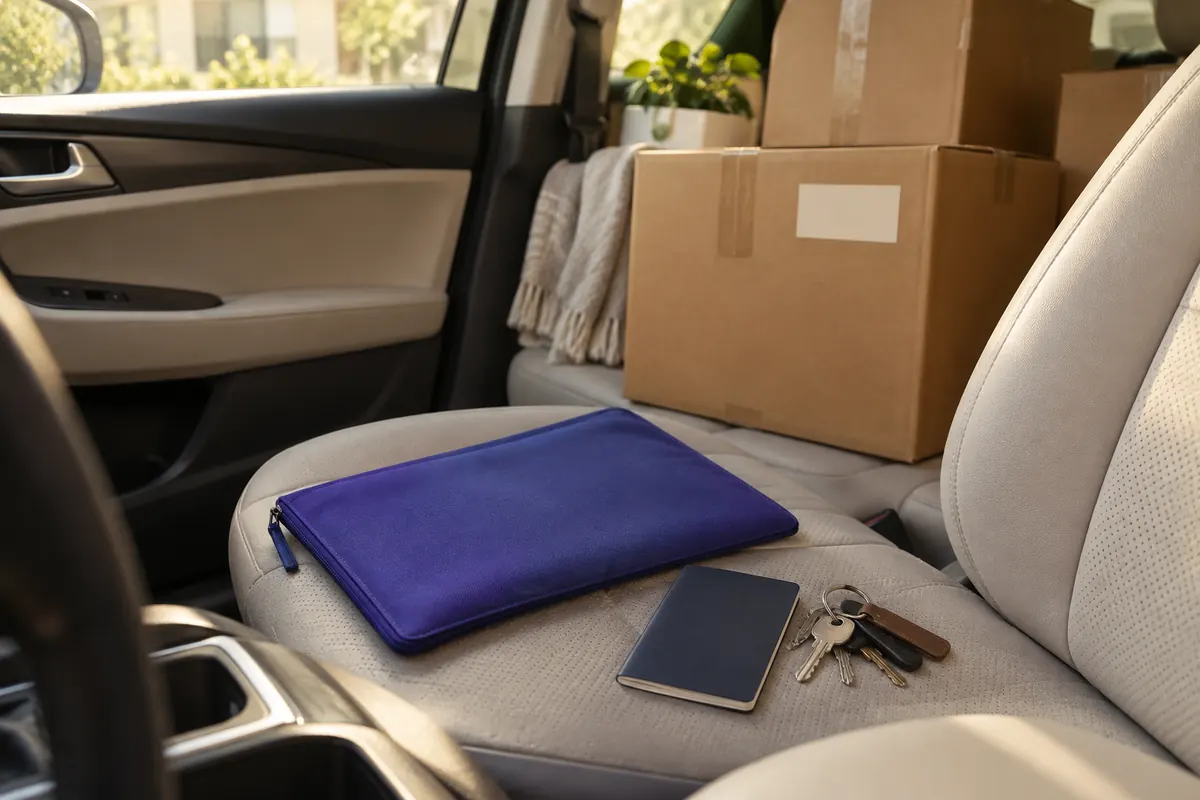
The new landlord wanted the signed lease and a photo ID before handing over the keys. The lease was in a folder. The folder was in a box marked "Office." The box was on a truck somewhere in Pennsylvania, and it wouldn't arrive for six days.
Most moving-day trouble is about stuff: a missing screw, a box nobody can find. The worst kind is about paper. A handful of documents need to be in your hands for the whole move, not in a box, not on a truck, not "somewhere in the car." Here's what goes in that folder, and how to back it up before you go.
The rule: if you'd need it in the first week, carry it
Moving trucks run on delivery windows, not appointments, especially on long-distance moves. Anything you might need to show someone, sign, or prove before the truck arrives belongs in a bag that stays with you. A zipped folder or document pouch that fits in a backpack works well. Put it somewhere you'll see it, not under the cooler.
Paperwork by the numbers
What goes in the folder
Identity
Passports, birth certificates and Social Security cards. These are the hardest to replace and the ones identity thieves want most. The Social Security Administration says to keep your card at home in a safe place and not to carry it routinely, which makes a move the one time it has to travel. Keep it in the folder, and put the folder back somewhere safe as soon as you arrive.
Your driver's license and other photo ID ride with you anyway, but check the expiry dates.
The move itself
The estimate, the order for service, the bill of lading and the mover's inventory. FMCSA calls the bill of lading your contract with the mover and says to keep it until your goods are delivered, the charges are paid and any claims are settled. The inventory is what you'll check boxes against on delivery day, and what a damage or loss claim starts from.
Have your payment ready too. Under federal rules, an interstate mover can refuse to unload until you pay 100 percent of a binding estimate or 110 percent of a non-binding one, and can put your goods in storage at your expense in the meantime. Our guide to reading a moving estimate explains which one you have.
Housing
The lease or closing papers for the new place, plus the keys, garage codes and anything the landlord or agent asked you to bring. Hang onto proof of your new address as well. For a REAL ID, DHS lists two proofs of your principal residence among the federal minimums, and states can ask for more, so a signed lease or a first utility bill becomes useful quickly.
Money
A checkbook if you use one, a backup card, and the account and policy numbers you'd need if your wallet went missing. Keep your renters or homeowners insurance details handy too.
Health
Prescriptions and a few days of medication beyond the move, plus vaccination records and any medical records you'll need to set up with new doctors. If you're moving with a pet, bring its records. For moves between states, APHIS says the state you're moving to sets the rules for pets, which can include a health certificate, so check before you go and carry whatever it asks for.
Car and kids
Your car's title, registration and insurance card, which you'll need when you register in a new state. If you have children changing schools, bring report cards, immunization records and anything else the new school asked for. Our guide to moving with kids covers school records in more detail.
Folder or truck?
| Document | Keep with you | Fine on the truck |
|---|---|---|
| Passports, birth certificates, Social Security cards | ✓ | ✗ |
| Bill of lading, estimate and inventory | ✓ | ✗ |
| Lease or closing papers, keys | ✓ | ✗ |
| Prescriptions, medical and pet records | ✓ | ✗ |
| Car title, registration, insurance card | ✓ | ✗ |
| Old tax returns and paid-off loan files | ✗ | ✓ |
| Manuals, warranties and old bills | ✗ | ✓ |
Old records you won't need for weeks can travel with everything else. Pack them in a clearly numbered box so you can find them again.
Make copies before you leave
Ready.gov's Emergency Financial First Aid Kit is a free checklist that's handy for a move. It suggests photocopying both sides of your driver's license and other photo IDs, and the first two pages of your passport. For storage, Ready.gov suggests paper copies in a fireproof and waterproof box, a safe deposit box or with someone you trust, and electronic copies in a password-protected, encrypted format, either on a removable drive or a secure cloud service.
That way, if the folder does go missing, you're replacing documents with the numbers in hand rather than starting from scratch.
For everything else on the truck
The folder covers what you carry. The boxes are a different job: knowing which one holds the tax files, the spare keys or the manual for the new washer.
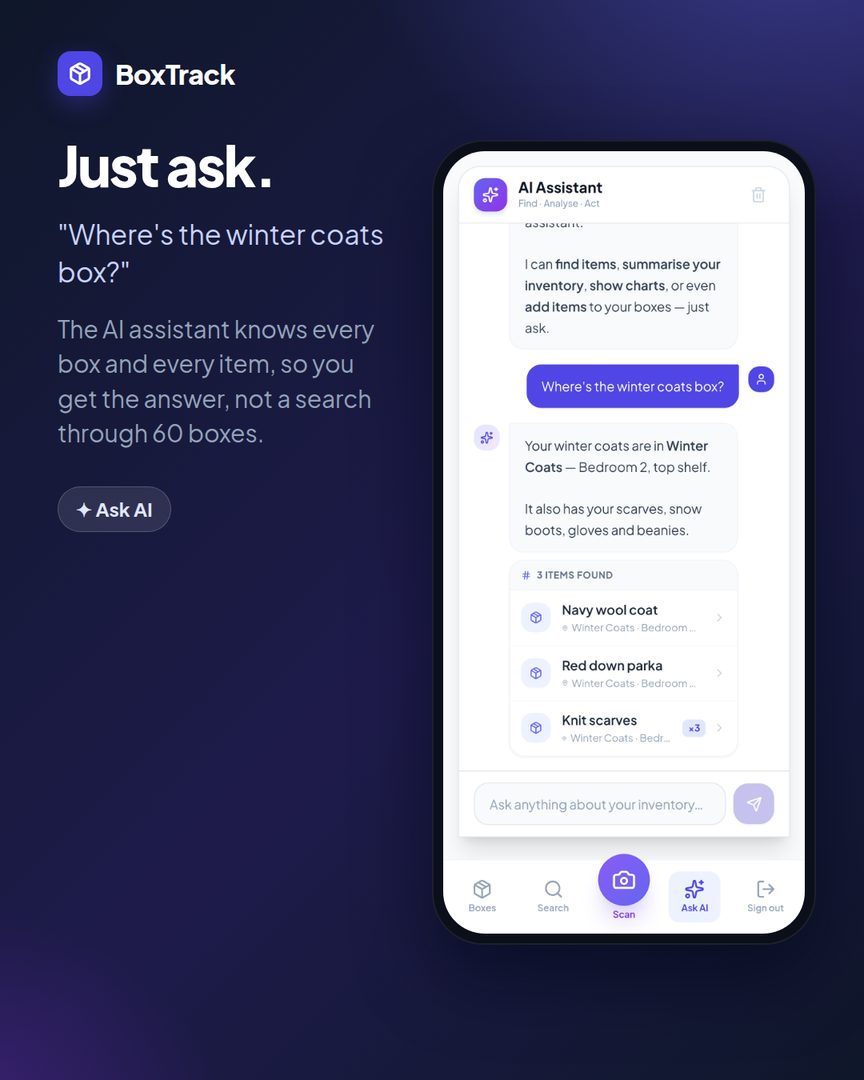
BoxTrack keeps a list of what's in every box. Make a box in the app, snap a photo of what goes in, and AI lists the items for you to check. Print a QR label for each box, and later you can scan it to see what's inside, or search "warranty" and get the box number. It's also a record of what was loaded if anything goes missing. See how BoxTrack works for a move. Your first box is free. Our free first night box checklist covers the rest of what should travel with you, and our cross-country moving checklist covers the whole long-distance move.
This is general information, not legal advice. Check your mover's paperwork and your new state's requirements for what applies to you.
Sources
- Social Security Administration, What you can do to protect your personal information
- FMCSA, Moving checklist
- FMCSA, Your rights and responsibilities when you move
- FMCSA, Collection of charges (Subpart H)
- TSA, REAL ID frequently asked questions
- USDA APHIS, Take a pet from one U.S. state or territory to another
- Ready.gov, Emergency Financial First Aid Kit