Moving across the country: a checklist
A cross-country moving checklist, from checking a mover's registration and estimate to delivery windows, what rides with you, and the new-state paperwork.
 The BoxTrack team · · 6 min read
The truck left Columbus on a Tuesday. The family flew out on Thursday, got the keys on Friday, and slept on an air mattress for nine nights, because the delivery window on the paperwork ran from the 14th to the 23rd and the truck came on the 22nd. Nobody had told them that was normal. Nobody had told them to pack the coffee maker in the car.
Moving across the country is a local move with three extra problems: the mover is regulated differently, your things and you travel on different schedules, and you land in a new state with its own rules. This checklist is built around those three.
Numbers worth knowing
Check the mover before anything else
Interstate movers are registered with the Federal Motor Carrier Safety Administration (FMCSA). Its mover search lets you look up a company by name, USDOT number or MC number and see its registration, whether it's authorized to move household goods, and its complaint history. FMCSA points out that a company can be registered and still not be authorized to move household goods, so check both.
Also check whether you're talking to a mover or a broker. A broker arranges the move and hands it to a mover; FMCSA says brokers must be registered as brokers and may only use registered interstate movers. Ask who will actually load your truck.
Our guide to spotting a moving scam covers the warning signs in more detail.
Get the estimate in writing
FMCSA requires a written estimate, dated and signed by you and the mover. A price given over the phone isn't an estimate. If you're moving from within 50 miles of the mover's or its agent's place of business, the estimate has to be based on a survey of your goods, which FMCSA's current handbook says can be done on-site or virtually. You can waive that, but only in writing, signed before your things are loaded.
There are two kinds of estimate. A binding estimate is the amount you pay. With a non-binding estimate, the final bill depends on the actual weight and services, but the mover can't require you to pay more than 110 percent of the estimate at delivery to get your things; the rest is billed later. Our guide to reading a moving estimate goes line by line, and the one on full value protection vs released value covers what the mover owes if something breaks.
Plan for the gap between pickup and delivery
On a long move, your things usually travel on their own schedule. The dates go on the order for service and the bill of lading, often as a window rather than a day. If the mover can't make the agreed pickup or delivery date, federal rules say it must tell you once it knows, and give you the new date in writing. That doesn't help you sleep, though, so pack for the gap.
| Item | Ride with you | Truck |
|---|---|---|
| Passports, birth certificates, Social Security cards | ✓ | ✗ |
| Bill of lading, estimate and inventory | ✓ | ✗ |
| Medications and prescriptions | ✓ | ✗ |
| Laptops, chargers, work equipment | ✓ | ✗ |
| A week of clothes and basic kitchen kit | ✓ | ✗ |
| Furniture, books, most of the kitchen | ✗ | ✓ |
| Seasonal clothes and decorations | ✗ | ✓ |
Our post on important documents to keep with you on moving day has the full list of papers, and the free first night box checklist covers the rest of what rides in the car.
FMCSA's checklist says to keep the bill of lading until your goods are delivered, the charges are paid and any claims are settled. If you don't pay the required amount at delivery, the mover can refuse to unload and put your things in storage at your expense, so have the payment ready for the day the truck arrives.
A cross-country timeline
From booking to the new state
- Eight weeks outCheck movers on FMCSA's search; ask for surveys and written estimates
- Six weeks outChoose a mover; read the estimate type and the delivery window
- Four weeks outCheck pet rules for your new state; book travel and a place to stay
- Two weeks outChange your address with USPS; pack what rides with you separately
- Moving dayCheck the inventory, sign the bill of lading, keep your copy
- Delivery dayCheck boxes off the inventory; note damage before you sign
- First weeksNew license, car registration and voter registration in your new state
Pets cross state lines too
The USDA doesn't set the rules for moving a pet between states; the state you're moving to does. APHIS says states may require a health certificate, updated vaccinations, testing or treatments, and it keeps a list of each state's requirements. Check before you book a vet visit, because some of these take time. Our guide to moving with a dog or cat covers the rest.
New state, new paperwork
Change your address with USPS on usps.com or at a Post Office. USPS no longer takes change-of-address requests from third-party businesses, so ignore sites that offer to file it for you for a fee.
Your new state will want a new driver's license and car registration, each with its own deadline, so look those up on the new state's DMV site before you go. For a REAL ID, DHS lists the federal minimum as proof of identity and date of birth, your Social Security number, two proofs of your new address and proof of lawful status, and states can ask for more. A lease or a utility bill in your name usually comes up here, so keep one handy.
Register to vote in your new state, too. Vote.gov says that if you move to another state you register there, and it links to each state's rules and deadlines.
For the full list of who needs your new address, see who to notify when you move.
Know what's on the truck
With a week or two between pickup and delivery, it's easy to forget what went into which box, or whether something went at all. And if a box doesn't show up, your list is what a claim is built on.
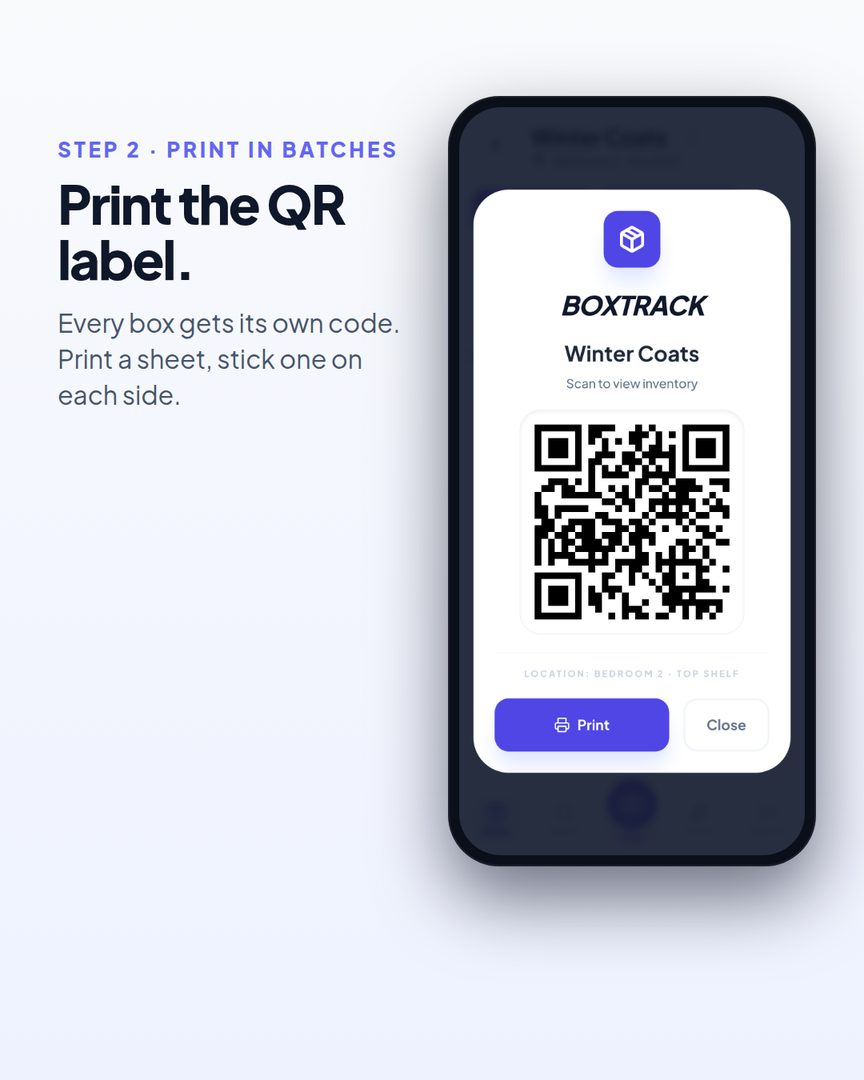
BoxTrack keeps that list as you pack. Make a box in the app, snap a photo of what goes in, and AI lists the items for you to check, with an estimated value. Print a QR label for each box. When the truck arrives, you can tick boxes off as they come in and scan any one to see what's inside, and on the first night you can search "coffee maker" to find the box. See how BoxTrack works for a move. Your first box is free. For a full week-by-week plan, our free moving checklist covers the whole move.
This is general information, not legal advice. Federal rules apply to interstate movers; check your estimate, bill of lading and your new state's requirements for your own move.
Sources
- FMCSA, Search for a registered mover
- FMCSA, Movers vs. brokers
- FMCSA, Estimating charges (Subpart D)
- FMCSA, Your rights and responsibilities when you move
- FMCSA, Moving checklist
- eCFR, 49 CFR Part 375, Subpart F: Transportation of shipments
- USDA APHIS, Take a pet from one U.S. state or territory to another
- USPS, Change of address: the basics
- TSA, REAL ID frequently asked questions
- Vote.gov, Register to vote