Who to notify when you move: the full list
Who to tell about your new address after a move, from USPS and the IRS to Social Security, USCIS and your health plan, with the deadlines that apply.
 The BoxTrack team · · 5 min read

Three months after the move, the tax refund check went to the old apartment. The post office had been forwarding mail the whole time, so it wasn't that. The IRS just still had the old address, and not every post office forwards government checks.
Mail forwarding catches a lot, but not everything, and some agencies have their own deadlines for hearing from you. Here's who to tell when you move, in the order that matters.
Start with the post office
File a change of address with USPS at usps.com/move, or at a post office. Online, USPS charges a $1.25 identity check. Third-party sites can charge far more for the same thing, and USPS says it no longer accepts requests from them.
What forwarding covers, according to USPS:
- First-Class Mail is forwarded for 12 months, and you can pay to extend it.
- Periodicals are forwarded for 60 days.
- Marketing mail generally isn't forwarded.
- From month 13 to month 18, mail goes back to the sender with your new address on it.
Give it 7 to 10 business days to take effect, so file before the move. Then use the forwarded mail as your to-do list: every envelope with a yellow forwarding sticker is a sender who still has the old address.
Deadlines worth knowing
Federal agencies (forwarding doesn't fix these)
The IRS. Use Form 8822, or file your next return with the new address. The IRS says to tell it directly even if you've told USPS, because not all post offices forward government checks. It can take several weeks to process.
USCIS, if you're not a citizen. Most non-citizens must report a move within 10 days. You can do it online through your USCIS account or with Form AR-11. USCIS says a USPS change of address doesn't update its records, and the Postal Service won't forward USCIS mail.
Selective Service, for men 18 through 25. The Selective Service System says registrants must report an address change within 10 days, until January 1 of the year they turn 26.
Social Security and Medicare. If you get either, update your address in your my Social Security account, and that updates Medicare too. People on SSI or without a U.S. mailing address need to contact Social Security instead.
The VA, if you get benefits or care, through VA.gov or your VA office.
State and local
- Driver's license and vehicle registration. Deadlines are set by each state, and they're often short after you become a resident. Check the DMV site for your new state.
- Voter registration. Register at your new address, or update it if you moved within the same state. Vote.gov links to each state's rules.
- State tax agency, especially if you moved between states and will file in both.
- Car insurance, which is priced by where the car is kept.
Health coverage
If you buy coverage through HealthCare.gov or a state Marketplace, a move to a new ZIP code or county can open a Special Enrollment Period. HealthCare.gov says you'll usually have 60 days from the move to pick a new plan, and you may be asked to prove the move with something like a lease. If you moved to a new state, you may need a new application.
If your insurance comes through work, tell HR. Your plan's network may not cover the new area.
Money
| Who | Why it matters |
|---|---|
| Banks and credit unions | Cards and fraud alerts are tied to your address |
| Credit card companies | Billing address must match for online purchases |
| Employer and payroll | W-2 and state tax withholding |
| Retirement and brokerage accounts | Tax forms and account notices |
| Loans and student loans | Statements and payment notices |
Everything else
This is the long tail, and it's where things get lost:
- Renters or homeowners insurance (end the old policy, start the new one)
- Utilities, internet and trash at both addresses, with stop and start dates
- Doctors, dentist, pharmacy and vet, plus prescription transfers
- Schools, including records transfers
- Subscriptions, memberships and online shopping accounts
- Package deliveries in transit (check the address on anything you've ordered)
- Family, friends, and anyone who sends you something once a year
Our free change of address checklist lists all of these with a box to tick, so nothing depends on memory. For the rest of the move, the 8-week moving checklist puts each step on a timeline.
When to send each one
- Two weeks beforeFile with USPS; tell your employer and bank
- Moving weekUtilities at both addresses; insurance start and stop
- Within 10 daysUSCIS and Selective Service, if they apply to you
- First monthIRS, DMV, voter registration, health plan
- As mail arrivesEvery sender whose envelope was forwarded
While you're sorting the paperwork
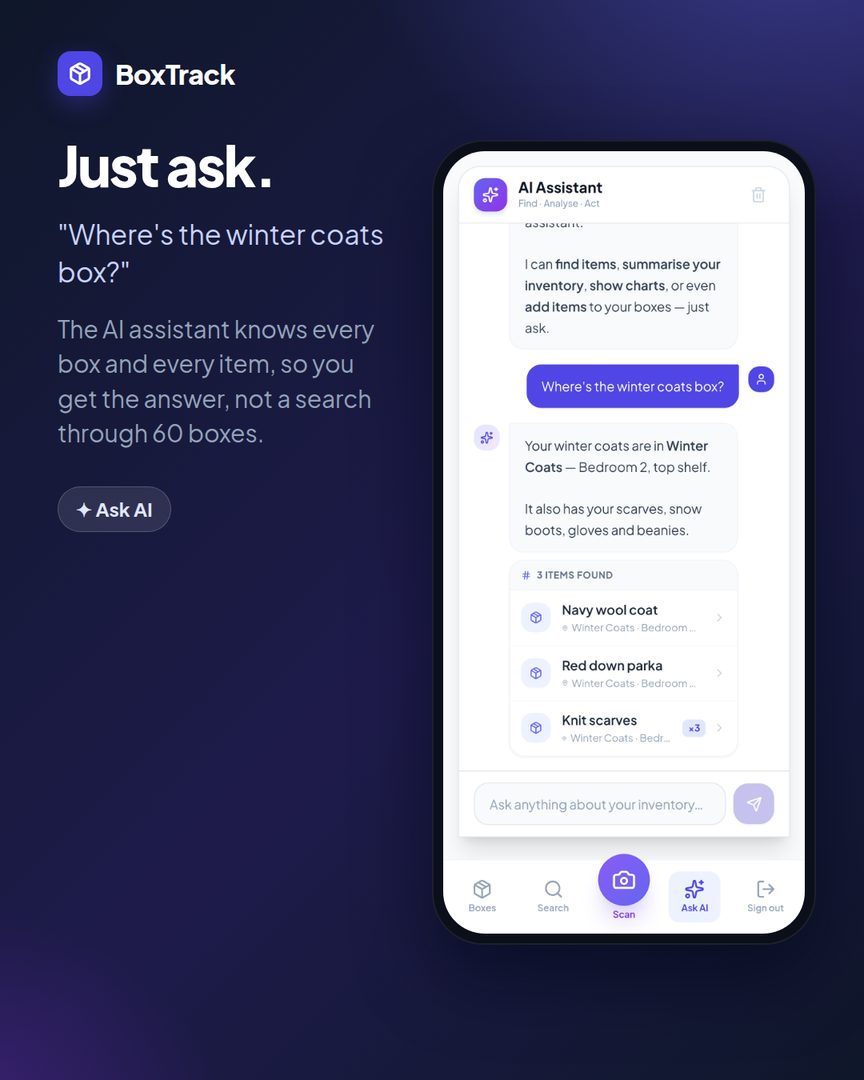
The other thing people lose in a move is the box with the passports and the old tax returns. BoxTrack keeps a list of what's in every box: make a box in the app, snap a photo of what goes in, and AI lists the items for you to check. Print a QR label for each box, then search "passport" or scan a label to see what's inside. See how BoxTrack works for a move. Your first box is free.
Sources
- USPS, Standard forward mail and change of address
- USPS, Mail forwarding options
- IRS, Topic no. 157, Change your address
- IRS, Form 8822, Change of address
- USCIS, How to change your address
- Selective Service System, Update your information
- Social Security Administration, Update contact information
- Medicare, How do I change my address with Medicare?
- HealthCare.gov, Getting health coverage outside Open Enrollment
- Vote.gov, Register to vote or update your registration
This is general information, not legal or tax advice. Deadlines and rules can change and some depend on your state, so check with each agency.