How to pack artwork and mirrors for a move
How to pack framed art, canvases and mirrors so they arrive whole, plus what to tell your mover about valuable pieces before moving day.
 The BoxTrack team · · 6 min read
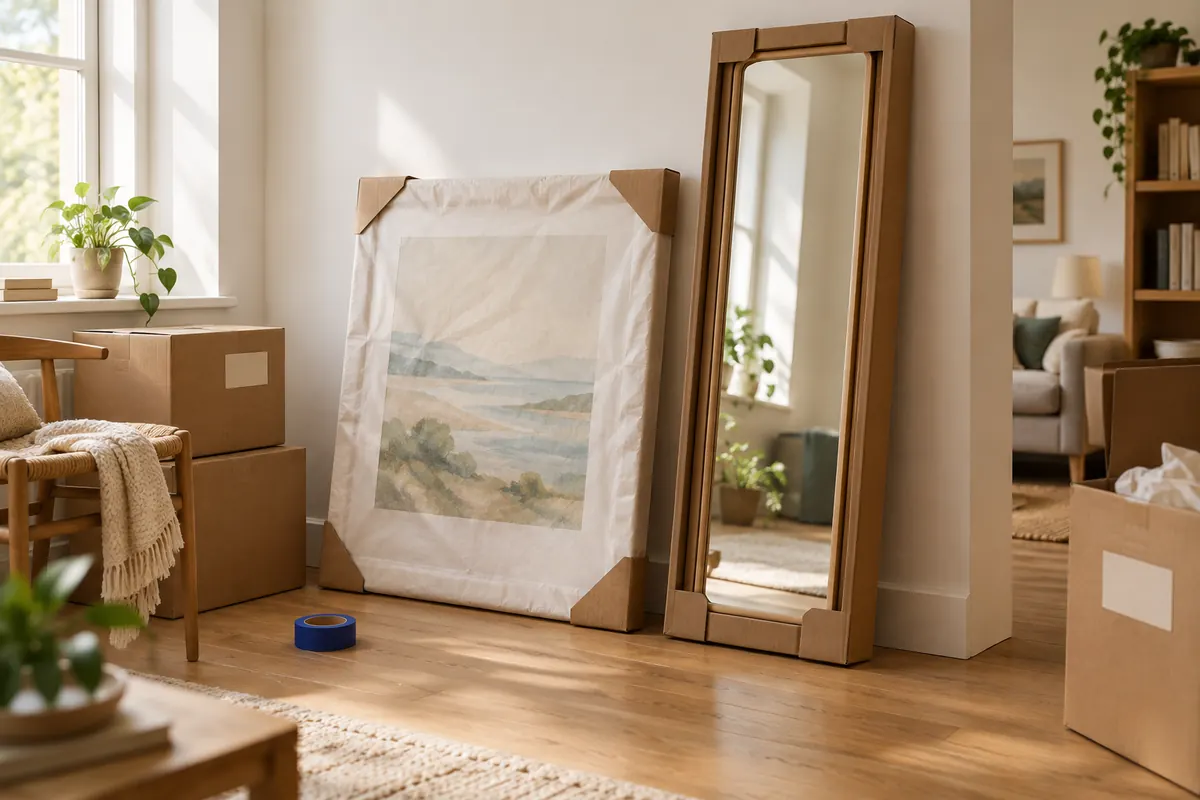
The movers were good. The couch made it, the dresser made it, the boxes of plates made it. Then someone unwrapped the hallway mirror, the one from a grandmother's house, and found a crack running corner to corner. It had been wrapped in a single moving blanket and laid flat under two boxes of books.
Glass and art break in a few predictable ways: pressure on the face, knocks on the corners, and lying flat with weight on top. Pack against those three and most pieces arrive fine.
Sort the pieces first
Before you buy supplies, walk through the house and sort what hangs on the walls into three groups:
- Everyday framed prints and photos. Pack these yourself.
- Mirrors and large glass. Pack yourself if you're careful, but get proper cartons.
- Pieces that are valuable, old, fragile or irreplaceable. Original paintings, anything with flaking paint, pastels and charcoal drawings, heavy gilded frames. Think about a fine art shipper or a conservator for these.
The National Park Service, which writes packing guidance for museum collections, says plainly in its Conserve O Gram on framed objects that if you're not sure a piece can travel safely, ask a conservator first. Its method is written for small framed works in good condition, and it says not to use it on pieces with flaking or damaged surfaces, or on charcoal, pastel or soft pencil drawings.
Supplies worth buying
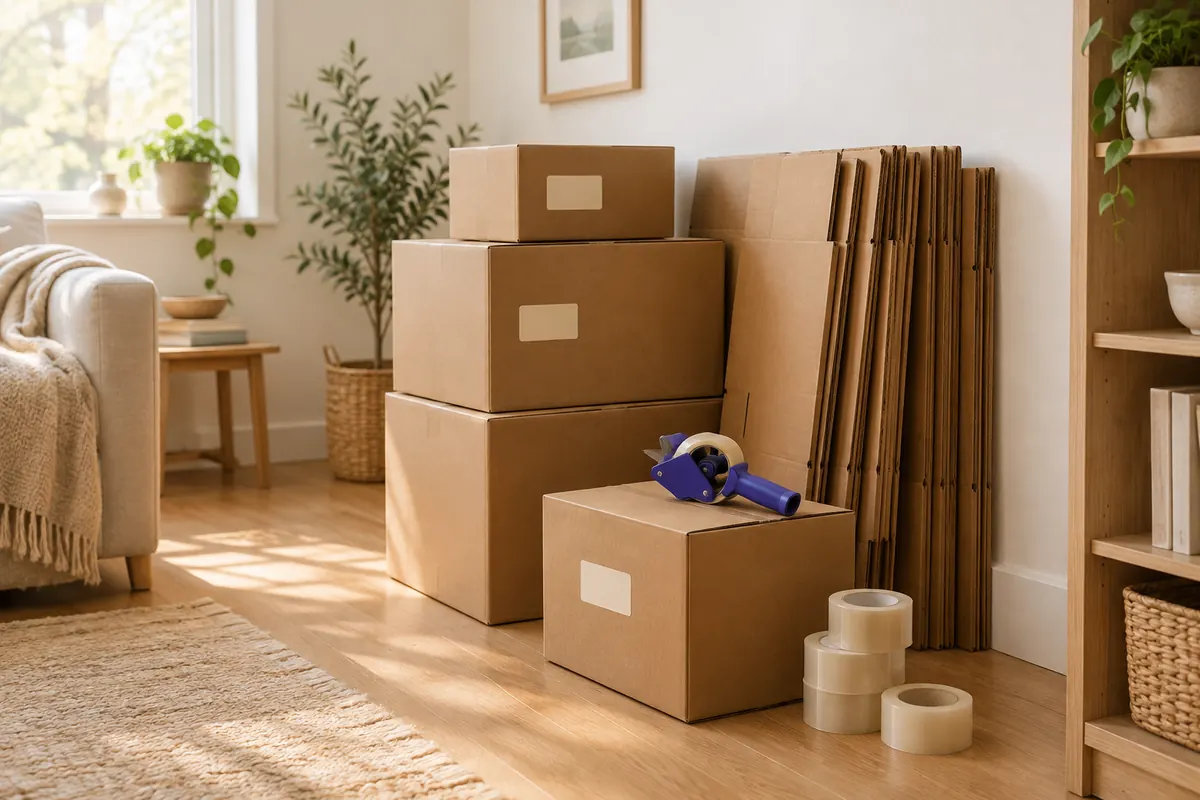
- Picture or mirror cartons (telescoping boxes that adjust to the frame), or flat cardboard you can cut
- Cardboard or foam corner protectors
- Low-tack tape, such as painter's tape
- Glassine, or plain unbuffered tissue, for anything with a painted or fragile surface
- Bubble wrap and packing paper
- A marker for "glass" and "this way up"
Regular boxes and moving blankets alone aren't enough for glass. A blanket spreads a bump, but it does nothing about a box of books pressing on the face.
Framed art behind glass
The NPS method for a small framed piece goes roughly like this:
- Tape the glass. Cover the whole glass or plexiglass surface with low-tack tape, and fold one end back to make a pull tab. If the glass breaks, the tape holds the pieces so they don't cut into the art.
- Wrap it in glassine with the art face up, fold the excess to the front, and don't tape the wrap shut.
- Cushion it. Sandwich it between foam and stiff cardboard, then bubble wrap it and put it in a box with padding all around.
Keep tape off the frame's finish and never let it touch the art itself. Plexiglass scratches easily, so keep it wrapped right up until the piece goes back on the wall.
Canvases without glass
An unframed or unglazed canvas has nothing to protect its face, so nothing sticky or rough should touch it. Wrap the face in glassine or tissue first, then add cardboard over the front and back so nothing can push into the canvas. Corner protectors go on the stretcher bars. Box it and fill the gaps so it can't slide.
Mirrors
Mirrors are heavy for their size, so the corners take the worst of any knock.
- Put painter's tape across the glass. It won't stop a mirror breaking, but it holds the pieces together if it does.
- Add corner protectors.
- Cut cardboard to the mirror's size for the front and back.
- Wrap in packing paper or a blanket, then bubble wrap.
- Slide it into a mirror carton with padding at the bottom.
| Framed art with glass | Canvas | Mirror | |
|---|---|---|---|
| Tape on the glass | ✓ | ✗ | ✓ |
| Glassine or tissue first | ✓ | ✓ | ✗ |
| Corner protectors | ✓ | ✓ | ✓ |
| Bubble wrap touching the surface | ✗ | ✗ | ✓ |
| Travels upright | ✓ | ✓ | ✓ |
How it rides in the truck
Every one of these travels standing on its edge, never flat, and never with anything stacked on it. Load them between mattresses or tall furniture so they can't tip, and write "GLASS" and an arrow on two sides of the carton so whoever lifts it can see which way is up.
If you're driving yourself, small framed pieces travel well standing between seat cushions in the back of a car.
What to remember
Tell your mover about valuable pieces
Most packing damage stories end at the claim, and the claim depends on paperwork you sign before the move. For interstate moves, the Federal Motor Carrier Safety Administration (FMCSA) says an item worth more than $100 a pound is an article of extraordinary value. List those items in writing on the shipping documents, or the mover's liability for them may be limited.
That matters most if you choose released value, the no-cost option. FMCSA says the mover's liability then is no more than 60 cents per pound, per article. A 10-pound painting worth thousands would be covered for $6. Our guide to full value protection vs released value explains the difference.
Check your own insurance too. The Insurance Information Institute notes that standard homeowners policies have limited coverage for valuables, and that a floater, often requiring a professional appraisal, can schedule individual items like art for broader protection.

Photograph everything before it's wrapped
Take a photo of each piece, front and back, with the frame corners visible, right before you pack it. If something arrives damaged, you have its condition on the day it left. Our guide to photographing belongings for insurance has the details.
Art and mirrors, start to finish
- Two weeks outSort pieces; book a fine art shipper for anything irreplaceable
- One week outBuy cartons, corners, tape and glassine
- Before packingPhotograph each piece, front and back
- Packing dayTape glass, wrap, box, mark GLASS and an arrow
- Moving dayList valuable items in writing; load upright
- ArrivalOpen and check each piece before signing for delivery
Keep a list of what's in each carton
Picture cartons all look alike once they're closed. BoxTrack keeps a list of what's in each one. Make a box in the app for each carton, snap a photo of what goes in, and AI lists the items for you to check, with an estimated value. Print a QR label for the carton, and at the new place, scan it to see which painting is inside before you cut the tape. See how BoxTrack works for a move. Your first box is free.
Sources
- National Park Service, Conserve O Gram 17/6: Packing a framed two-dimensional object
- FMCSA, Understanding valuation and insurance options
- FMCSA, Liability and protection
- Insurance Information Institute, Special coverage for jewelry and other valuables
- United Van Lines, How to pack a mirror
This is general information, not insurance advice. Mover liability options and insurance coverage depend on your mover, your policy and your state, so check them in writing before you move.