How to pack clothes for moving without the wrinkles
Wardrobe boxes for what hangs, suitcases and drawers for what folds, and how to keep moths, mildew and mystery bags out of the new closet.
 The BoxTrack team · · 5 min read
The first morning in the new apartment, there was a job interview at ten. The suit was in one of six black trash bags in the bedroom. So was the shirt, the belt and, eventually, one of the shoes. The other shoe turned up two days later in a box marked "bathroom."
Clothes look like the easiest thing to pack, which is why they get packed last and worst. A little planning saves the ironing, the hunt, and a closet full of things that should have been left behind.
Sort before you pack anything
Every piece of clothing you pack has to be carried, loaded, unloaded and hung up again. Go through each closet and drawer and pull out what doesn't fit, hasn't been worn in a year, or belongs to a season you're moving away from. Donate, sell or recycle it before the boxes come out.
Then split what's left into three piles:
- Hanging clothes that wrinkle or need to stay on hangers: suits, dresses, shirts, coats
- Folding clothes: T-shirts, jeans, sweaters, gym clothes, pajamas
- The first week: a few outfits, sleepwear and anything you'll need for work, packed separately and kept with you
Hanging clothes: wardrobe boxes
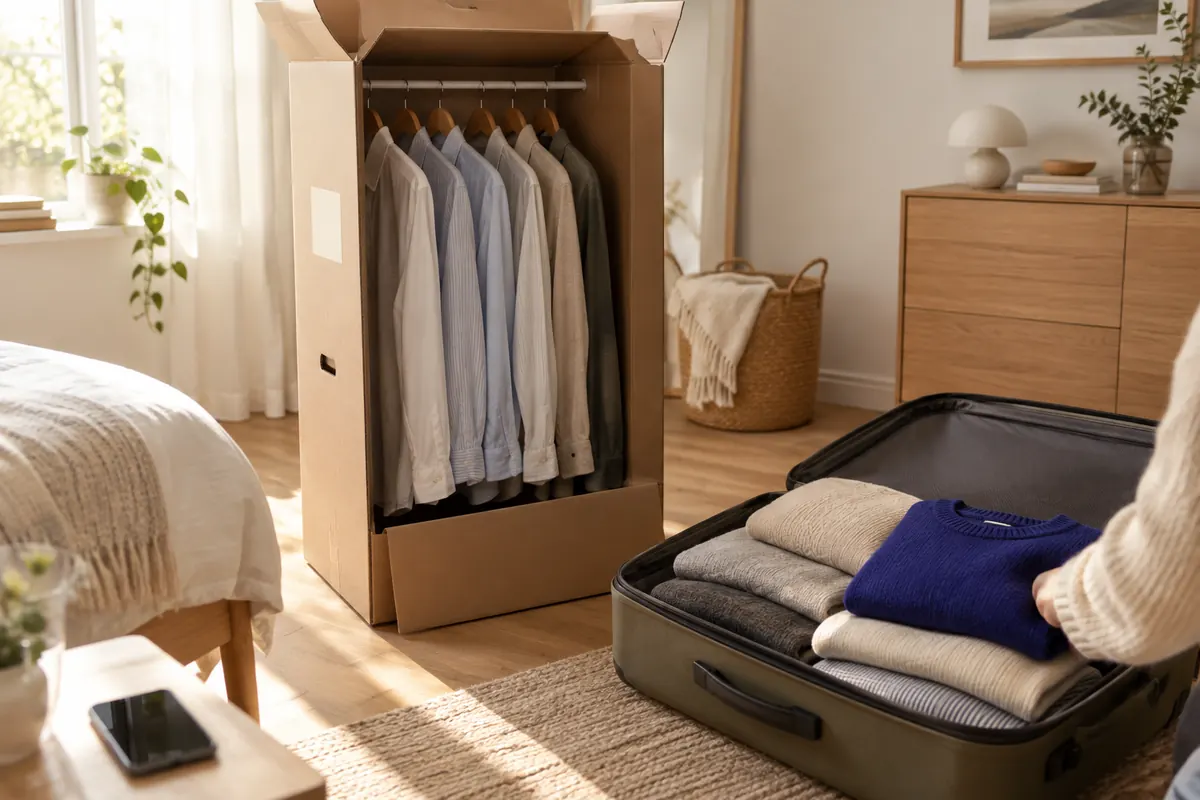
A wardrobe box is a tall box with a metal bar across the top. You lift clothes straight from the closet rod to the bar, still on their hangers, and unpack them the same way. U-Haul's Space Saver wardrobe box suggests one box for every foot and a half of closet rod, and its larger wardrobe box one for every two feet.
A few things make them work better:
- Group hangers together with a rubber band or zip tie so they don't slide off the bar.
- Don't cram. Clothes pressed tight still wrinkle.
- Use the floor of the box for shoes, belts or folded linens, as long as it stays light enough to carry.
- Long coats and dresses can be folded once over the bar if the box is too short.
If you don't want to buy wardrobe boxes, a trash bag pulled up over a bundle of hangers from the bottom, with the hooks poking out through a hole at the top, keeps clothes together and clean for a short drive. Label every bag, though, so it doesn't end up at the curb.
Folding clothes: use what you already have
Folded clothes are light, so they're a good way to fill things you're moving anyway.
| Good for | Watch out for | |
|---|---|---|
| Suitcases and duffels | Everyday clothes, the first-week bag | Overpacking heavy bags with wheels that won't hold up |
| Dresser drawers | Light clothes, left in place | Ask your mover first; some want drawers emptied |
| Medium boxes | Sweaters, jeans, sheets | Large boxes get heavy fast if packed tight |
| Vacuum bags | Bulky synthetics, bedding for a short time | Down and wool, which can lose loft or trap moisture |
Rolling T-shirts and jeans saves space and cuts down on creases. Line boxes with a clean sheet or paper if they've held anything dusty.
Keep moths and mildew out
Clothes that sit packed for weeks, in a moving container or a storage unit, are where moths and mildew show up.
- Pack them clean. Mississippi State University Extension notes that cleaning kills any clothes moth stages already present and makes the item less attractive to moths laying eggs. Wool and items with food stains or body oils are the ones they go for.
- Pack them dry. Never box clothes that are even slightly damp from the wash.
- Seal the box. Purdue University's extension guide says almost any box or bag works for storage as long as it's tight enough, or taped, to keep adult moths out.
- Be careful with mothballs. They're pesticides, and their EPA-registered labels say how to use them, usually only in a closed, airtight container. Follow the label on the product you buy, and air clothes out before wearing them.

Shoes, accessories and the small stuff
Stuff shoes with socks so they hold their shape, wrap each pair in paper or a bag so soles don't scuff other things, and pack them heavy-side down at the bottom of a box. Belts can be rolled. Jewelry should never go in a clothes box; carry it with you.
Ties, scarves and other small things go in a labeled bag inside a box rather than loose, where they slip into corners and get thrown out with the packing paper.
Packing a closet over a week
- A week outSort everything; donate and sell what's not coming
- Four days outPack the off-season clothes in sealed boxes
- Two days outPack folded clothes into suitcases and boxes; set aside the first-week bag
- The night beforeMove hanging clothes into wardrobe boxes
- Moving dayFirst-week bag rides with you, not in the truck
Label it all, and know what's where
Clothes boxes all look the same. Label each one with the room and the person it belongs to, and say what's inside: "Bedroom 2, Maya: winter coats, boots." That way the interview suit isn't in bag four of six.
BoxTrack makes that list as you pack. Make a box in the app for each wardrobe box, suitcase or bag, snap a photo of what goes in, and AI lists the items. Print a QR label, then search "navy suit" at the new place to see which box it's in. See how BoxTrack works for a move. Your first box is free.
For more on labeling, see how to label moving boxes. If some clothes are heading into storage between seasons, climate-controlled storage explains which fabrics need it.
Sources
- U-Haul, Space Saver wardrobe box and Grand wardrobe box
- Mississippi State University Extension, Webbing clothes moth
- Purdue University Extension, Clothes moths and carpet beetles (E-18)
- National Pesticide Information Center, Clothes moths